The Twin4Twin Project Reached Its Successful Conclusion
The Twin4Twin Project Reached Its Successful Conclusion
Nikos Makris, Director of Innovation, Ioannis Meintanis, Principal Data Scientist & Maria Lentoudi, Events and Stakeholder Engagement Manager
Calculating...
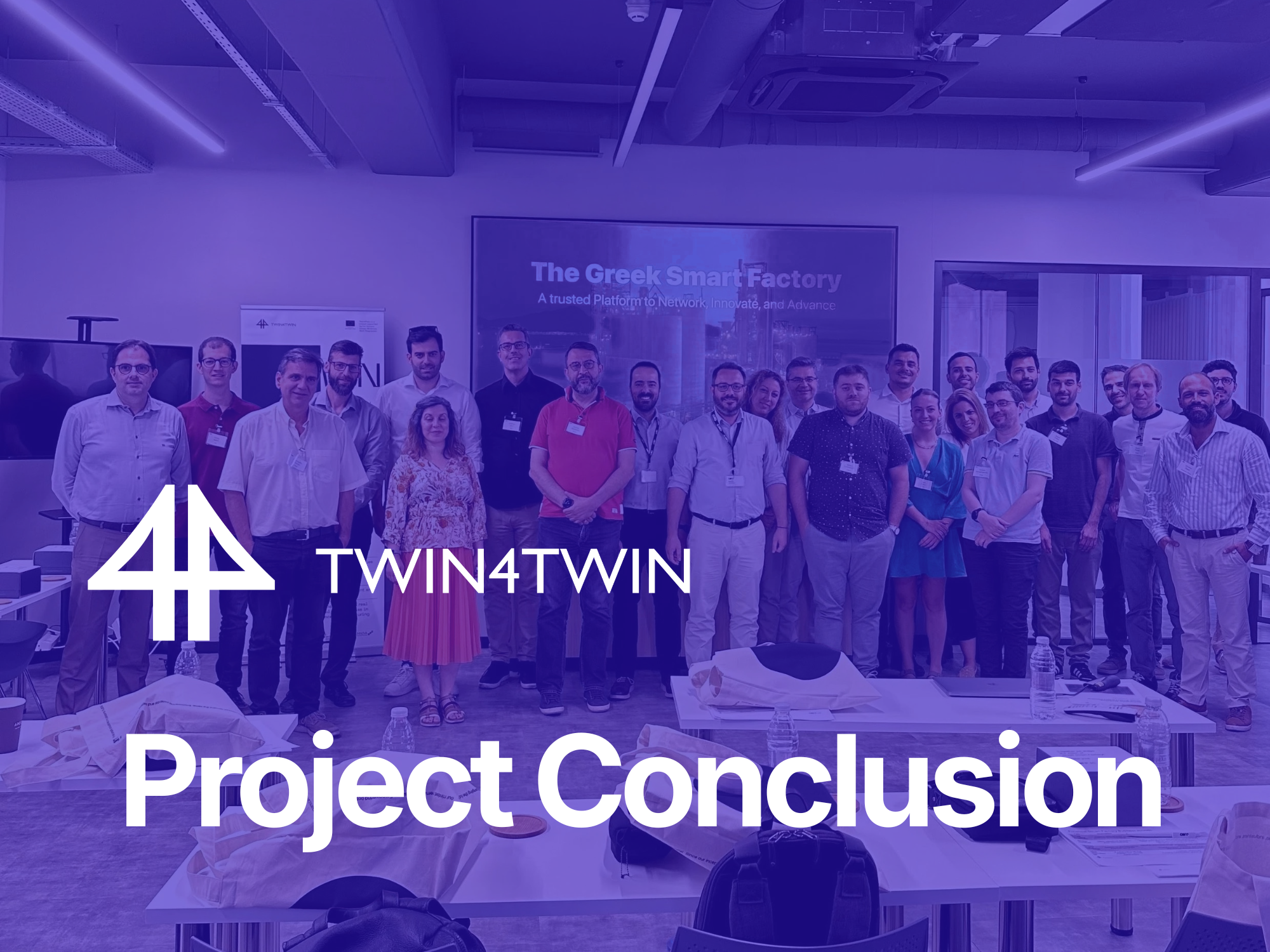
After three years of collaboration, innovation, and knowledge exchange, the Twin4Twin EU Project has officially come to an end. Coordinated by CORE Innovation Centre (CORE IC), the project culminated with its Final General Assembly in Athens, Greece, in December 2025, followed by the successful Final Review Meeting in March 2026.
Launched in January 2023 under the Horizon Europe Widening Participation and Spreading Excellence Programme, Twin4Twin was designed to strengthen research and innovation capacity in Greece by transferring expertise from leading European organisations to CORE IC. Through collaboration with renowned partners from Austria, Spain, and Switzerland, the project aimed to accelerate the adoption of Industry 4.0 technologies, digital twins, artificial intelligence, and data-driven manufacturing solutions, while supporting CORE IC's long-term vision of becoming a leading Industry 4.0 innovation hub in Southeastern Europe.
Addressing a Critical Industry Challenge
Twin4Twin tackled a key challenge facing the Greek manufacturing sector: the limited adoption of advanced Industry 4.0 technologies and the lack of capacity to deploy Digital Twins in real industrial environments.
To address this gap, the project focused on knowledge transfer, research excellence, and ecosystem development, bringing together research organisations, technology providers, and industrial stakeholders. By strengthening collaboration between these actors, Twin4Twin laid the foundations for a more connected, innovative, and digitally mature manufacturing ecosystem.
The challenge extends beyond Greece. Across Europe, manufacturers increasingly require smarter, more flexible, and data-driven production systems, yet many regions still lack the skills, infrastructure, and collaboration models needed to support large-scale digital transformation. Through its activities, Twin4Twin contributed to bridging this gap and creating pathways for future industrial innovation.
The Project at a Glance
Twin4Twin was built around four complementary pillars:
· Strengthening scientific excellence in Digital Twin technologies
· Enhancing CORE IC's research, innovation, and project management capacities
· Developing a research use case in metal additive manufacturing
· Establishing two flagship legacy initiatives: the Greek Smart Factory and CORE Innovation Days
At the technological level, the project developed a Hybrid Digital Twin for metal additive manufacturing, aiming to improve monitoring, quality assurance, sustainability, and operational efficiency in LPBF (Laser Powder Bed Fusion) processes. By combining real-time data, physics-based models, and artificial intelligence, the solution supports the principles of Zero Defects, Zero Waste, and First-Time-Right manufacturing.
The consortium brought together complementary expertise from leading European organisations, including ITAINNOVA (Spain), SCCH (Austria), and Swiss Smart Factory (Switzerland), which transferred valuable knowledge and best practices to CORE IC and supported the replication of smart factory concepts in Greece.
CORE IC’s Contribution
As project coordinator, CORE Innovation Centre played a central role in both the technical and strategic implementation of Twin4Twin.
CORE contributed to the development of the Hybrid Digital Twin's intelligence layer, system integration architecture, and user interface, while also leading the design and implementation of AI-based defect detection workflows, from dataset preparation and annotation to model training, validation, and deployment.
Beyond the technical activities, CORE's innovation team actively engaged with stakeholders from industry, research, and technology sectors, using their feedback to shape the development of the Greek Smart Factory concept and its future business model.
At the same time, CORE IC's Communication Team led all communication, dissemination, and stakeholder engagement activities throughout the project. Through a comprehensive outreach strategy, the team established a strong project identity, increased Twin4Twin's visibility across Europe, and ensured continuous engagement with scientific, industrial, and policy audiences.
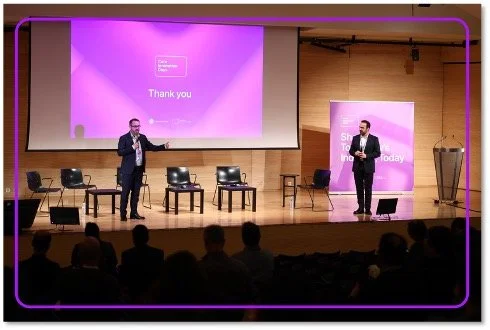
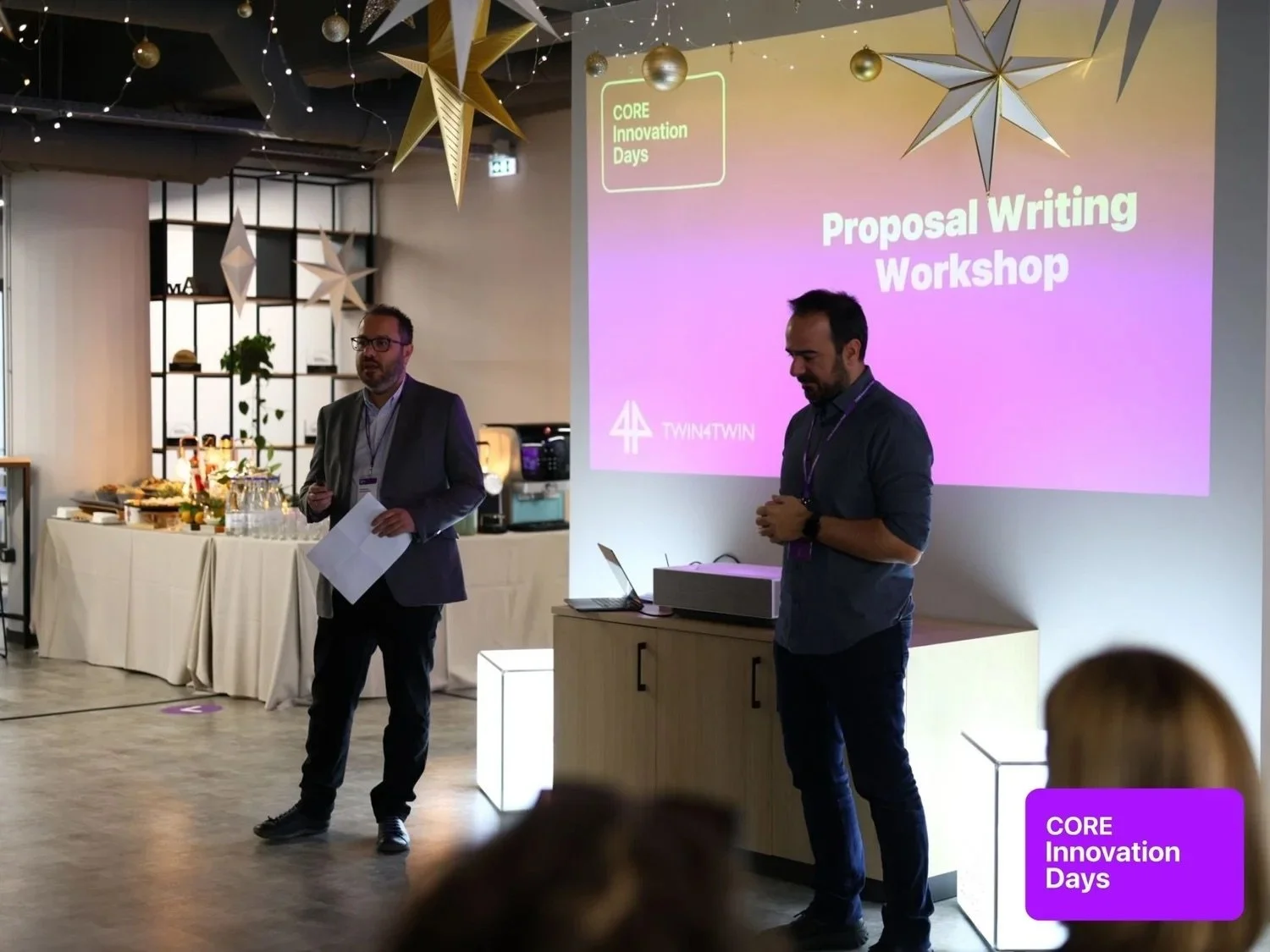
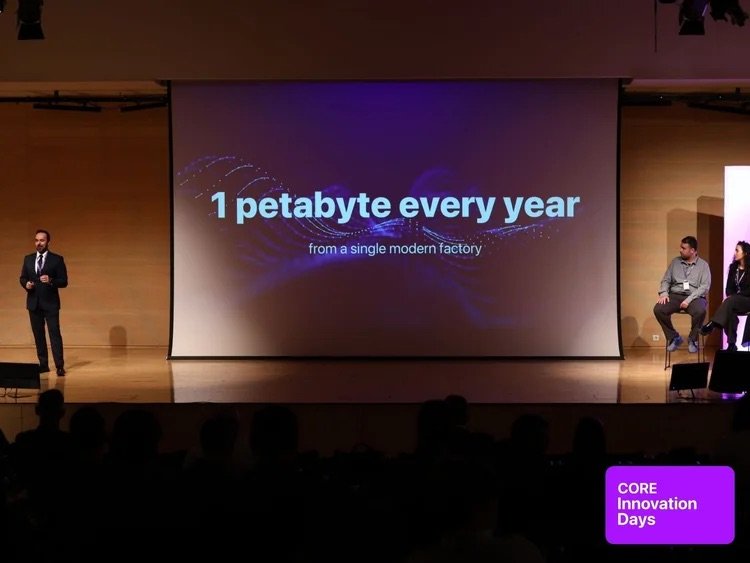
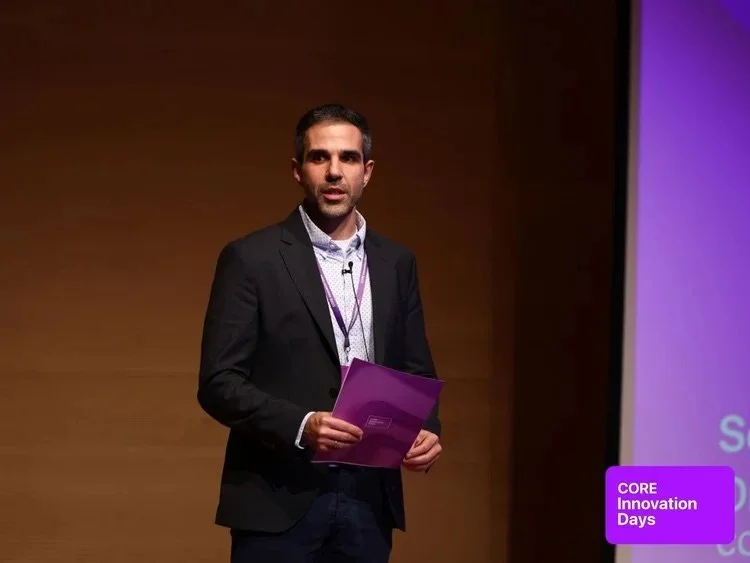
The project achieved significant outreach through social media campaigns, newsletters, press releases, multimedia content, and participation in 24 events and five exhibition booths. A particular highlight was the successful organisation of two editions of CORE Innovation Days, which exceeded participation expectations and have now evolved into a flagship Industry 4.0 event bringing together key stakeholders from across the European innovation ecosystem.
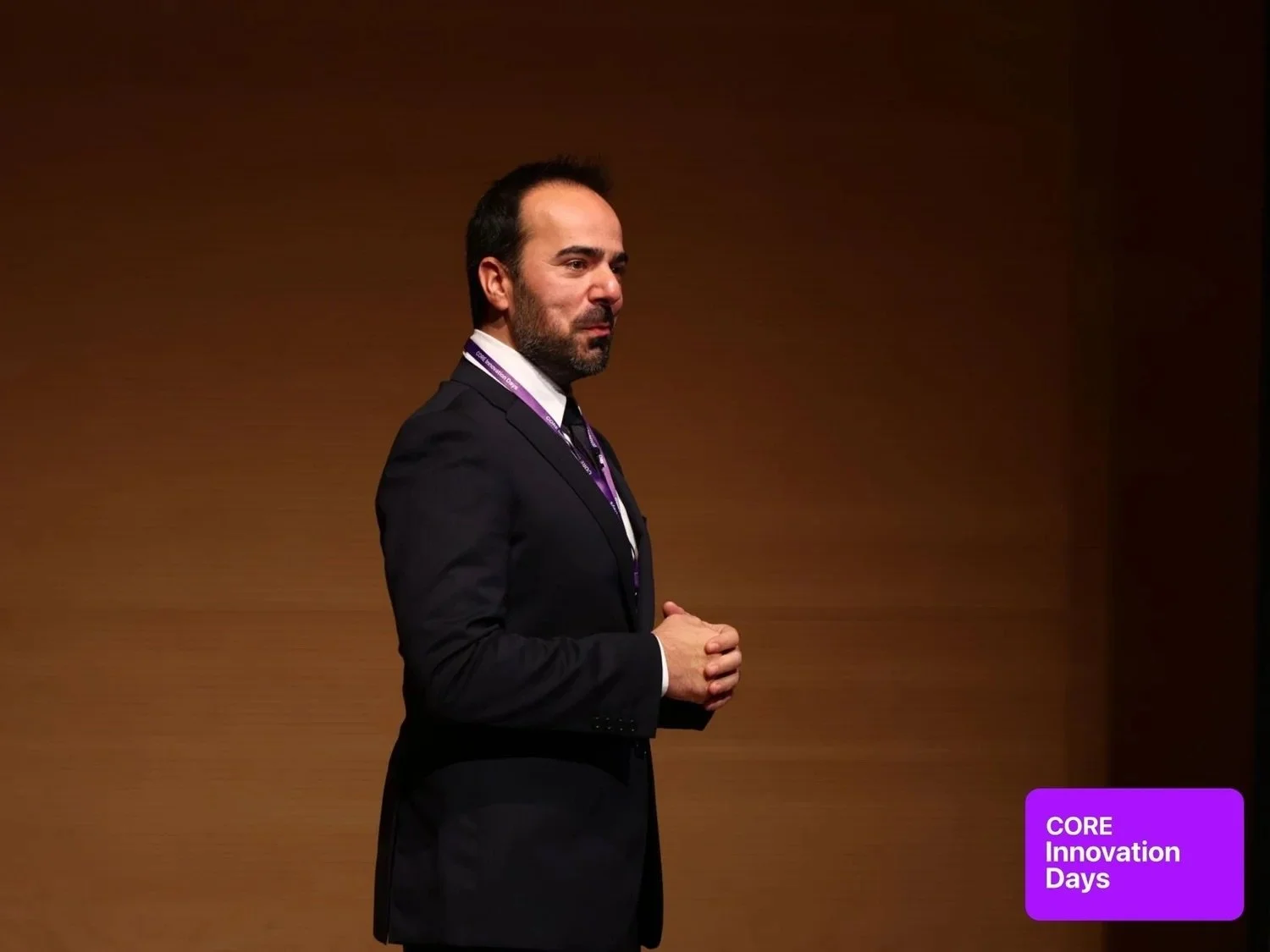
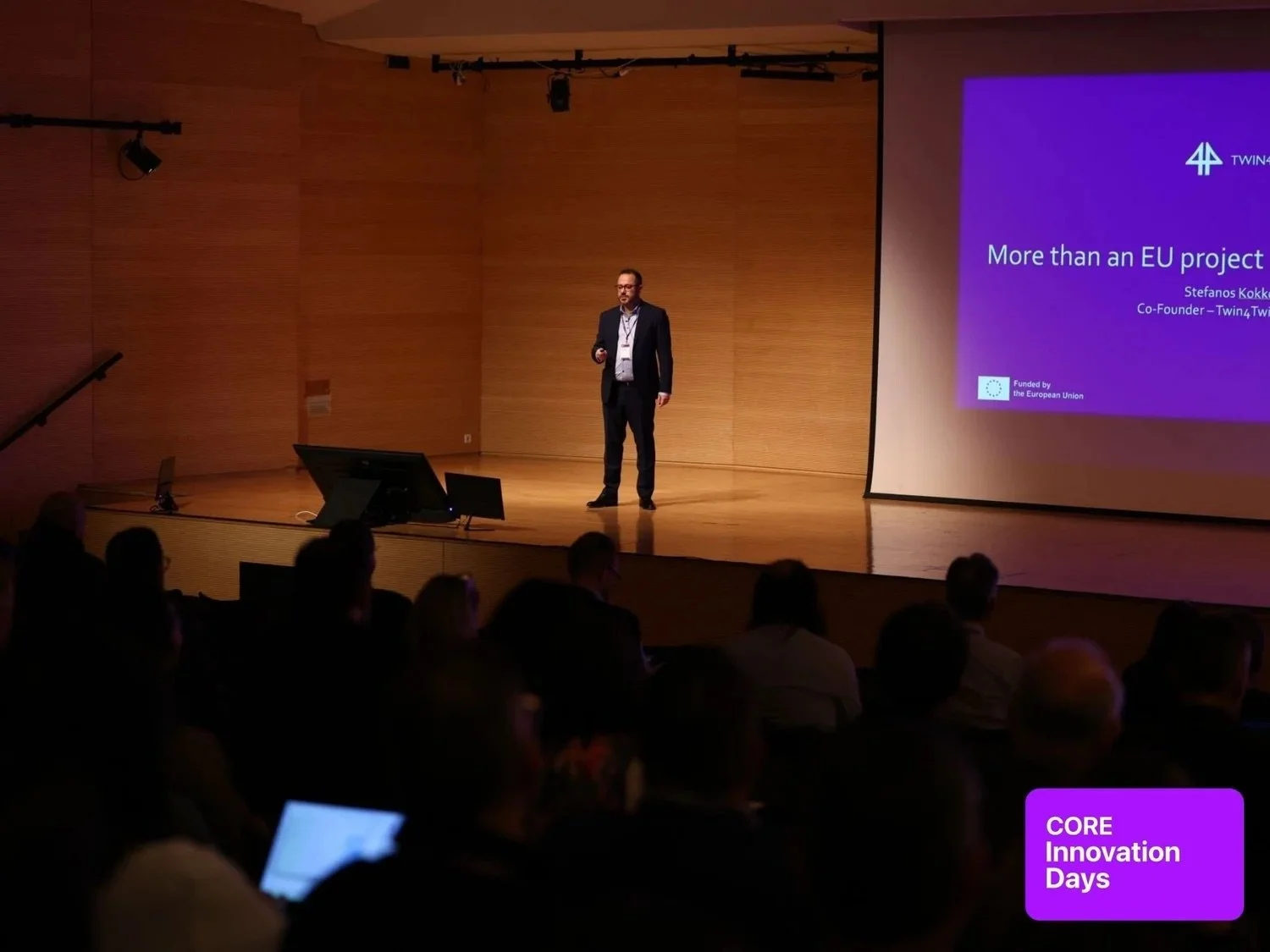
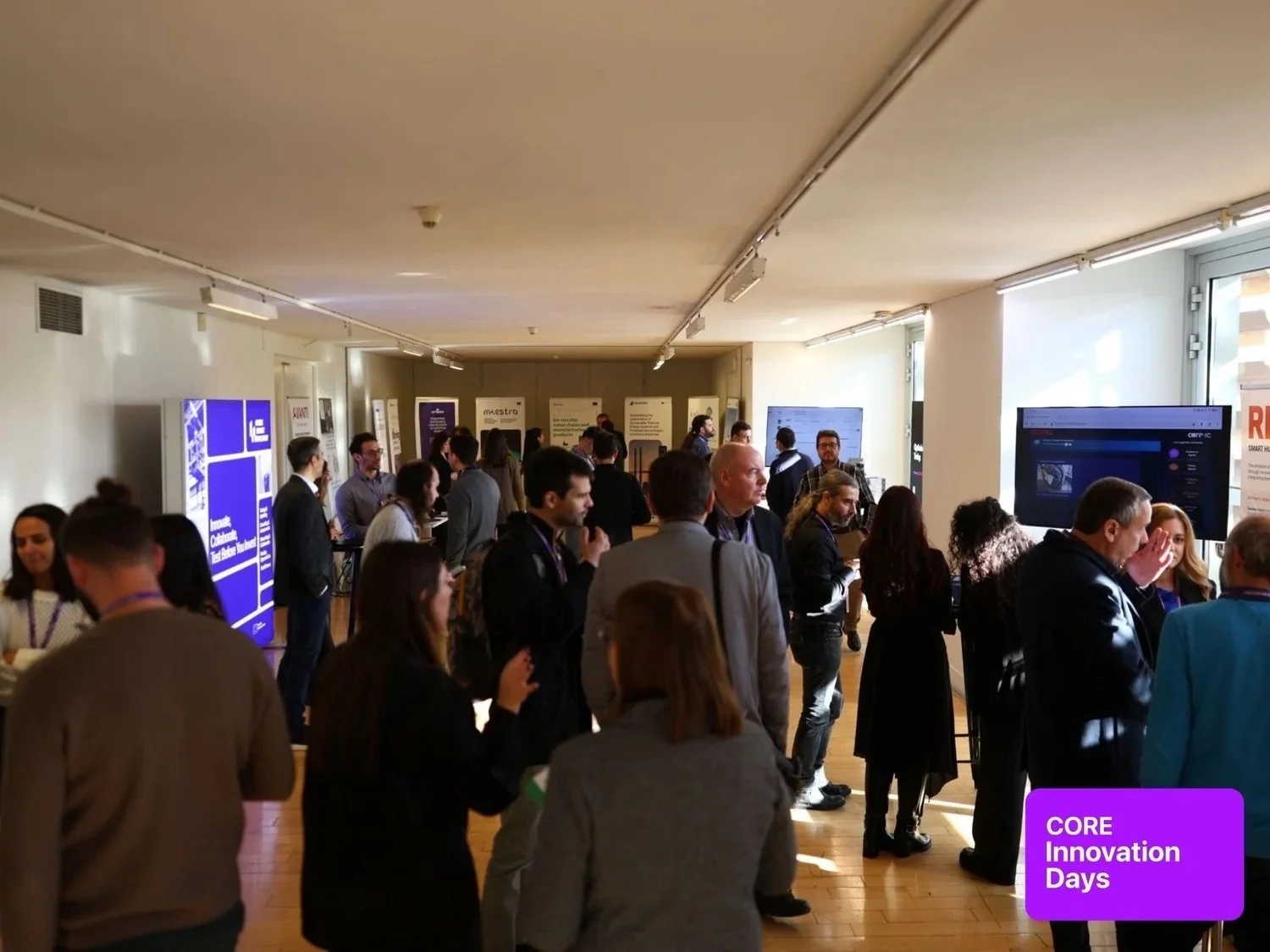
CORE Innovation Days
Key Results and Outcomes
One of Twin4Twin's most significant achievements was the development of a Hybrid Digital Twin for Metal Additive Manufacturing. The solution combines machine data, thermal information, powder-bed imagery, reduced-order modelling, and AI-driven defect detection to provide advanced monitoring and quality assurance capabilities.
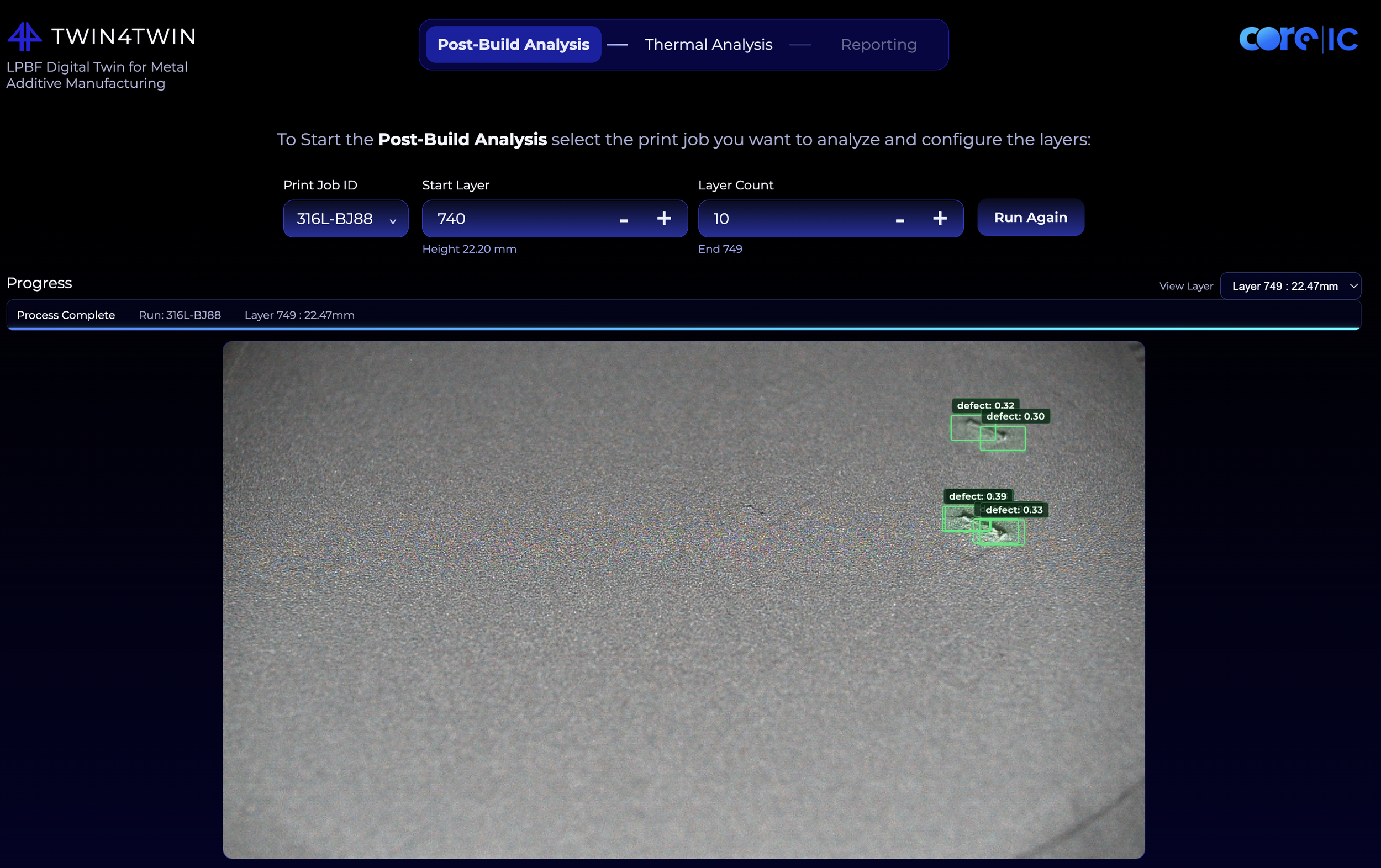
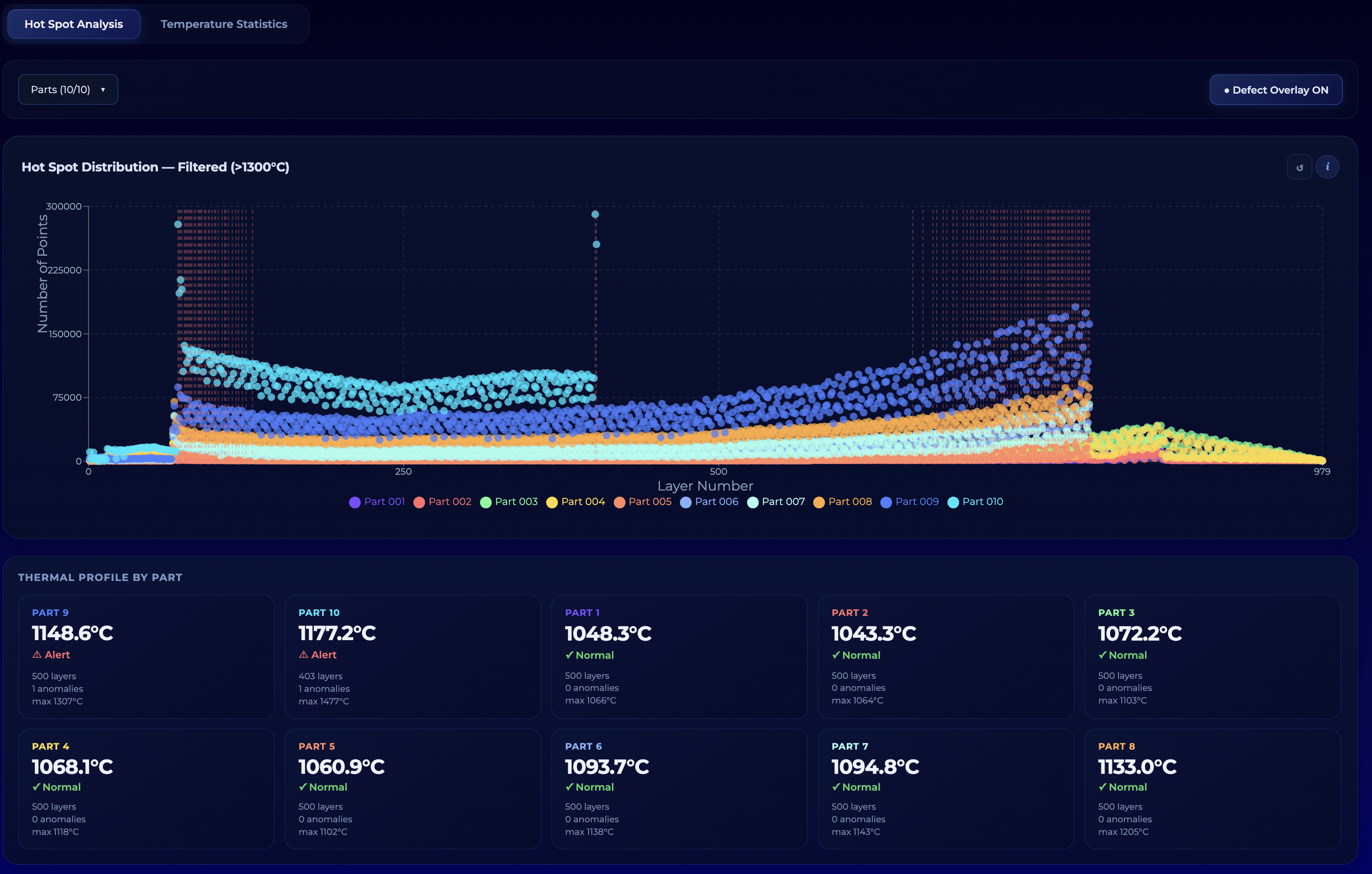
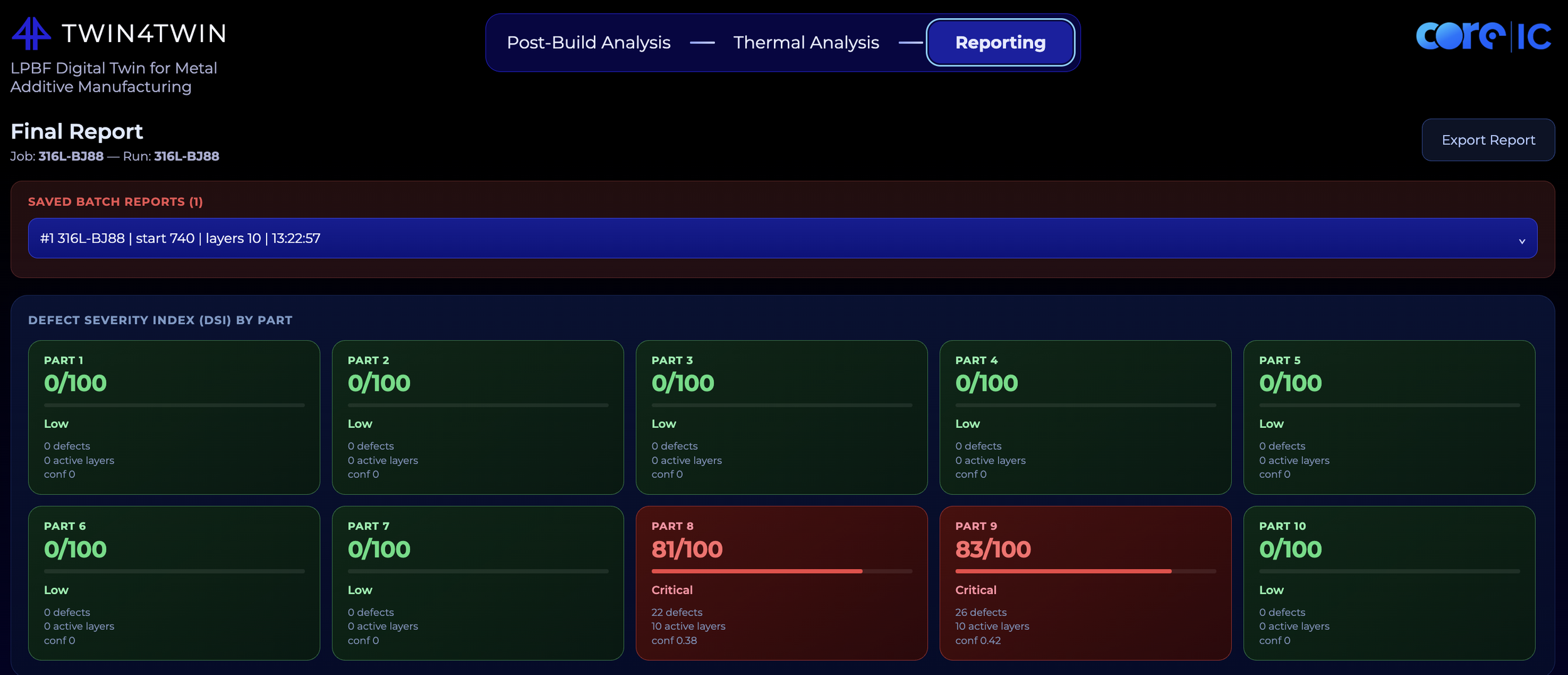
LPBF Digital Twin for Metal Additive Manufacturing
The system enables:
Real-time collection and synchronisation of process data
AI-based defect detection from powder-bed images
Thermal anomaly identification and analysis
Prediction of deformation behaviour through reduced-order models
Interactive visualisation through a Digital Twin interface
Automated quality and inspection reporting
The demonstrator was validated using the Aconity-MINI LPBF printer at the Swiss Smart Factory facilities, demonstrating its potential to improve productivity, reduce waste, and increase manufacturing efficiency.
Beyond the Digital Twin itself, Twin4Twin delivered several additional strategic outcomes, including:
The Digital Twins Best Practice Atlas, showcasing Digital Twin applications across Europe
The Greek Smart Factoryconcept and business model
CORE Innovation Days, now established as an annual Industry 4.0 conference
The Proposal-to-Project Serious Game and Proposal Writing Workshop methodologies
An AI-powered Knowledge Repository supporting innovation and knowledge management
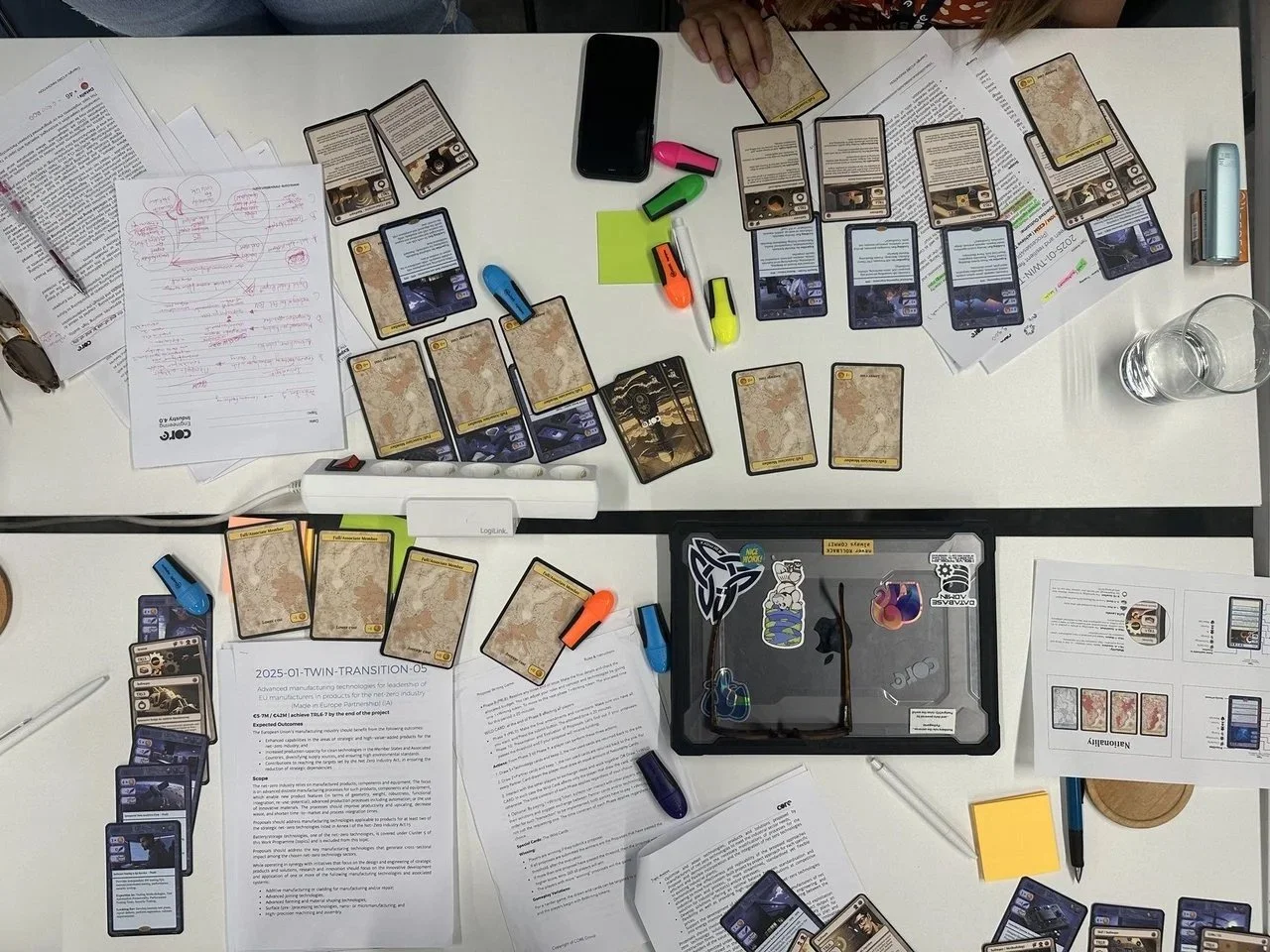
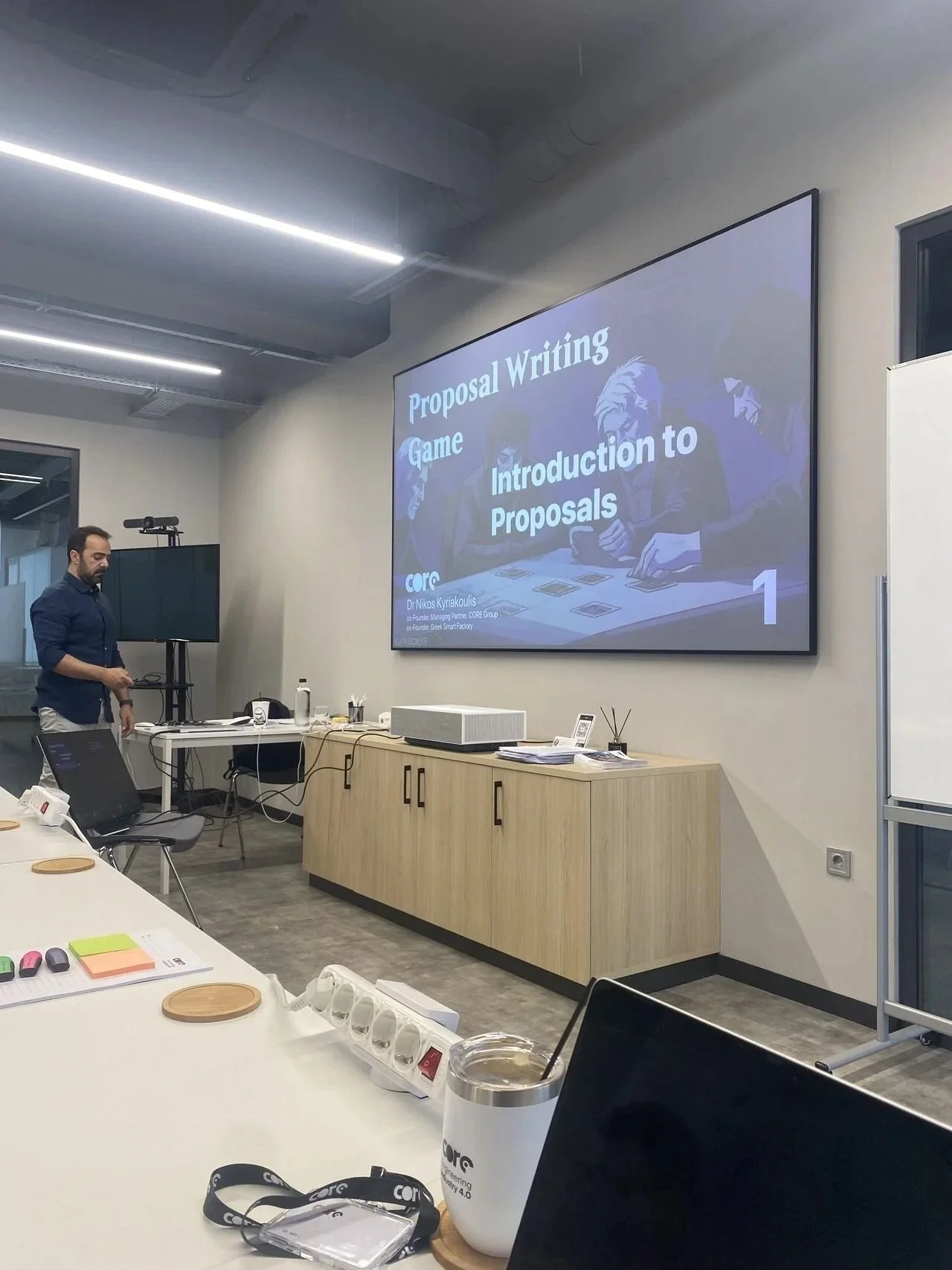
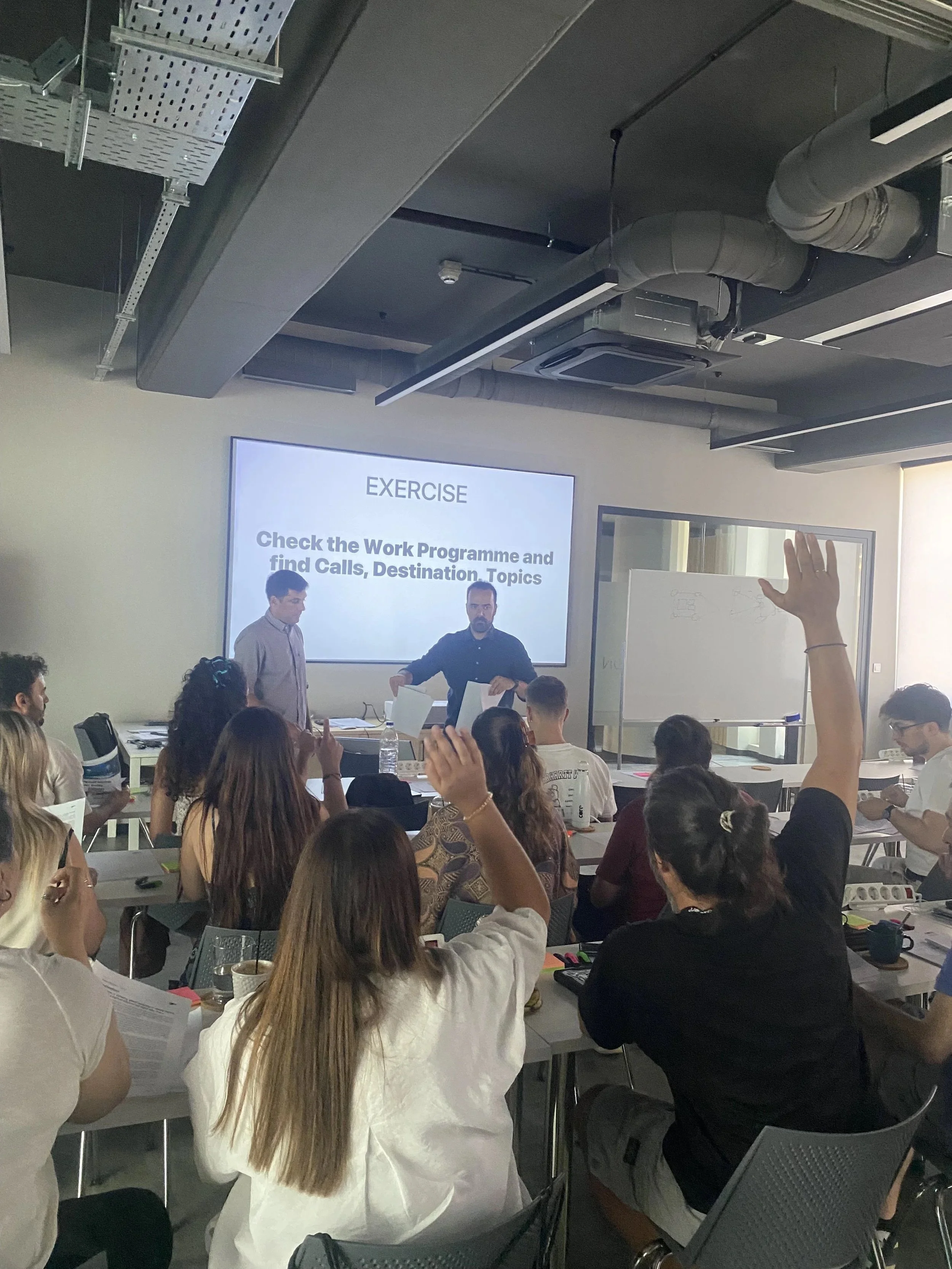
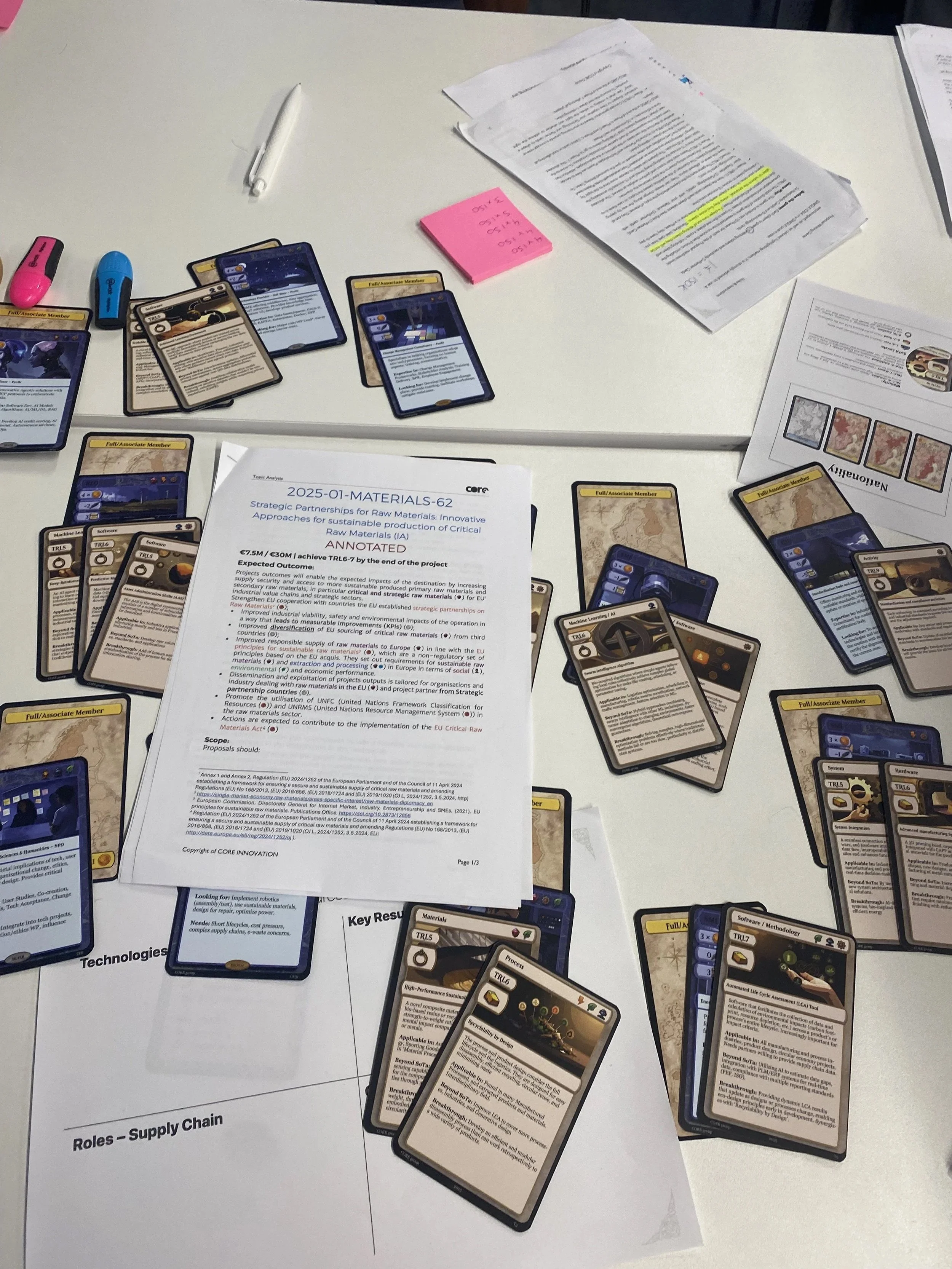
Proposal-to-Project Serious Game
Building a Lasting Legacy
The impact of Twin4Twin extends well beyond the project's lifetime.
The Greek Smart Factory concept provides a roadmap for future test-before-invest services and industrial innovation support in Greece. The Proposal-to-Project methodologies strengthen organisations' ability to transform ideas into successful innovation projects, while the AI-powered Knowledge Repository creates new opportunities for knowledge sharing and organisational learning.
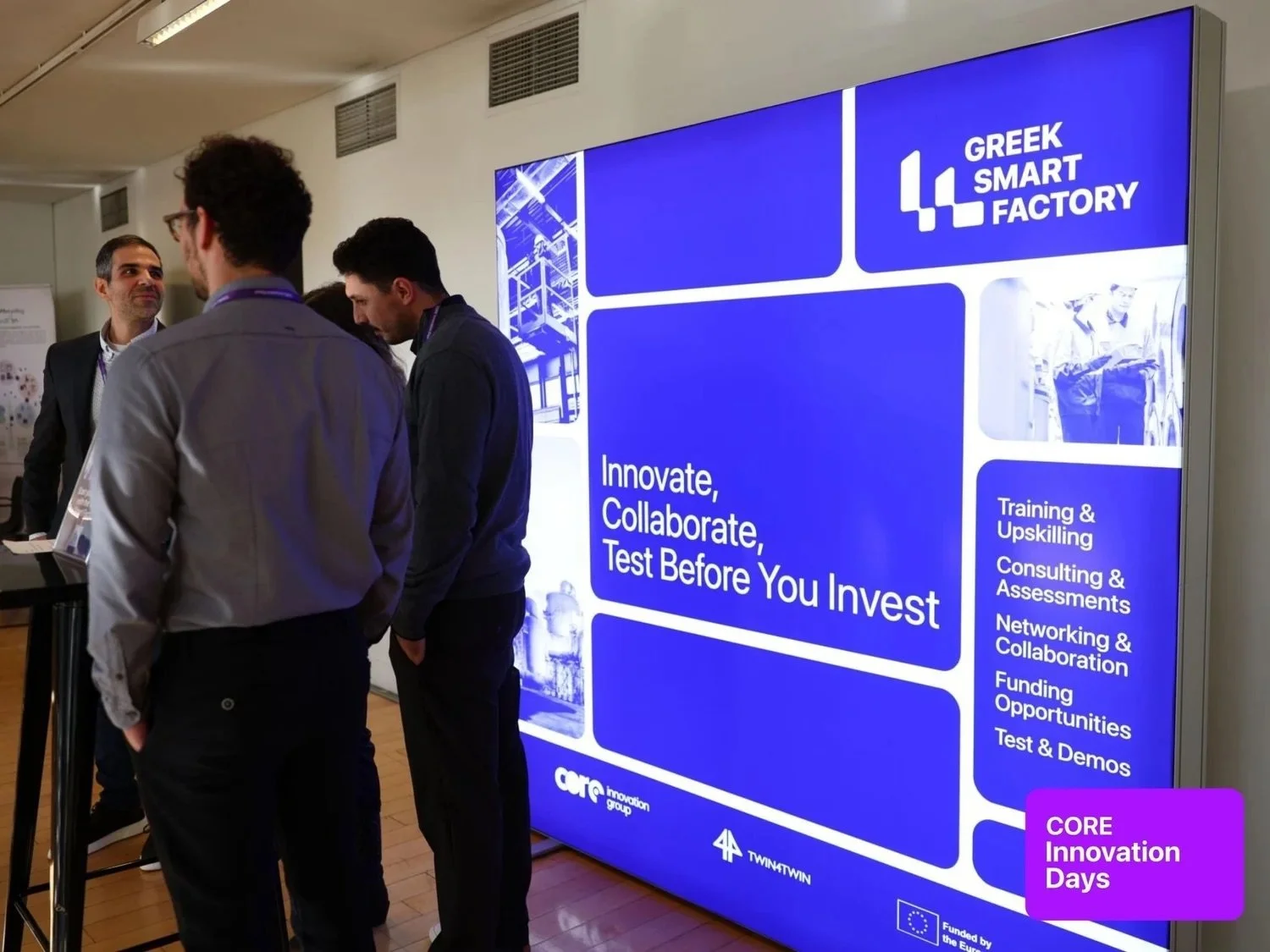
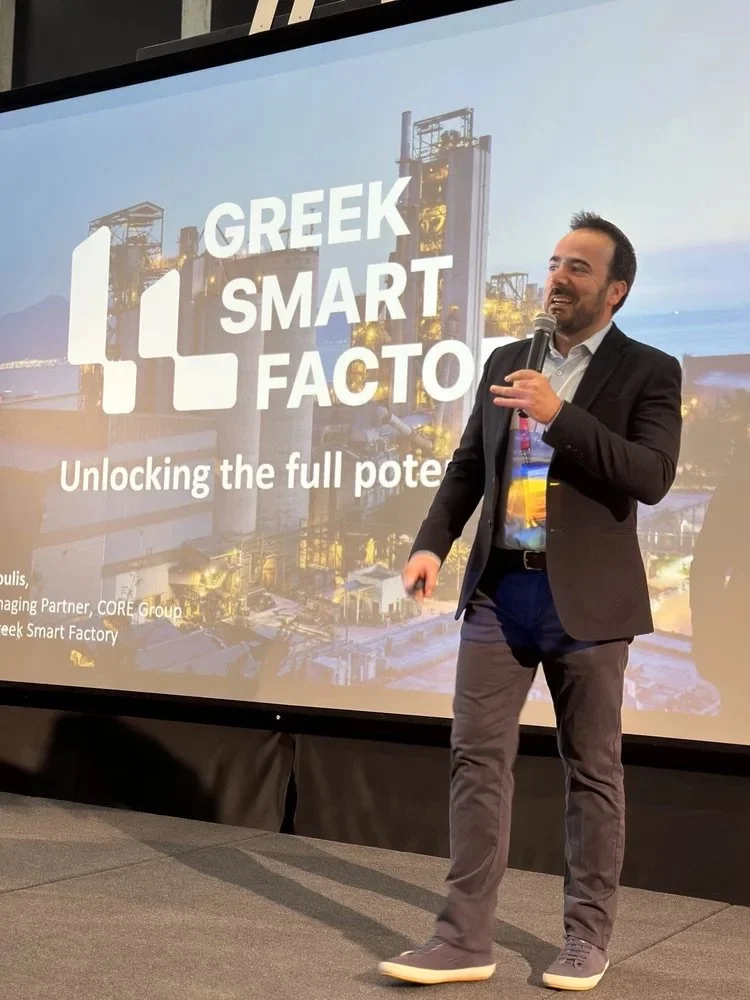
Showcasing the Greek Smart Factory
Meanwhile, the Hybrid Digital Twin demonstrates how artificial intelligence, data infrastructure, and physics-based modelling can be combined to support smarter manufacturing processes, offering a blueprint that can be replicated across different industrial applications.
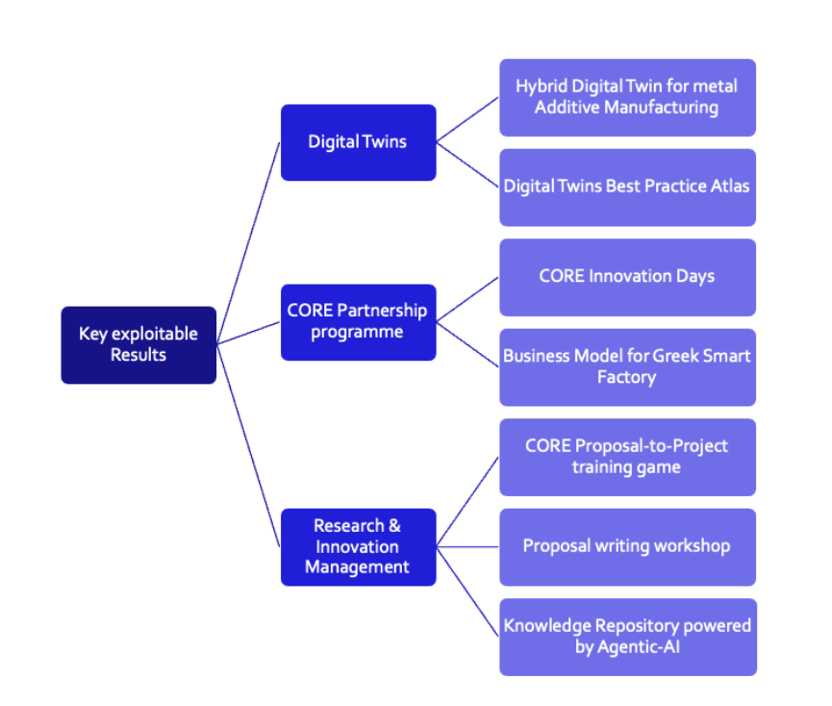
Twin4Twin Project Results