CORE Innovation Days #3
Physical AI & Industry 5.0:
From Automation to Autonomy
Calculating...
Industrial environments are complex, and new technologies need more than a promising demo to make it onto the factory floor. They need reliable solutions, careful integration and, above all, the trust of the people who work with them every day. As AI moves into manufacturing, going from automation to autonomy means rethinking how machines, people and processes work together.
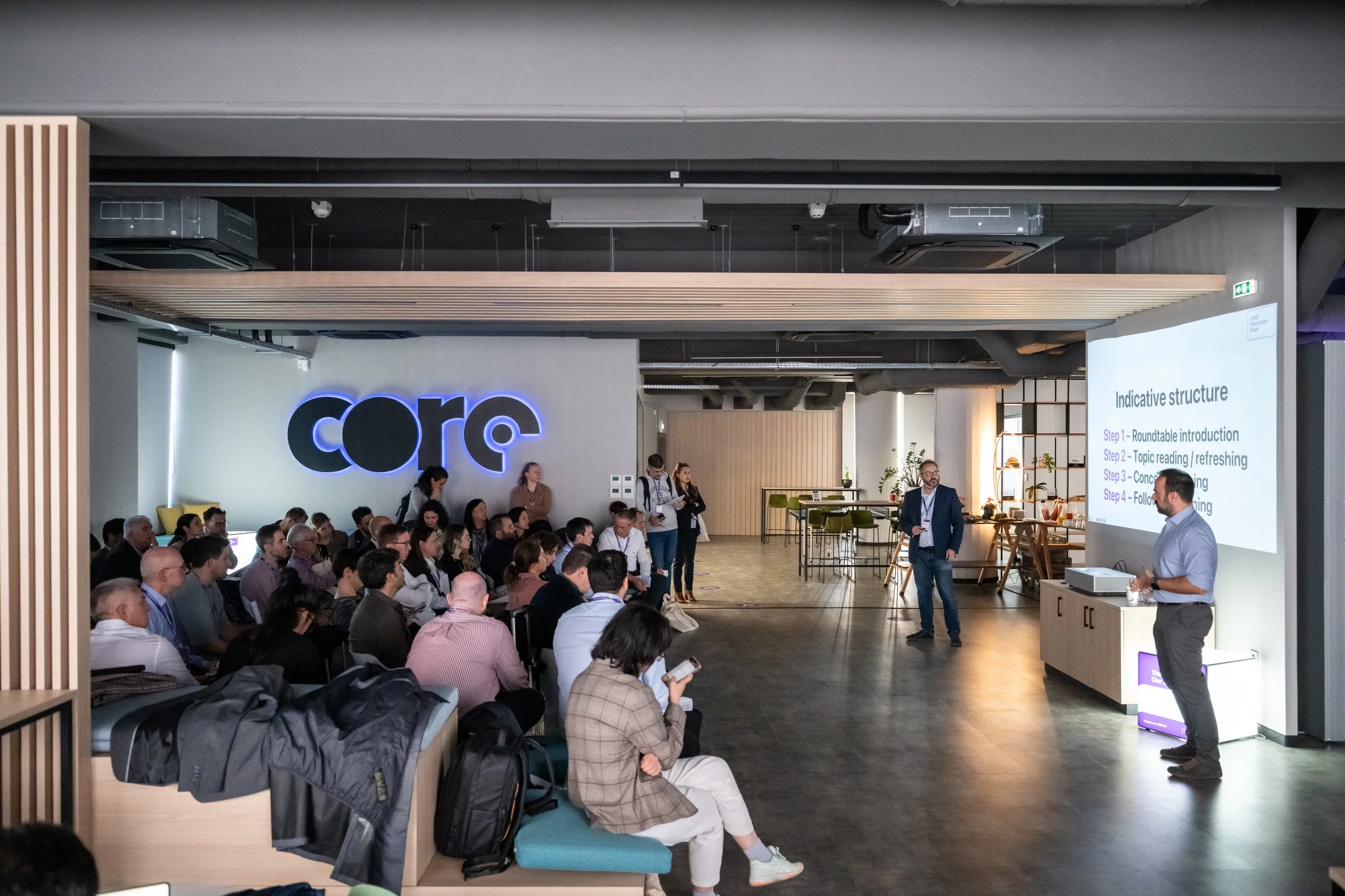
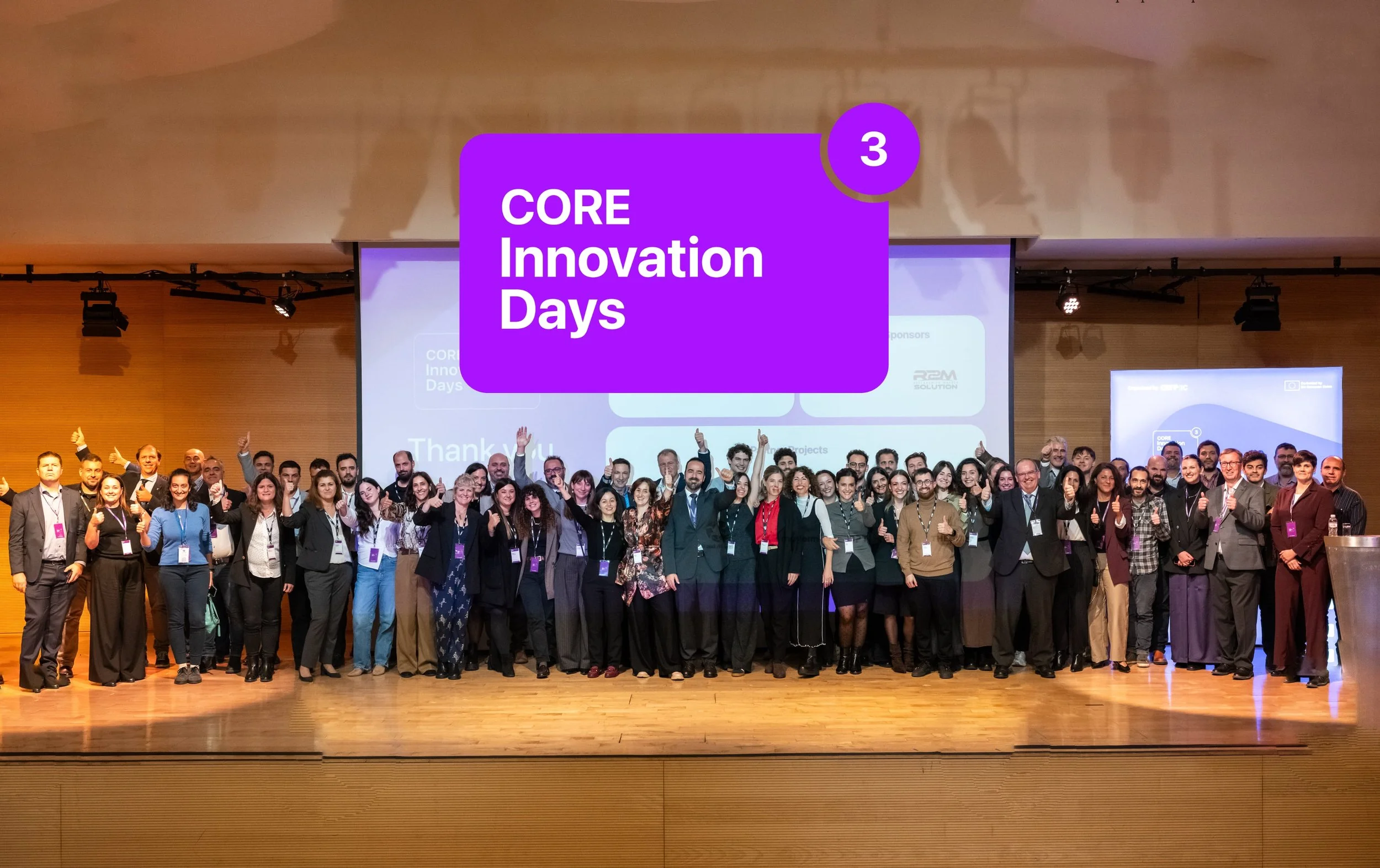
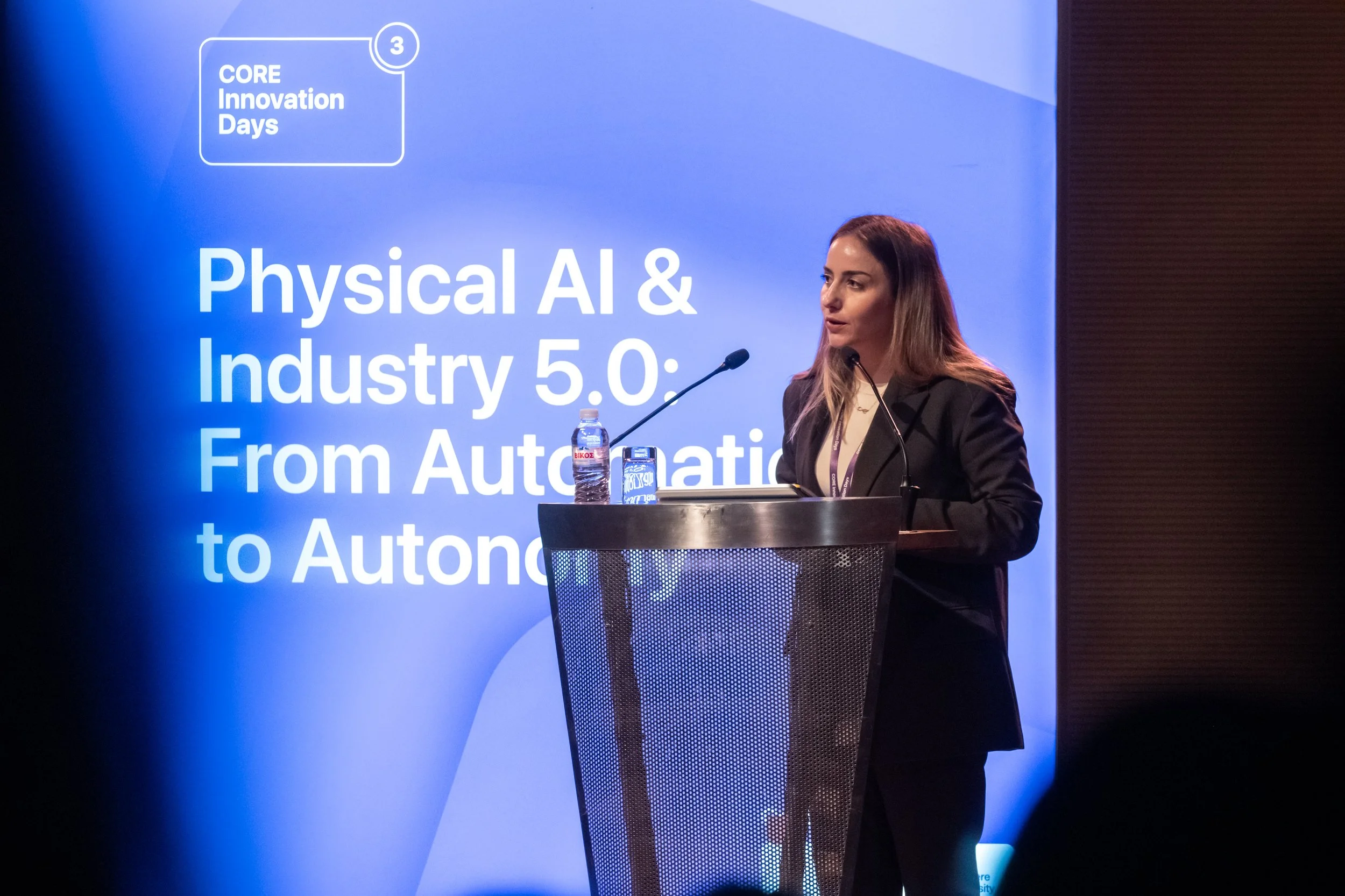
This was the starting point for the third edition of CORE Innovation Days, held on 3 November at the Benaki Museum in Athens under the theme “Physical AI & Industry 5.0: From Automation to Autonomy.”
Bringing together more than 30 speakers, and a wide audience of engineers, researches, industry representatives, and policymakers, the event offered an opportunity to look beyond the promises of Physical AI and discus what it takes to put these technologies into practice.
Across the sessions, one message came through clearly: the potential is significant, but so is the work ahead. From data silos and system integration to workforce readiness and operational reliability, the discussions focused on the practical realities of bringing intelligence into industrial environments.
Here are some of the key conversations and takeaways from the day:
The Opening Question
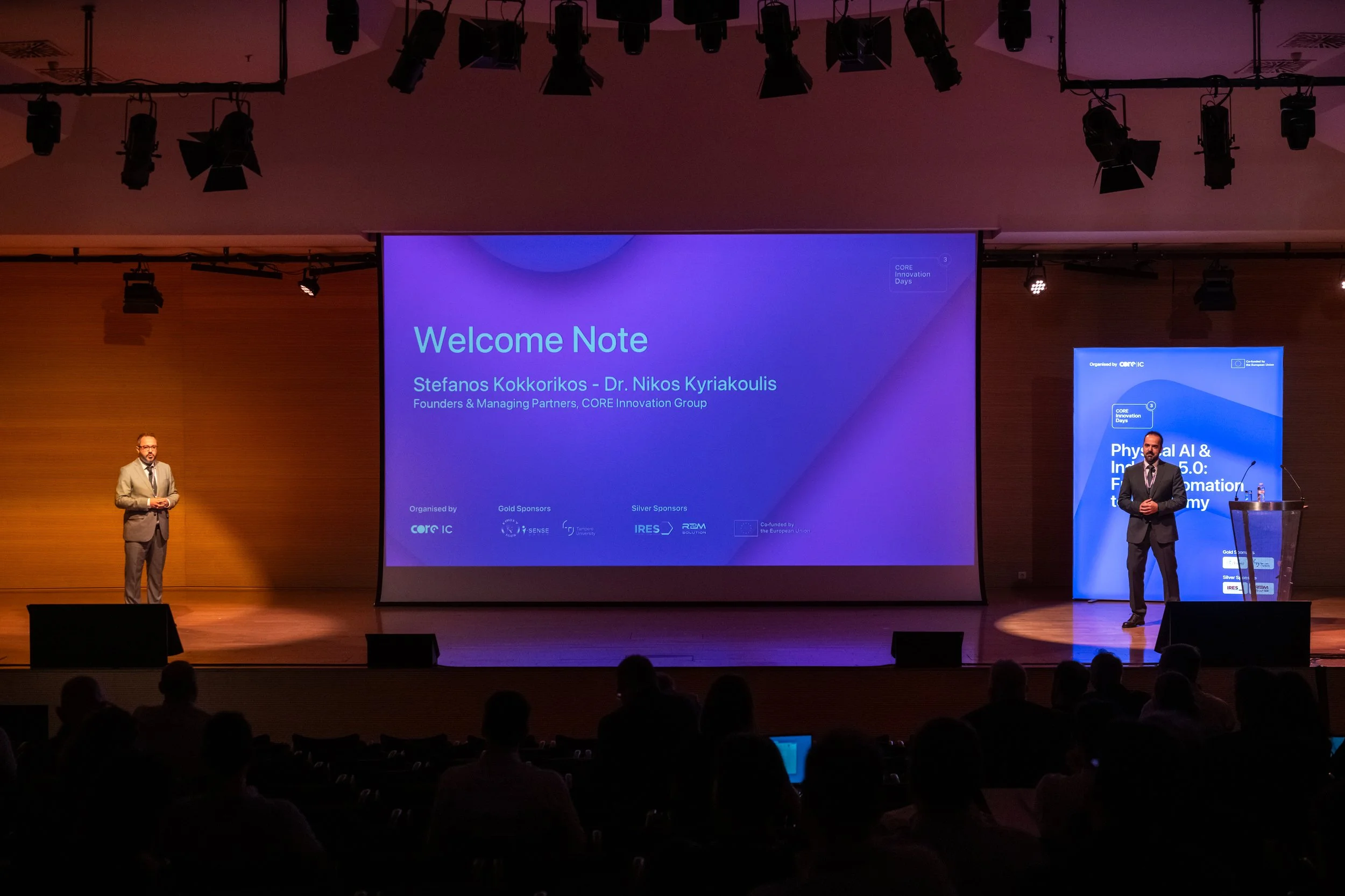
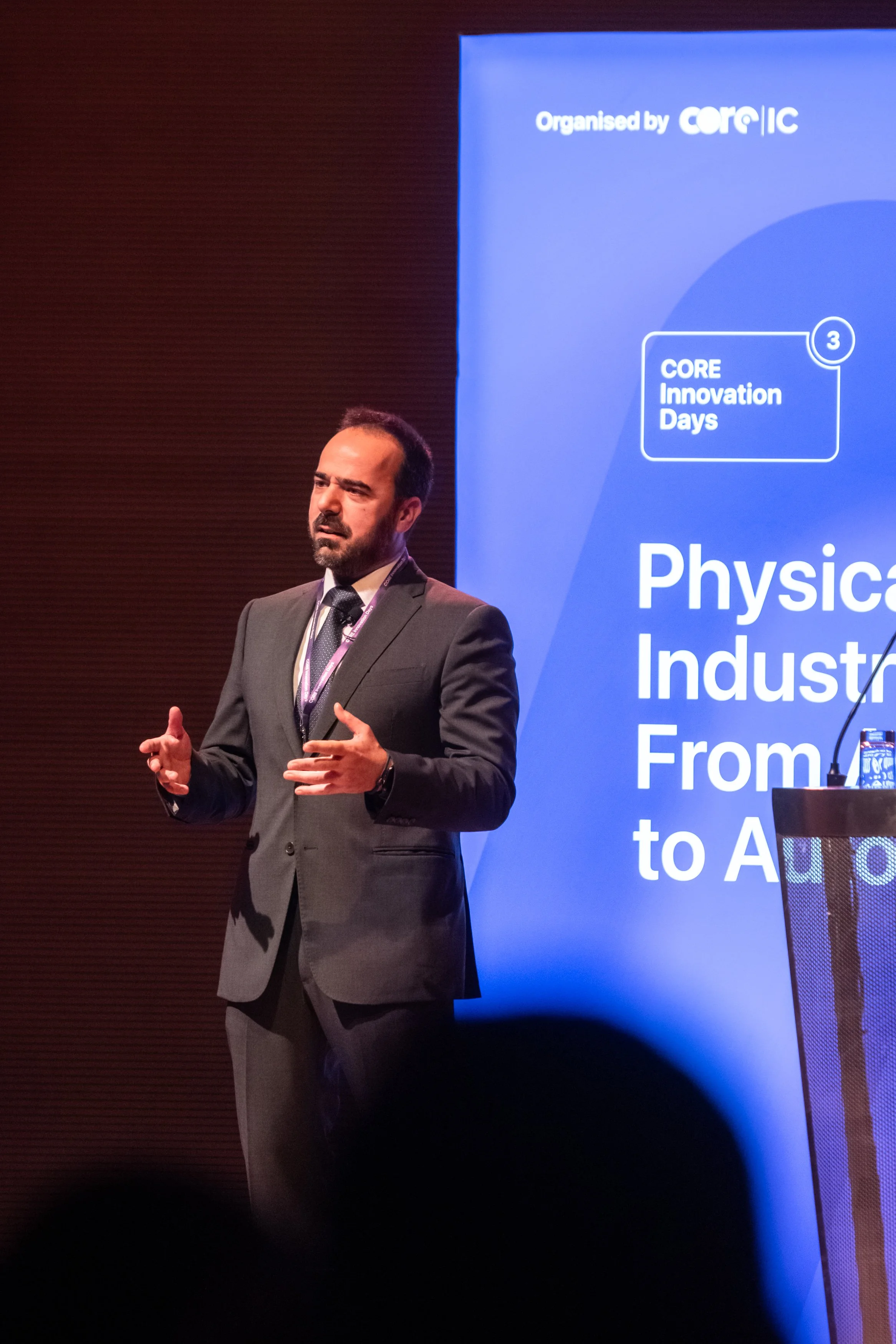
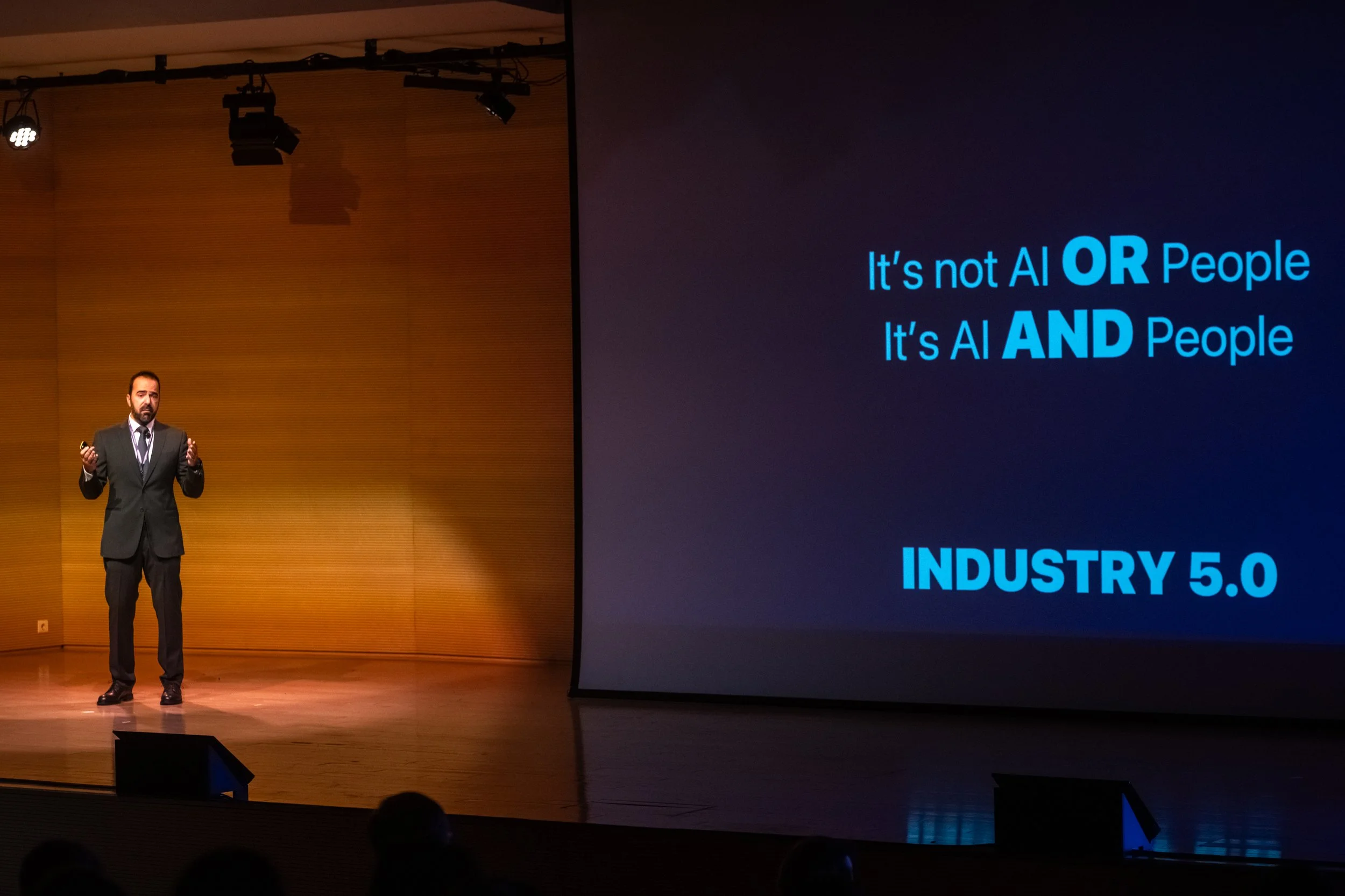
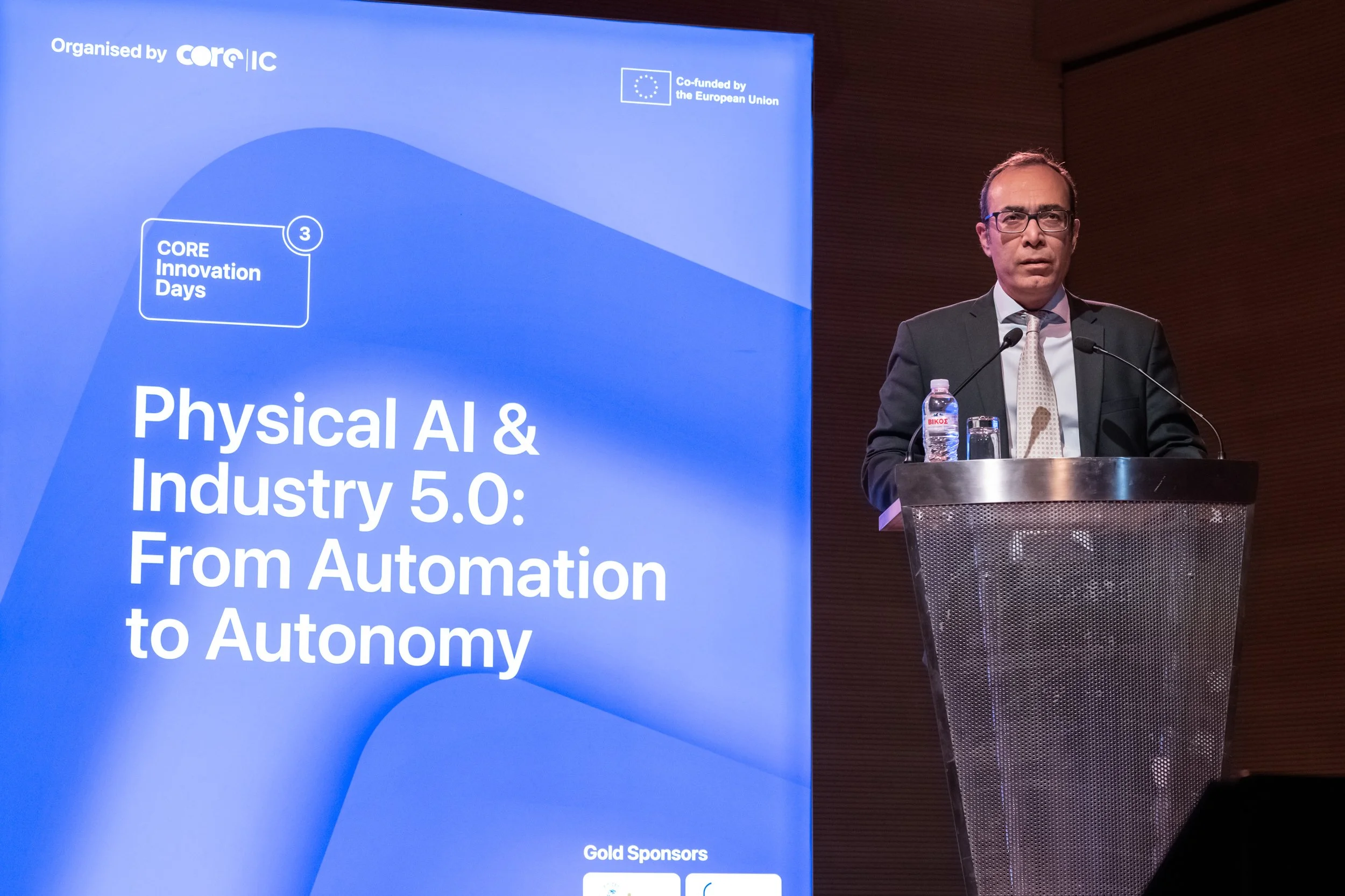
The day began with a keynote by Dr. Nikos Kyriakoulis (Founding Partner, CORE Innovation Group), titled “Fear of Losing, or Losing to Fear”.
This central question set the tone for the event: Is European Industry moving too slowly to keep up with the opportunities offered by Physical AI, or is the fear of the unknown holding back the progress that is already within reach?
Surviving Pilot Purgatory
Moving from a successful pilot to full-scale industrial deployment remains one of the biggest challenges facing Physical AI. A technology may perform well in a controlled environment, but making it work consistently across an entire production facility is another matter.
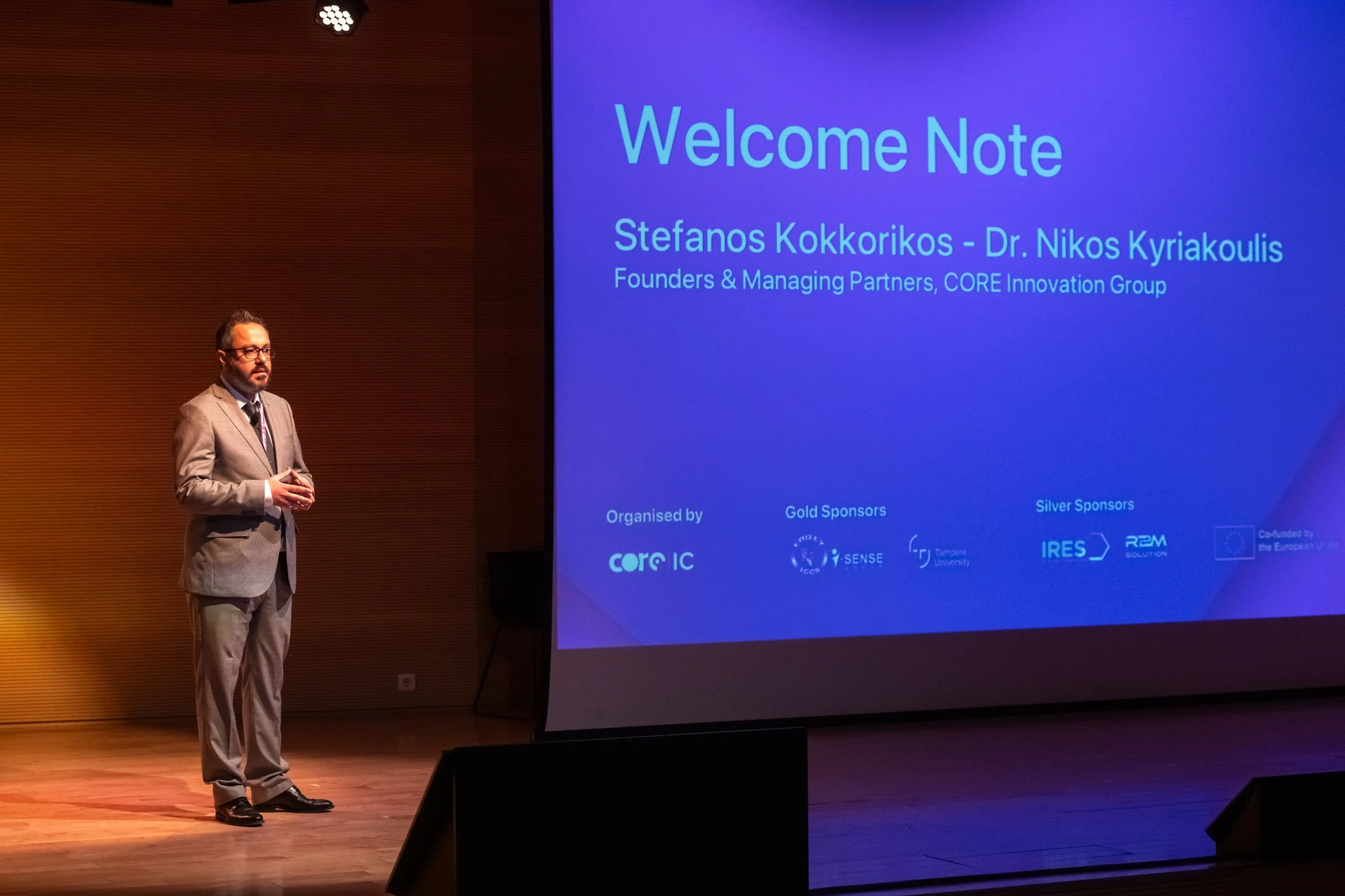
Our first session looked at what it takes to make that transition, bringing together perspectives from industry, research, and technology development.
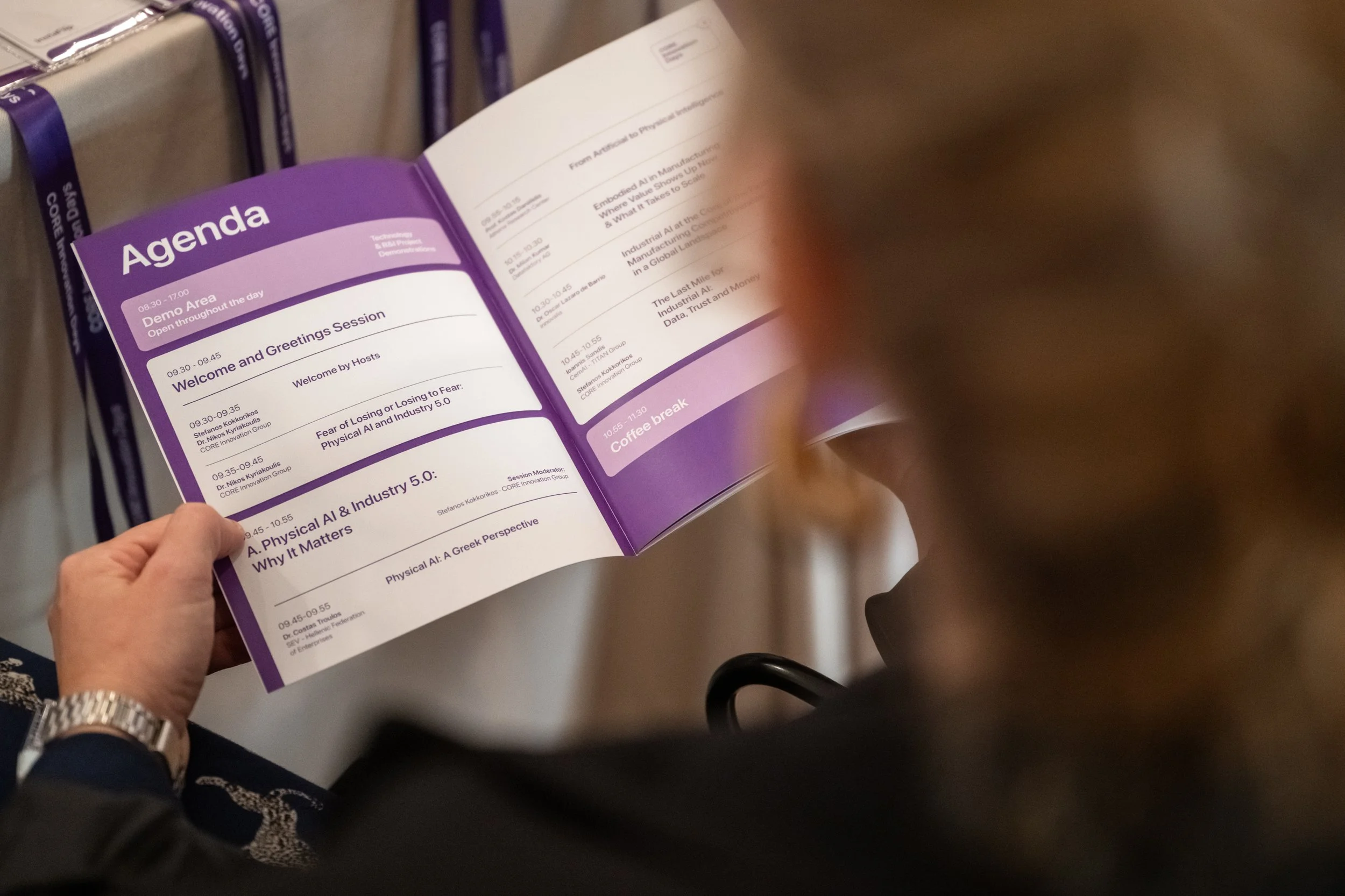
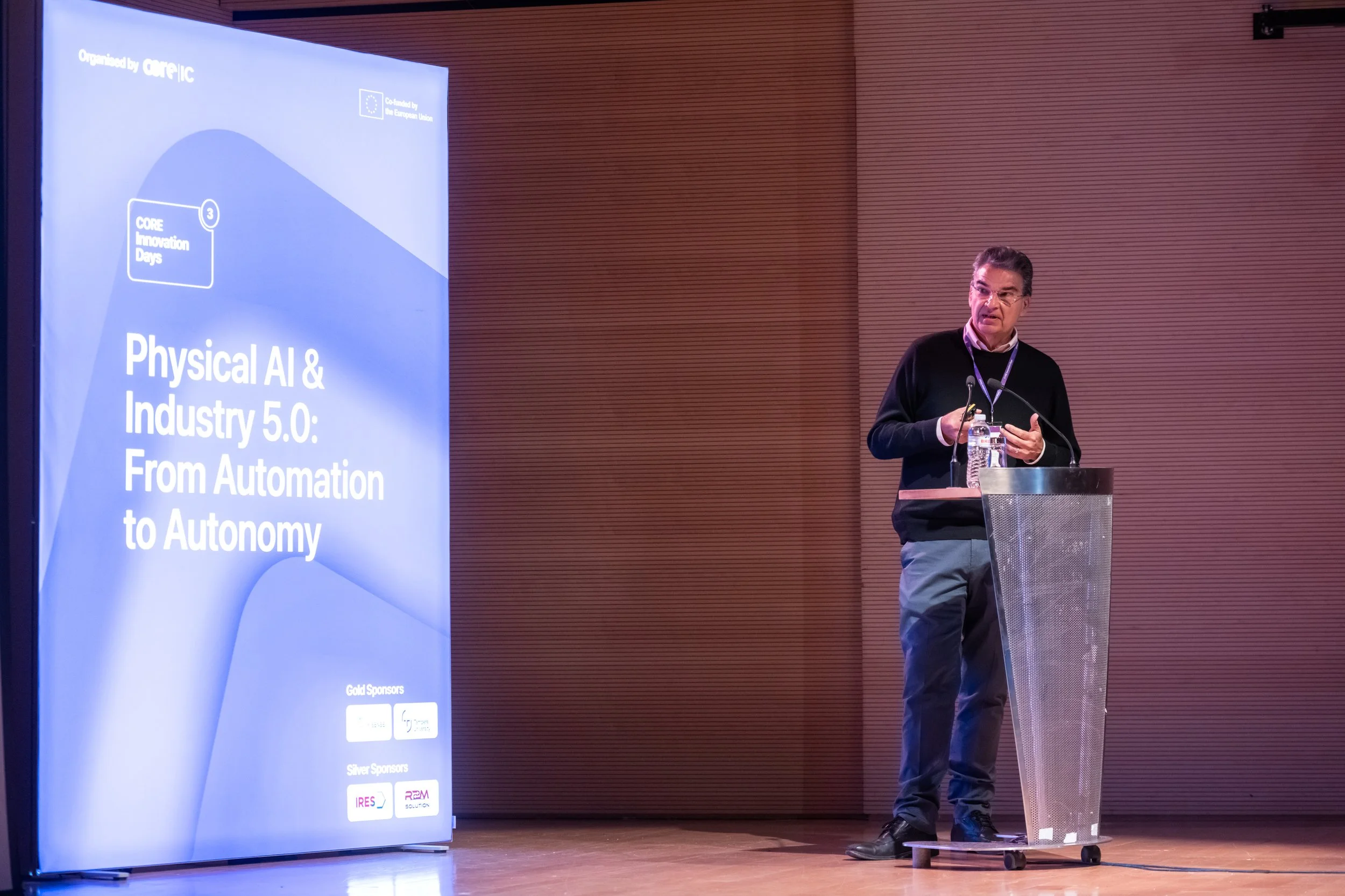
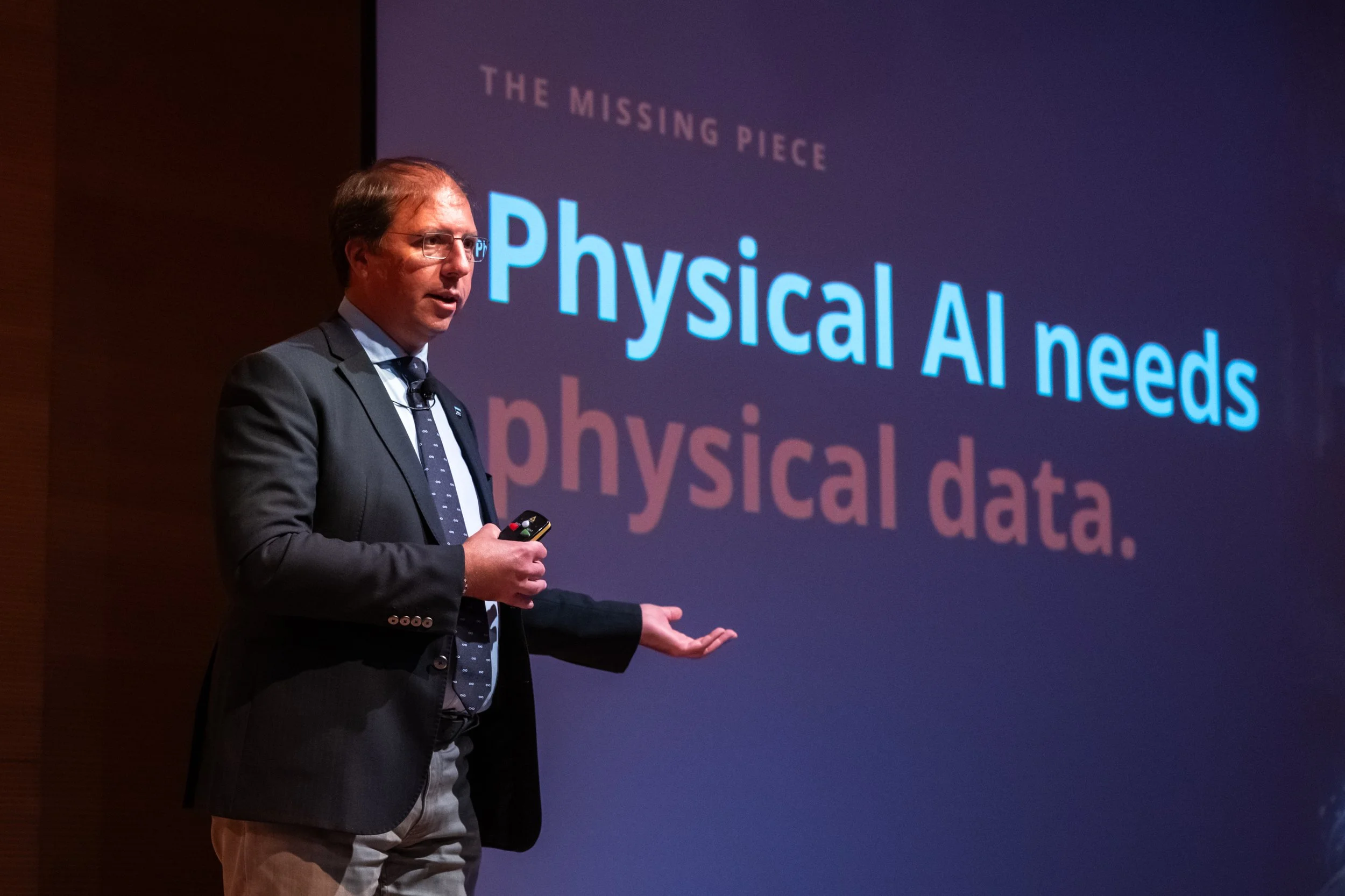
Dr. Costas Troulos (SEV Hellenic Federation of Enterprises) presented the Greek perspective on Physical AI.
Prof. Kostas Daniilidis (Athena Research Center & UPenn) explored the evolution from artificial to physical intelligence.
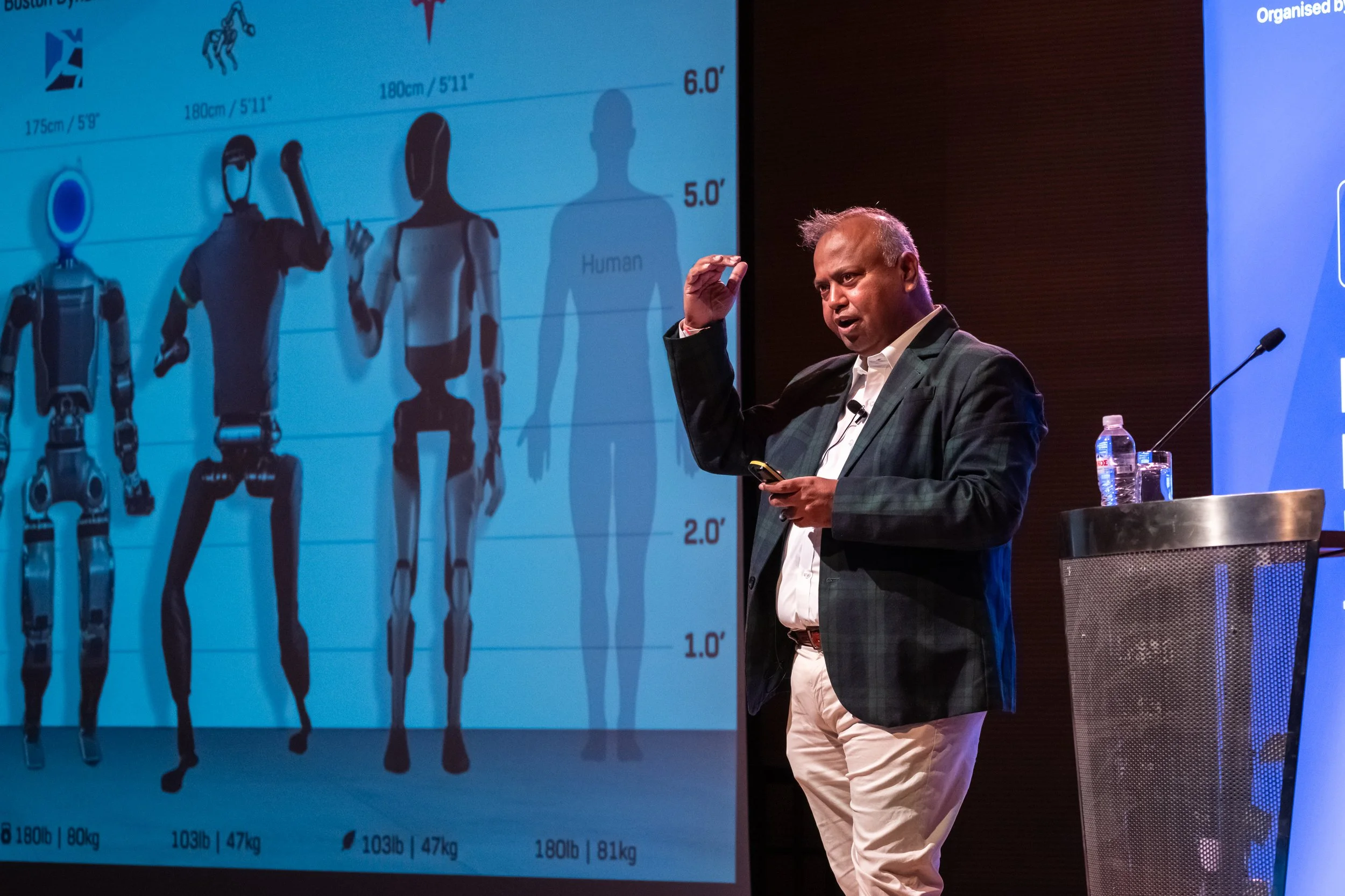
Dr. Milan Kumar (Datafaktory AG) discussed where embodied AI is already delivering tangible business value.
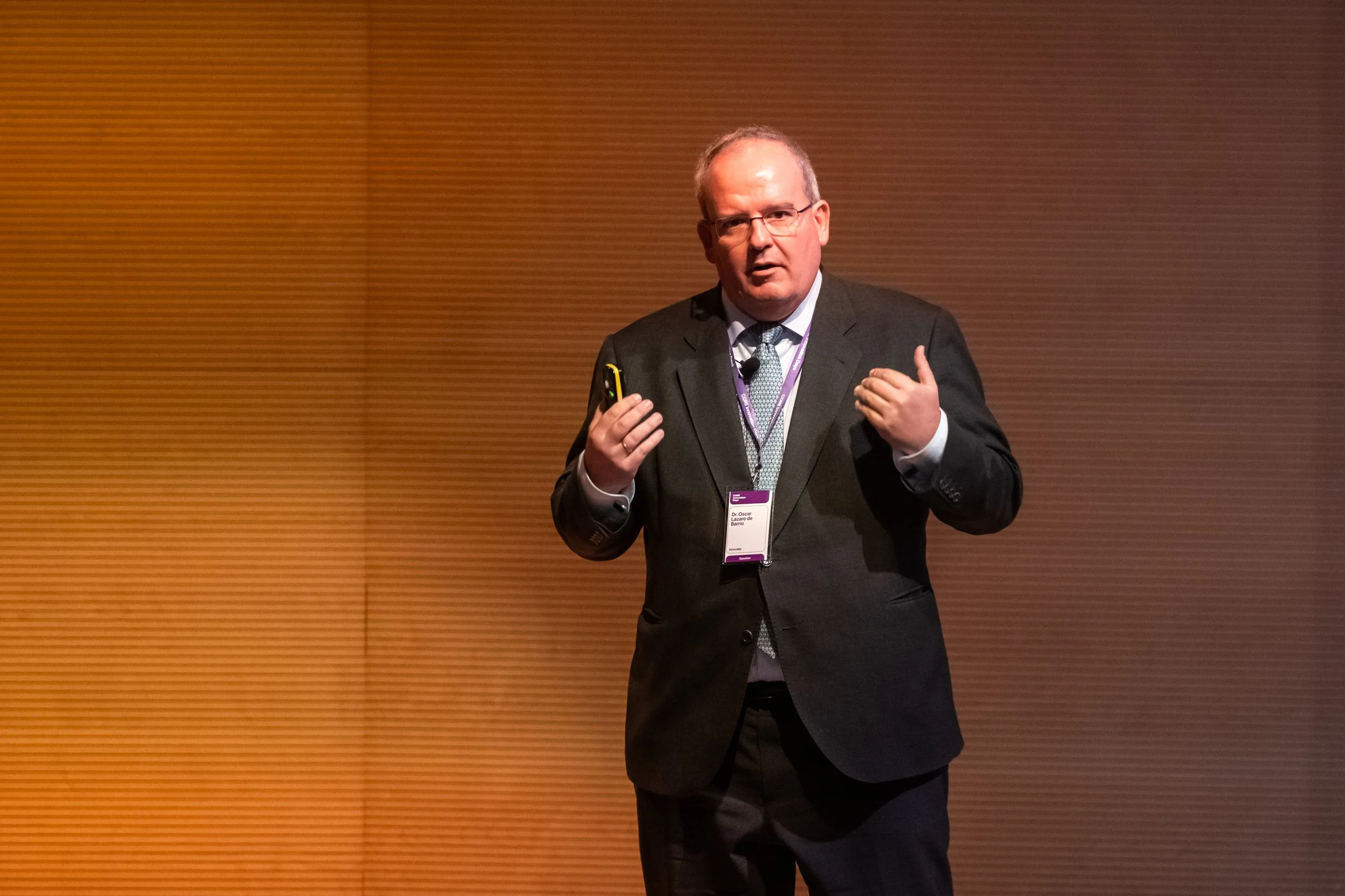
Dr. Oscar Lazaro de Barrio (Innovalia) highlighted the challenges of maintaining manufacturing competitiveness in a rapidly changing global landscape.
The session concluded with a fireside chat between Ioannis Sandis (CemAI, TITAN Group) and Stefanos Kokkorikos (Founding Partner, CORE Innovation Group). Their discussion addressed a question many manufacturers are still asking: if the technology is advancing so quickly, why is large-scale adoption taking so long?
Data ownership, integration with existing infrastructure, and the need to build trust with factory teams emerged as some of the key factors.
The New Co-Workers
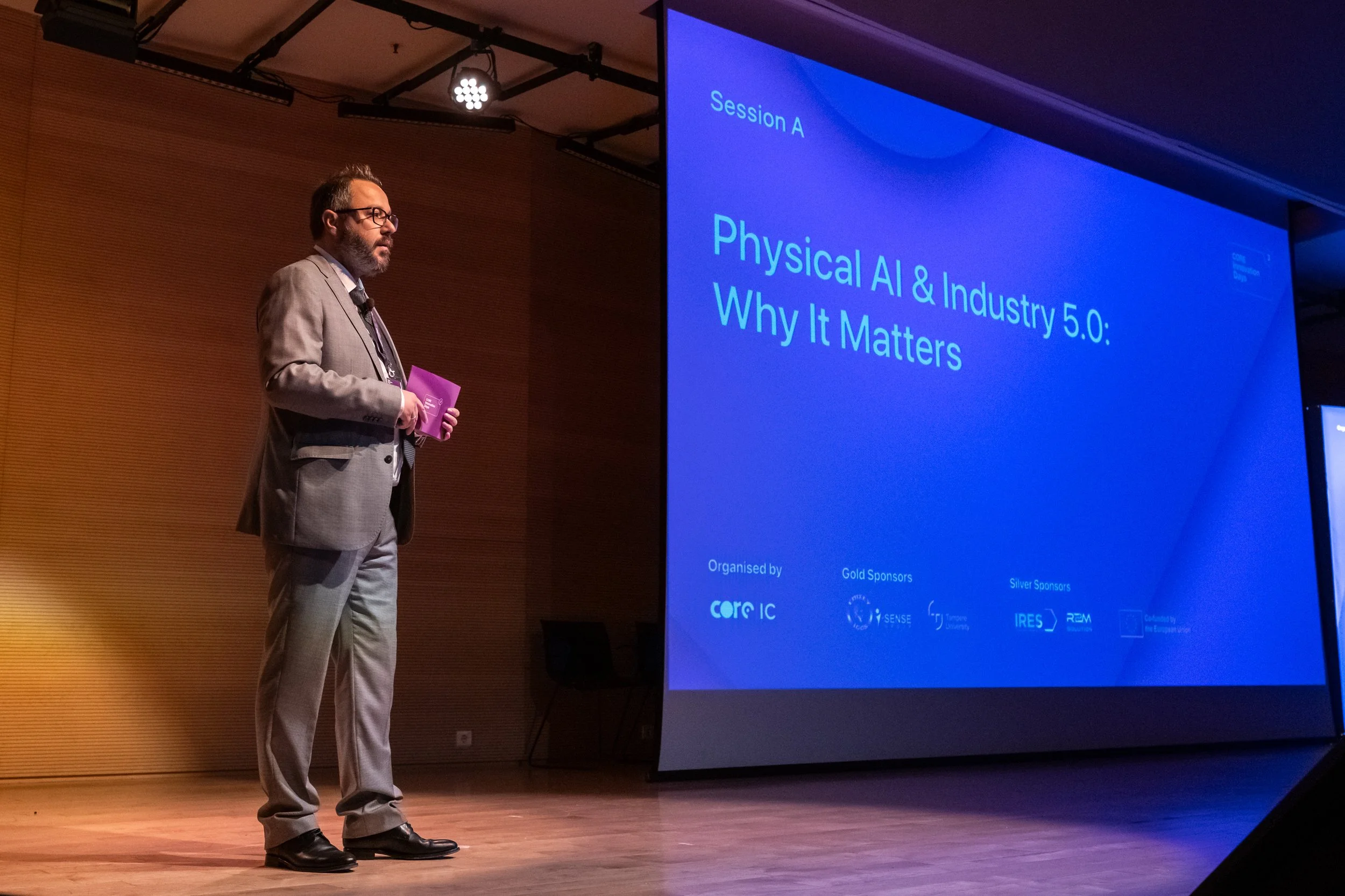
As AI becomes more closely integrated into industrial operations, the relationship between people and machines is also changing. The question is no longer simply what a robot can do, but how it can work alongside people safely, effectively, and in a way that supports rather than replaces human expertise.
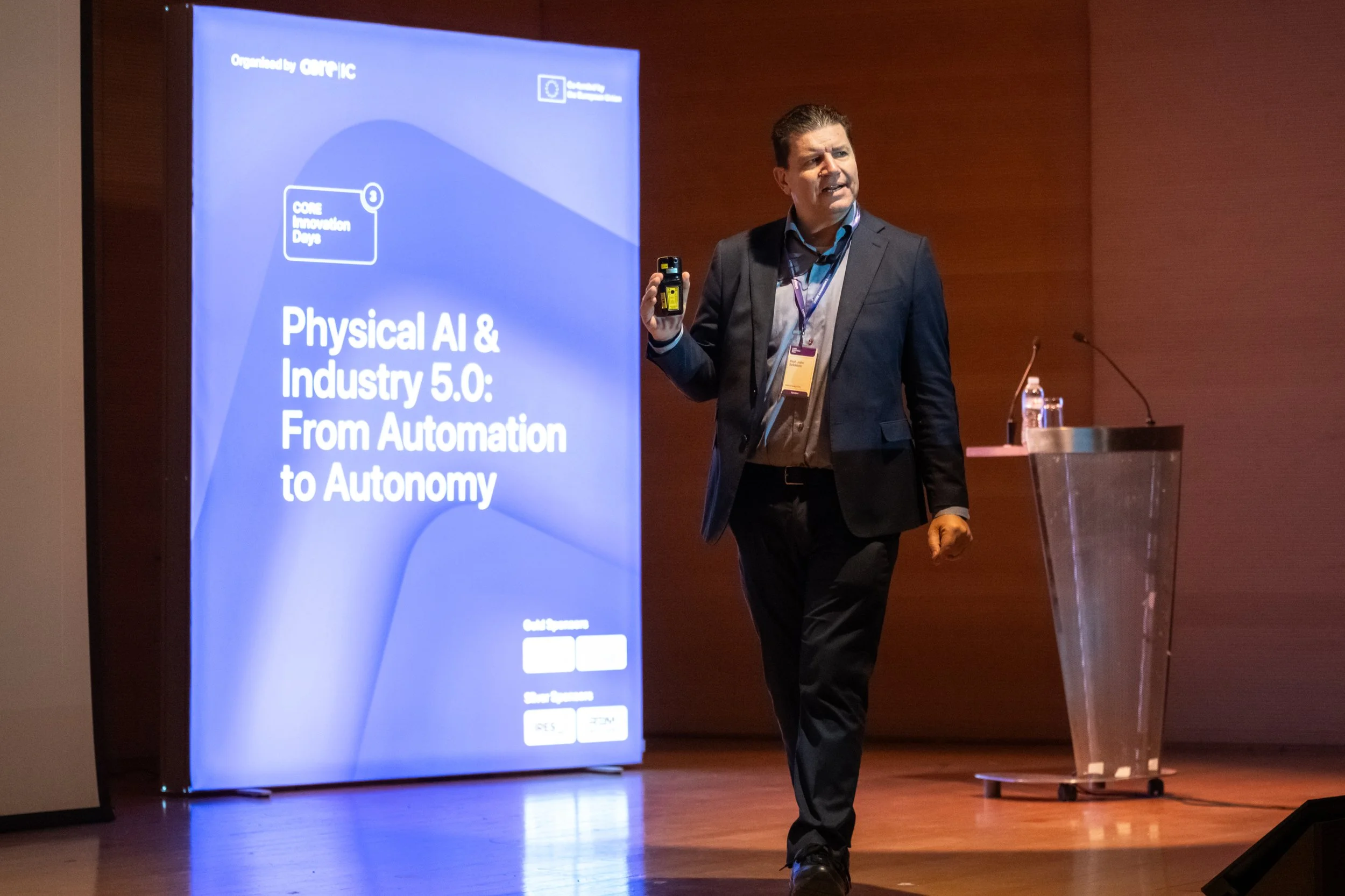
The second session explored this shift, focusing on AI agents, human-machine collaboration, and the systems needed to make these interactions work in practice.
Contributions included:
Prof. John Soldatos (Netcompany) on introducing AI agents as new co-workers in the factory.
Prof. Iñigo Flores Ituarte (Tampere University) on AI-orchestrated design-to-manufacturing.
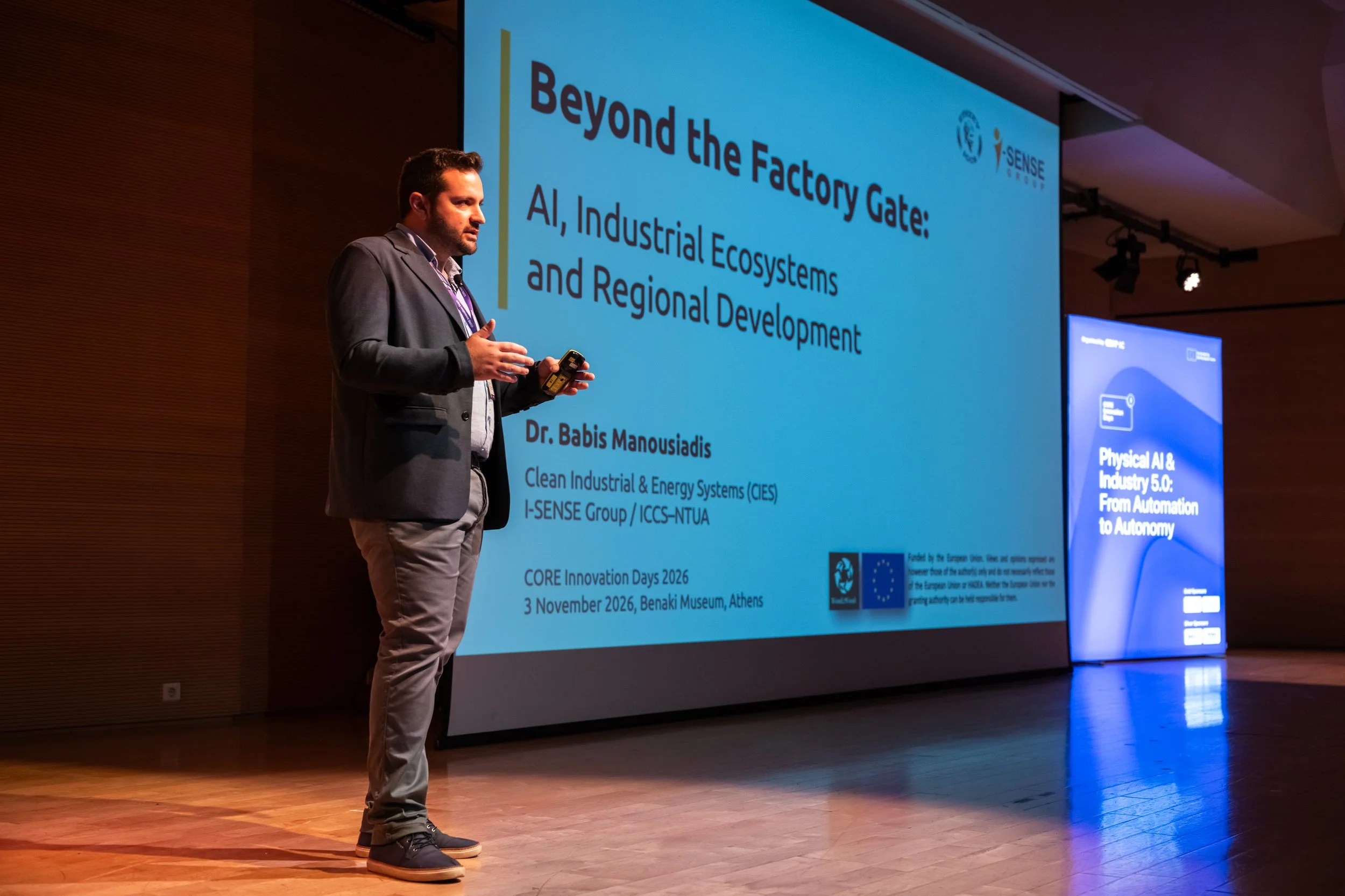
Dr. Babis Manousiadis (I-SENSE Group, ICCS) on extending AI applications beyond individual factories and into regional ecosystems.
Dr. Francesca Flamigni (TTTech Systems SE) on software-defined systems.
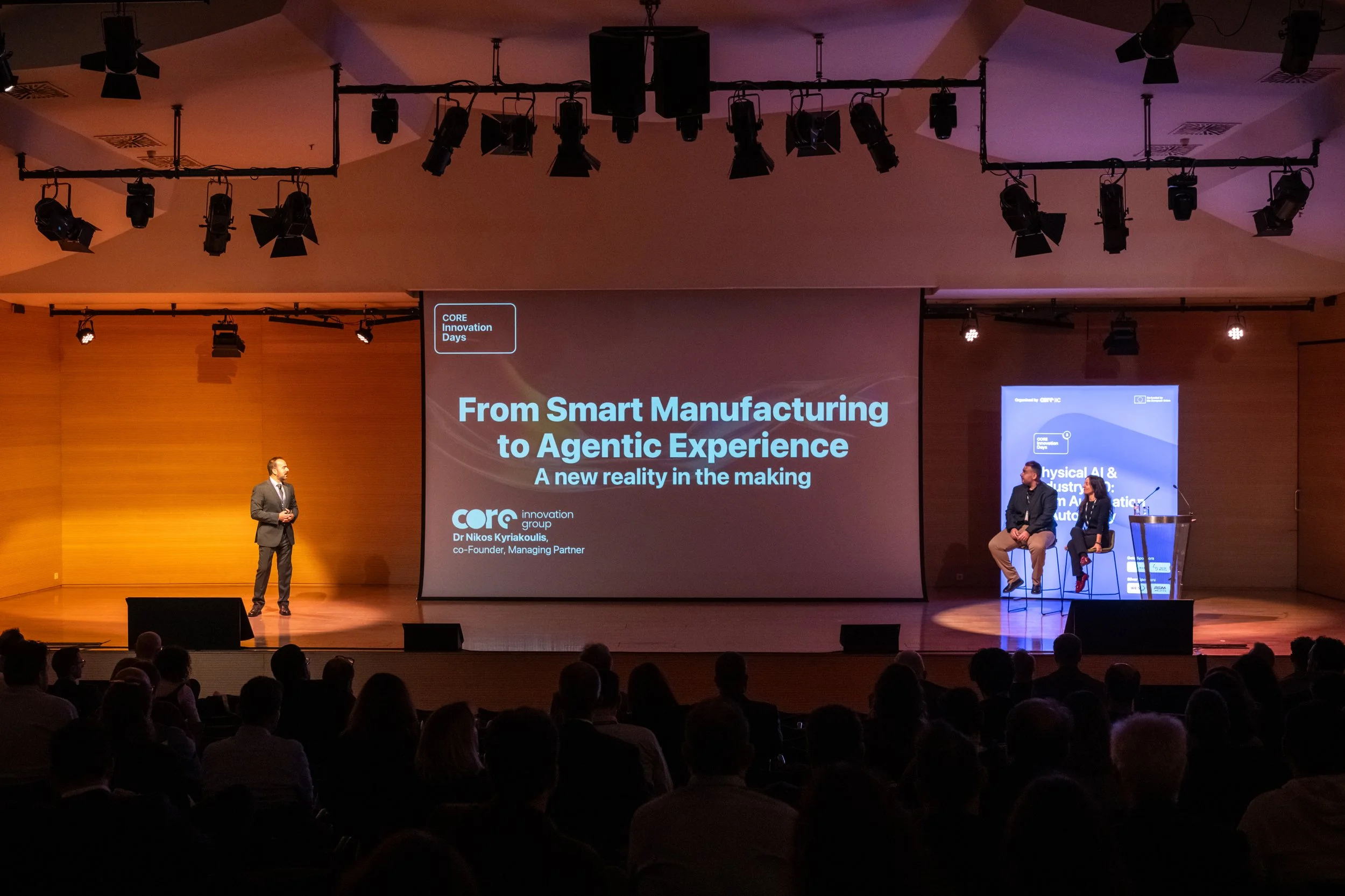
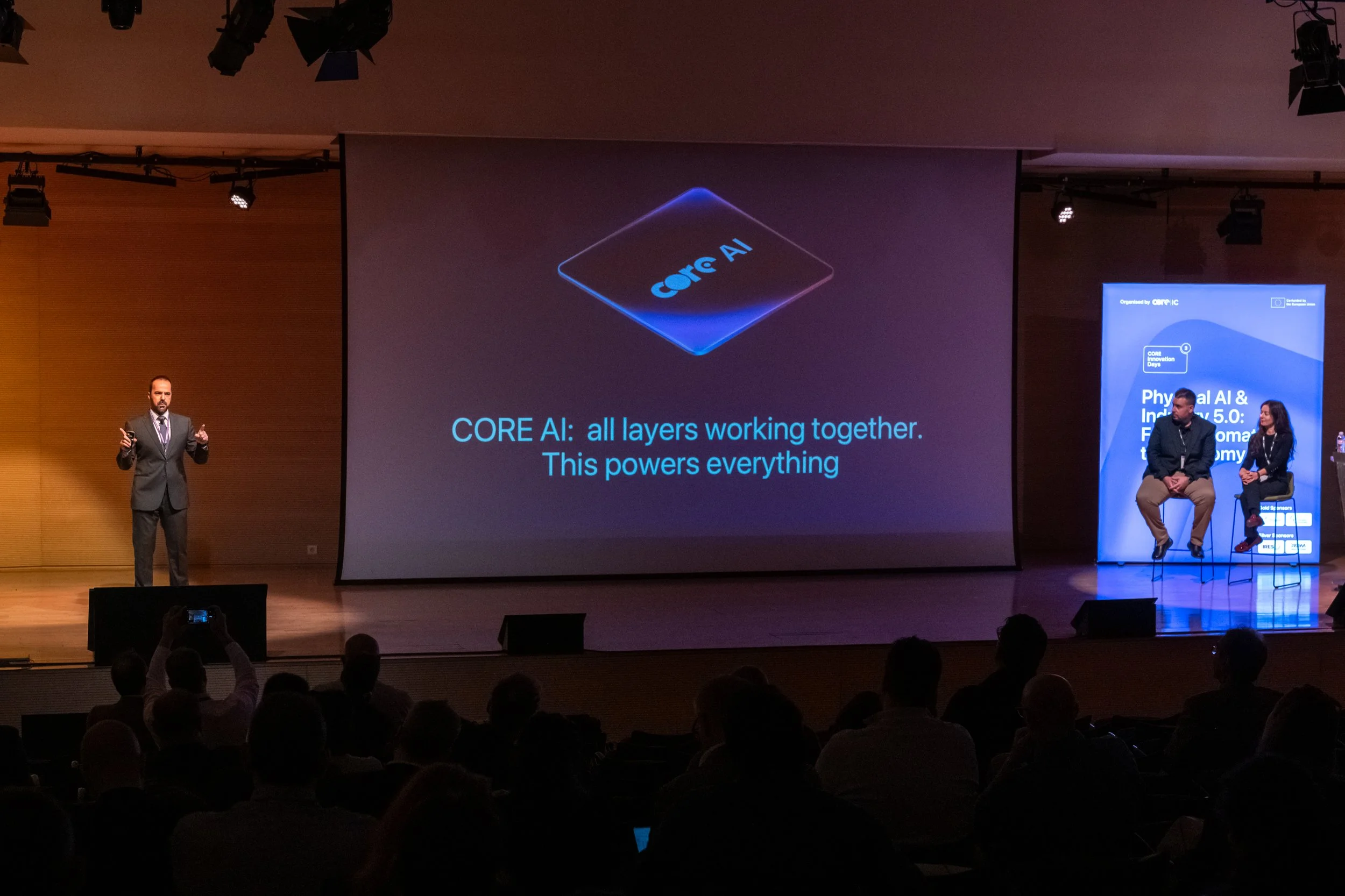
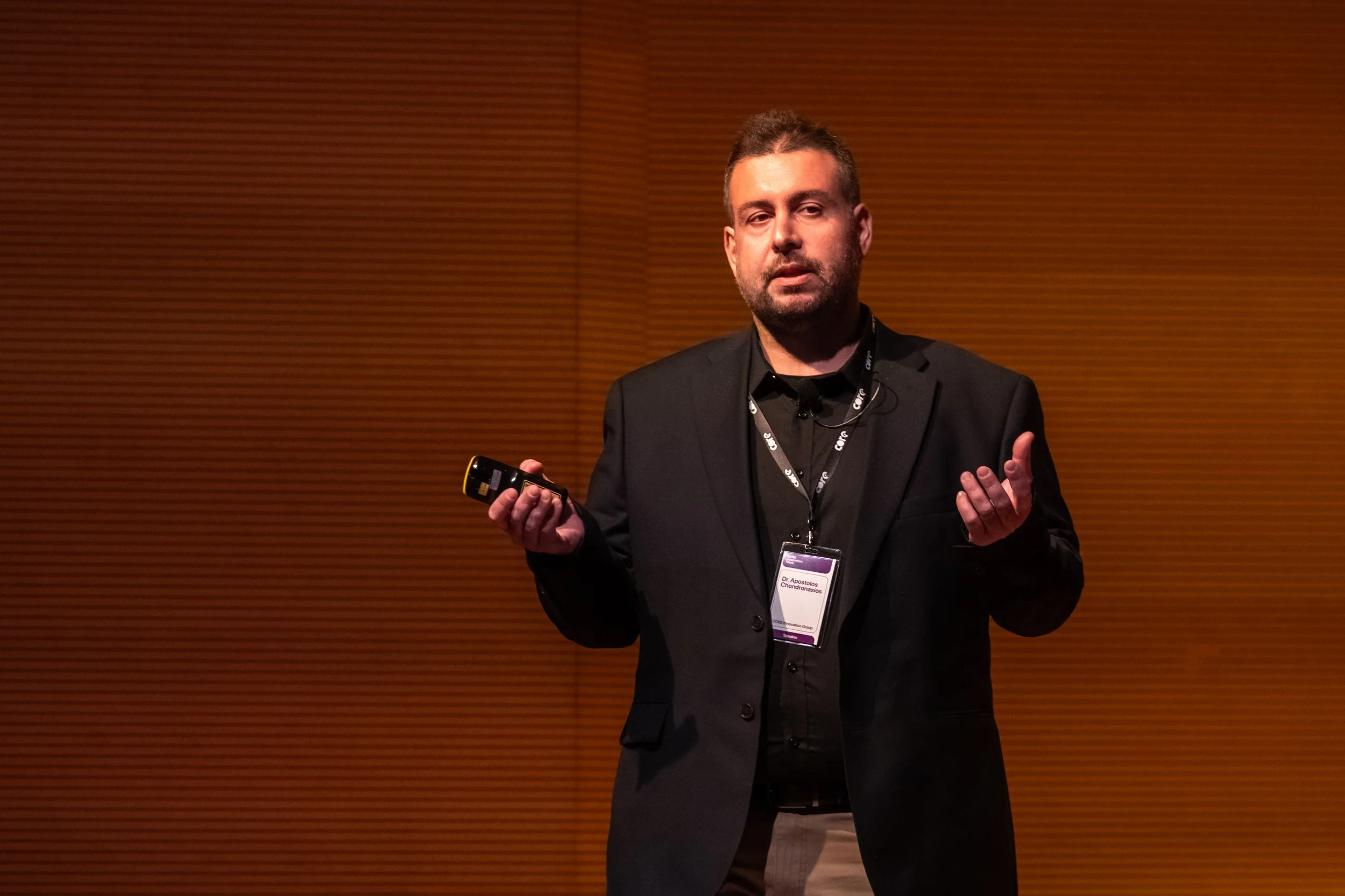
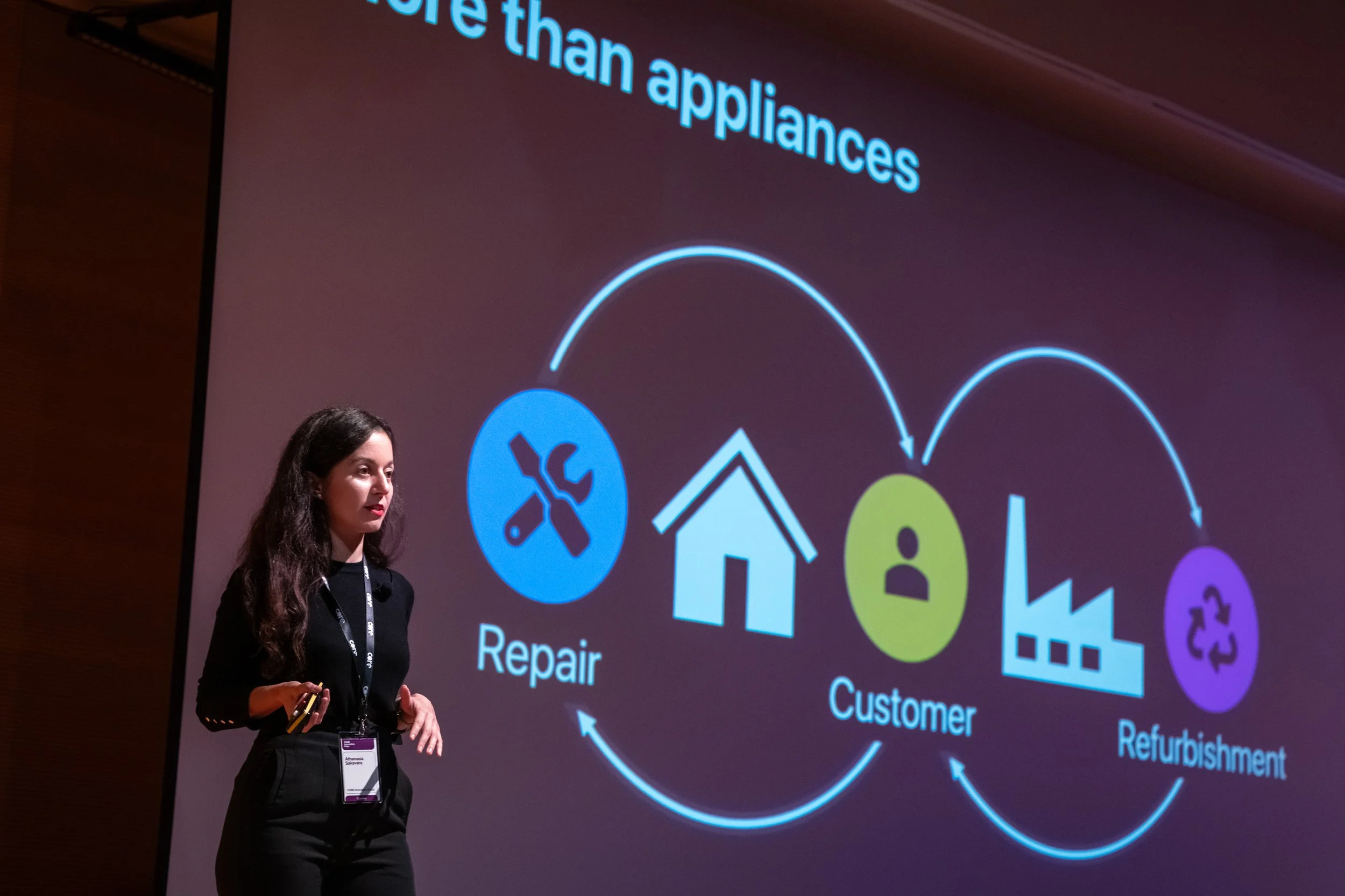
Dr. Nikos Kyriakoulis, Athanasia Sakavara, and Dr. Apostolos Chondronasios (CORE Innovation Group) on the transition from smart manufacturing to agentic experiences.
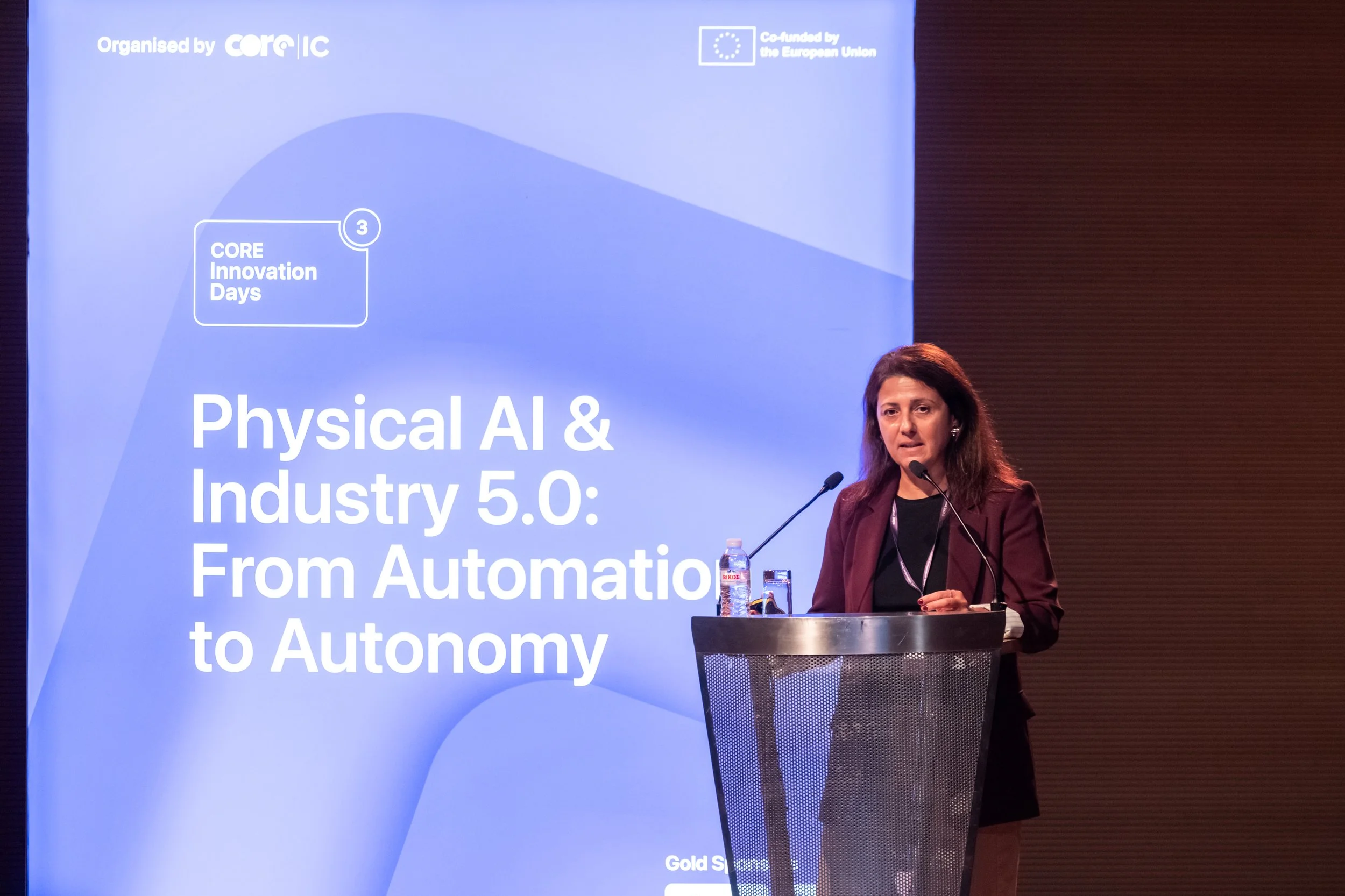
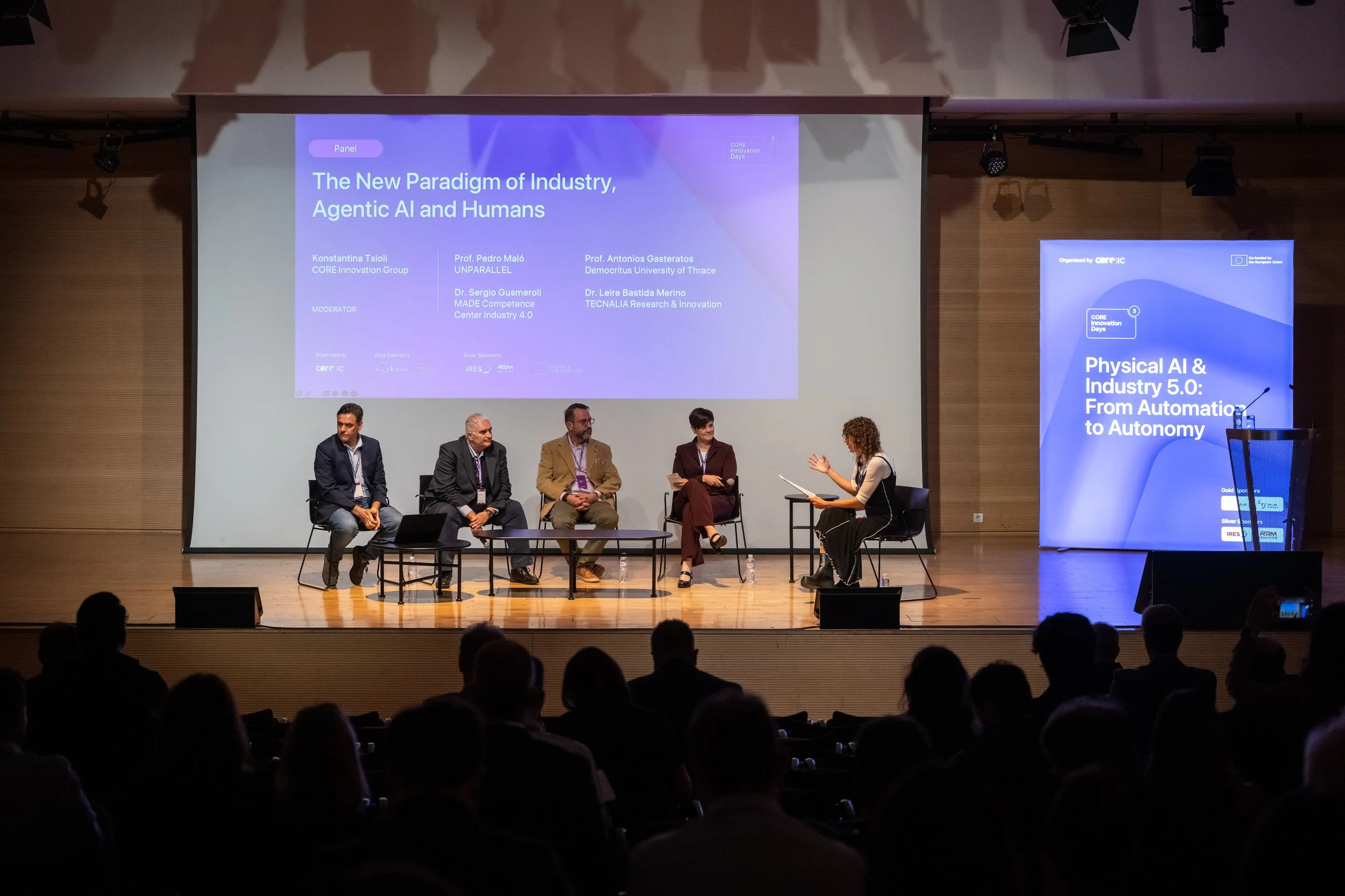
The conversation continued in a panel titled “The New Paradigm of Industry, Agentic AI and Humans” moderated by Konstantina Tsioli (CORE Innovation Group), which brought together Prof. Pedro Maló (UNPARALLEL), Dr. Sergio Gusmeroli (MADE Competence Center), Prof. Antonios Gasteratos (Democritus University of Thrace), and Dr. Leire Bastida (TECNALIA).
Together, they examined what these developments mean for the industrial workforce and how organisations can prepare people for increasingly collaborative working environments.
When Machines Adapt
In the afternoon, the focus shifted to robotics and the ability of machines to respond to changing conditions rather than simply follow predefined instructions.
The session brought the discussion closer to the physical side of Physical AI, highlighting both the progress being made in adaptive robotics and the practical challenges of connecting new technologies with existing industrial systems.
Speakers included:
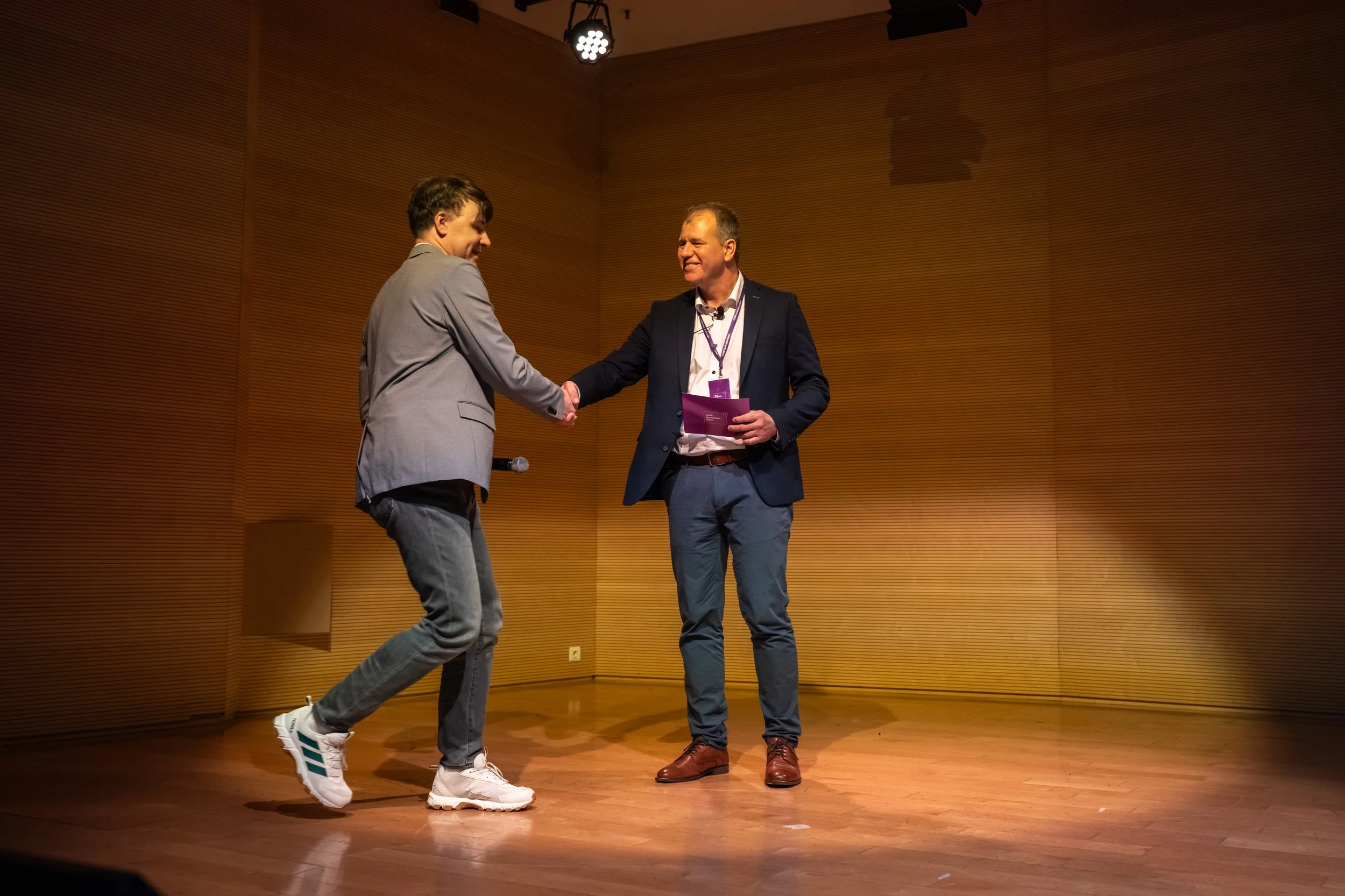
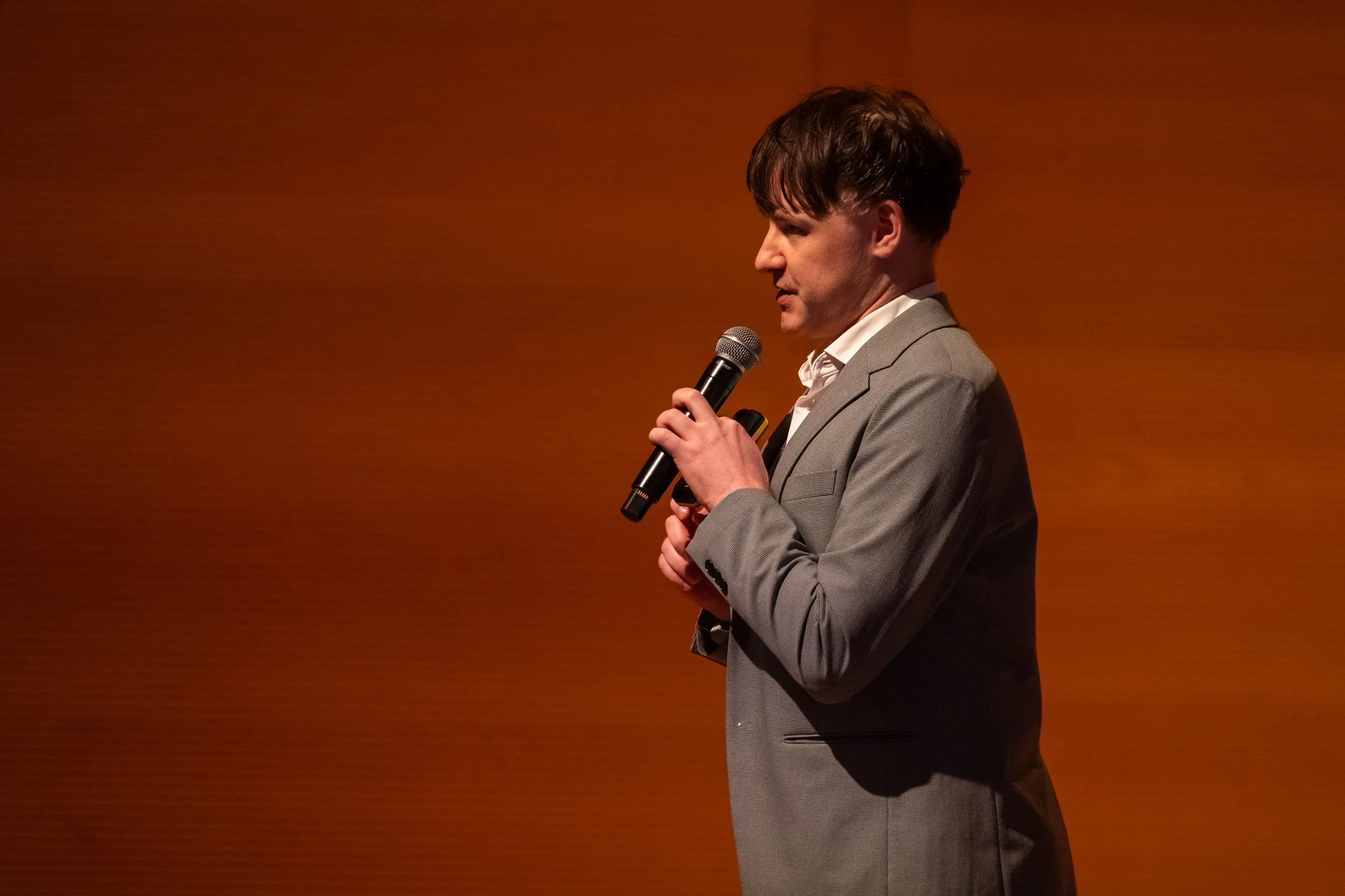
Dr. Dominic Gorecky (Swiss Smart Factory) on the next frontier of Industry 5.0.
Nick Arapkoules (Axl Imperial) sharing insights into the development of a humanoid robot in just six months.
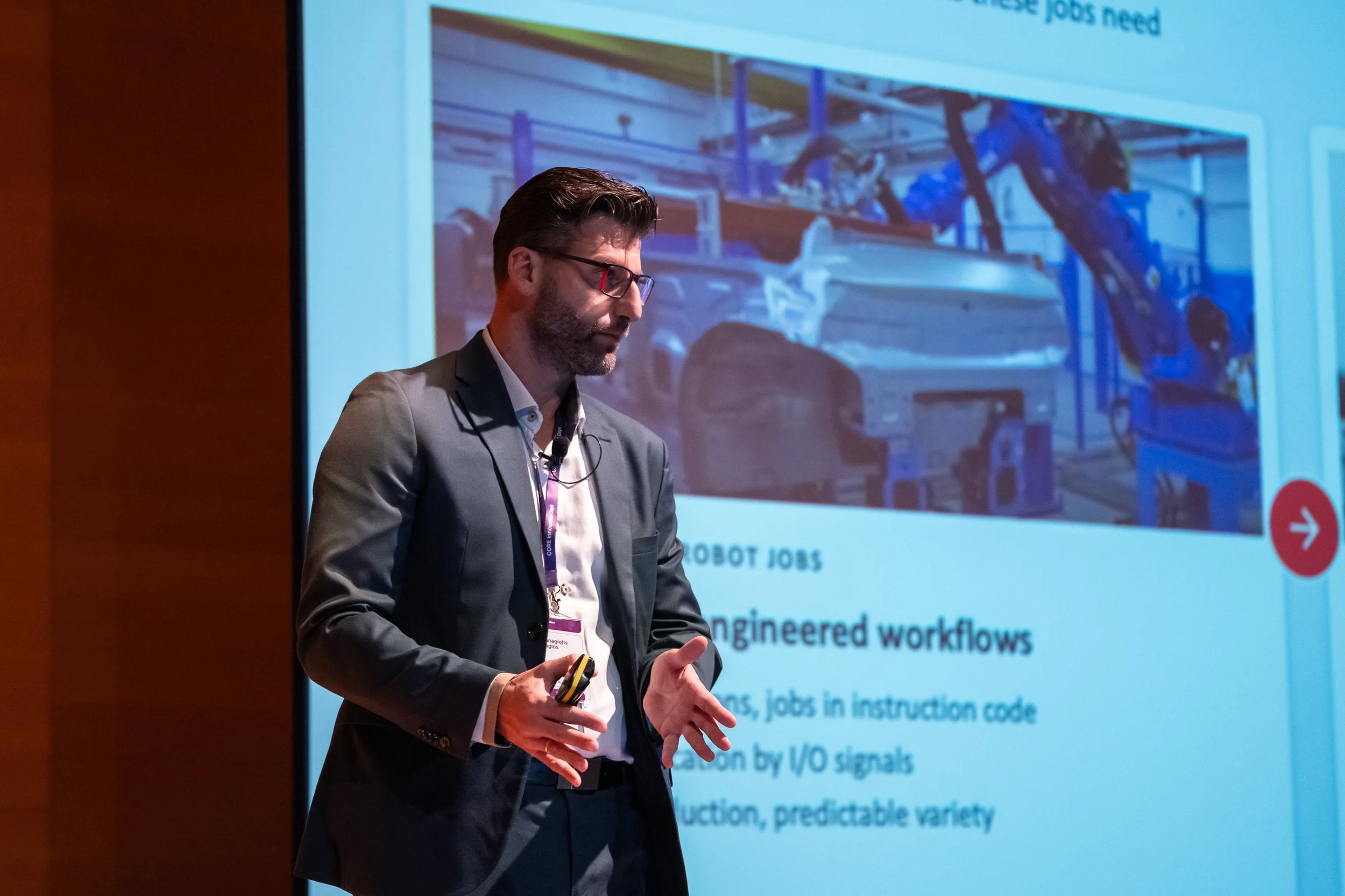
Panagiotis Lagios (Octopus Automation) on the shift from programmed to adaptive robotics.
Fotis Dimeas (Progressive Robotics) explaining why even 99.9% reliability may not be sufficient for logistics automation.
Dr. Jacopo Cassina (Syxis) on transforming traditional heavy machinery into intelligent agents.
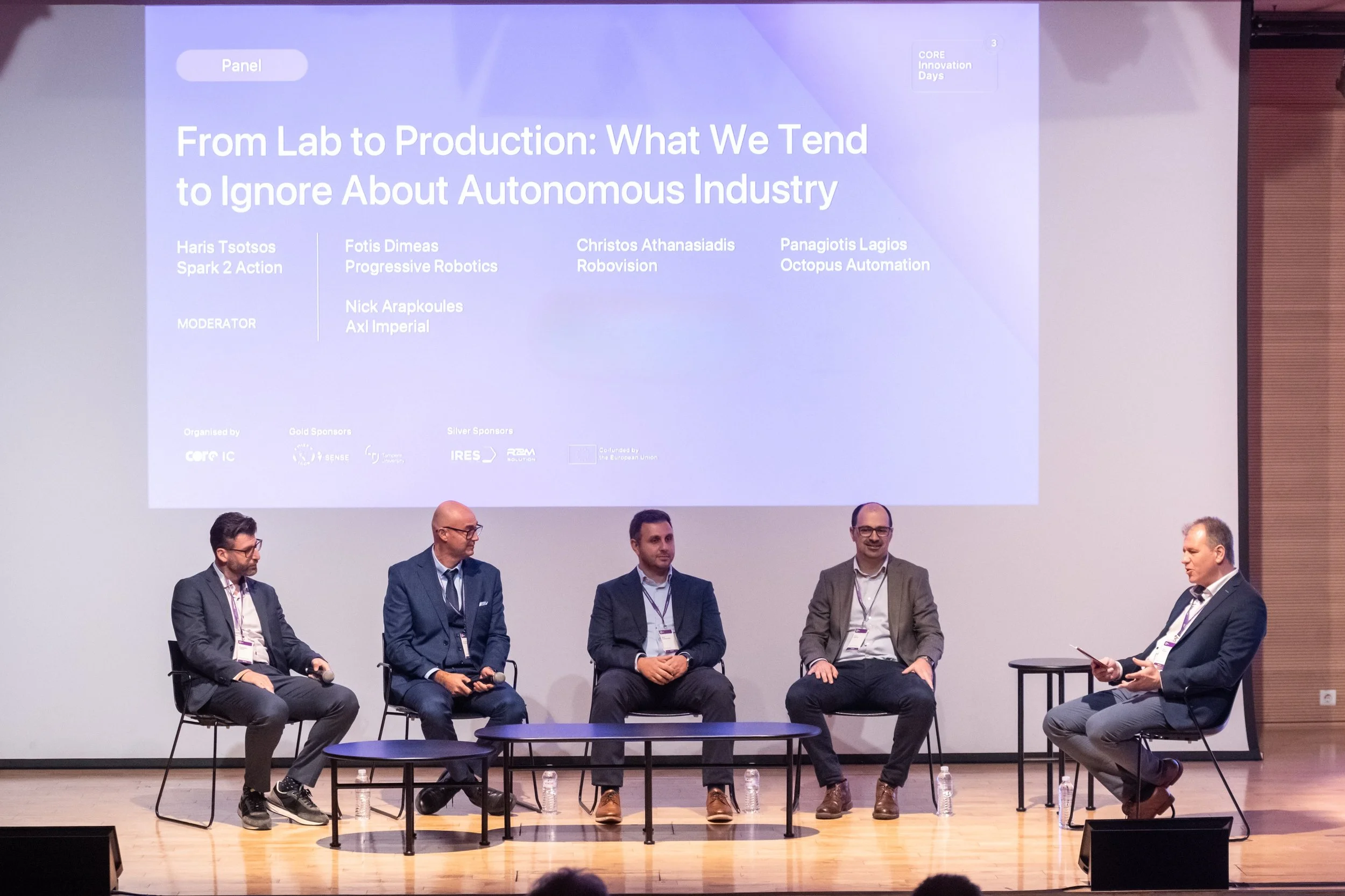
Then, the panel “From Lab to Production: What We Tend to Ignore About Autonomous Industry” moderated by Haris Tsotsos (Spark 2 Action) brought together Fotis Dimeas (Progressive Robotics), Nick Arapkoules (Axl Imperial), Christos Athanasiadis (Robovision), and Panagiotis Lagios (Octopus Automation).
Rather than focusing solely on what robotics could achieve, the discussion offered a more grounded perspective on what happens when robots enter real production environments, where reliability, compatibility, and unexpected situations quickly become part of the equation.
Earning Autonomy in Heavy Industry
The final session turned to some of the most demanding industrial environments: cement production, copper manufacturing, and heavy logistics.
In these settings, introducing new technologies requires particular care. Production cannot simply stop while a new system is tested, and the consequences of failure can be significant. This makes the transition towards autonomy a gradual process, built on operational experience, reliable integration, and close collaboration between technology providers and industrial teams.
The session featured:
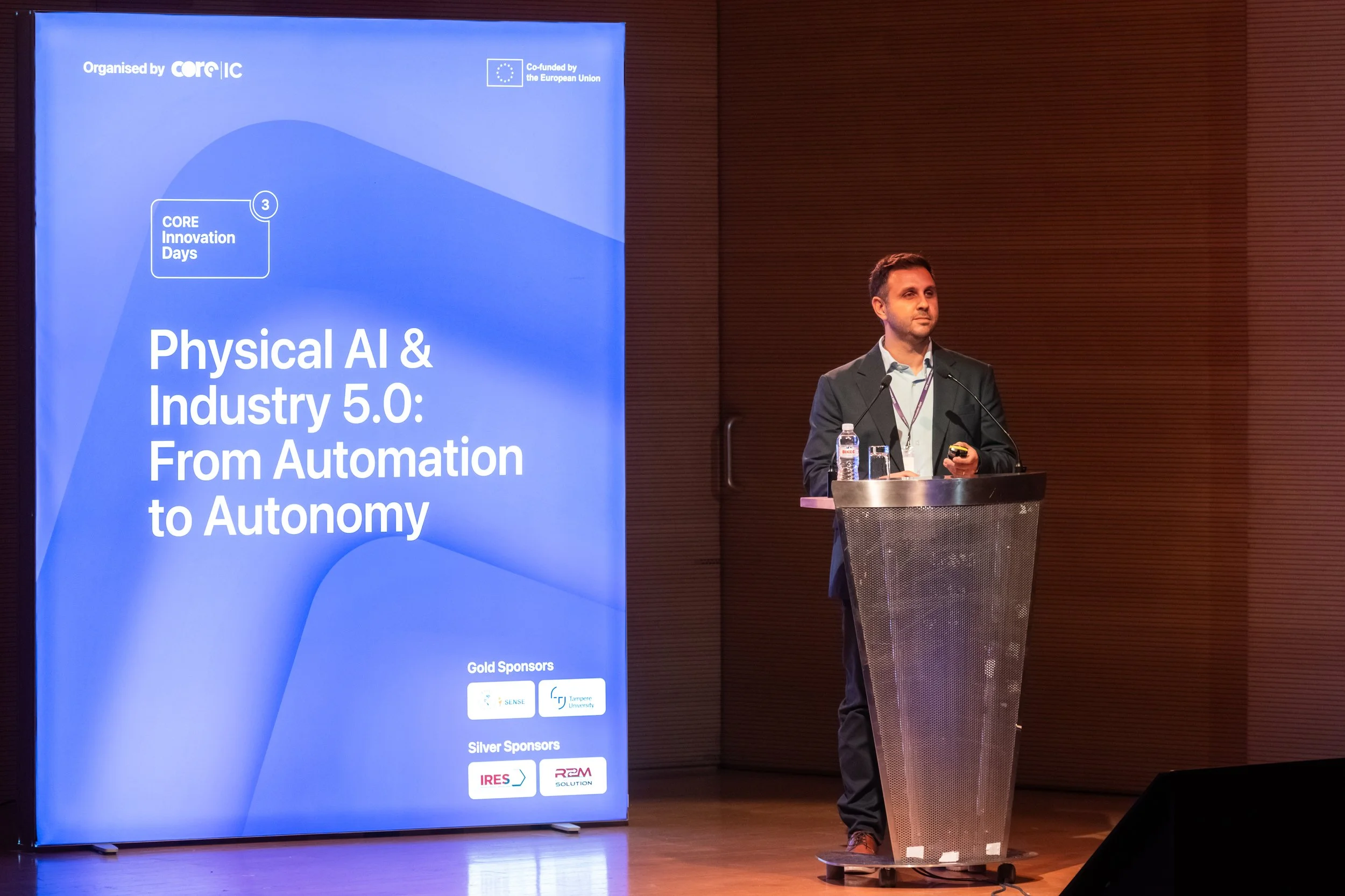
Ioannis Sandis (CemAI, TITAN Group) on optimising cement production while keeping people and teams at the centre of the process.
Dr. Panagiota Tsarouchi (HALCOR) sharing the journey of a copper manufacturer towards adaptive manufacturing.
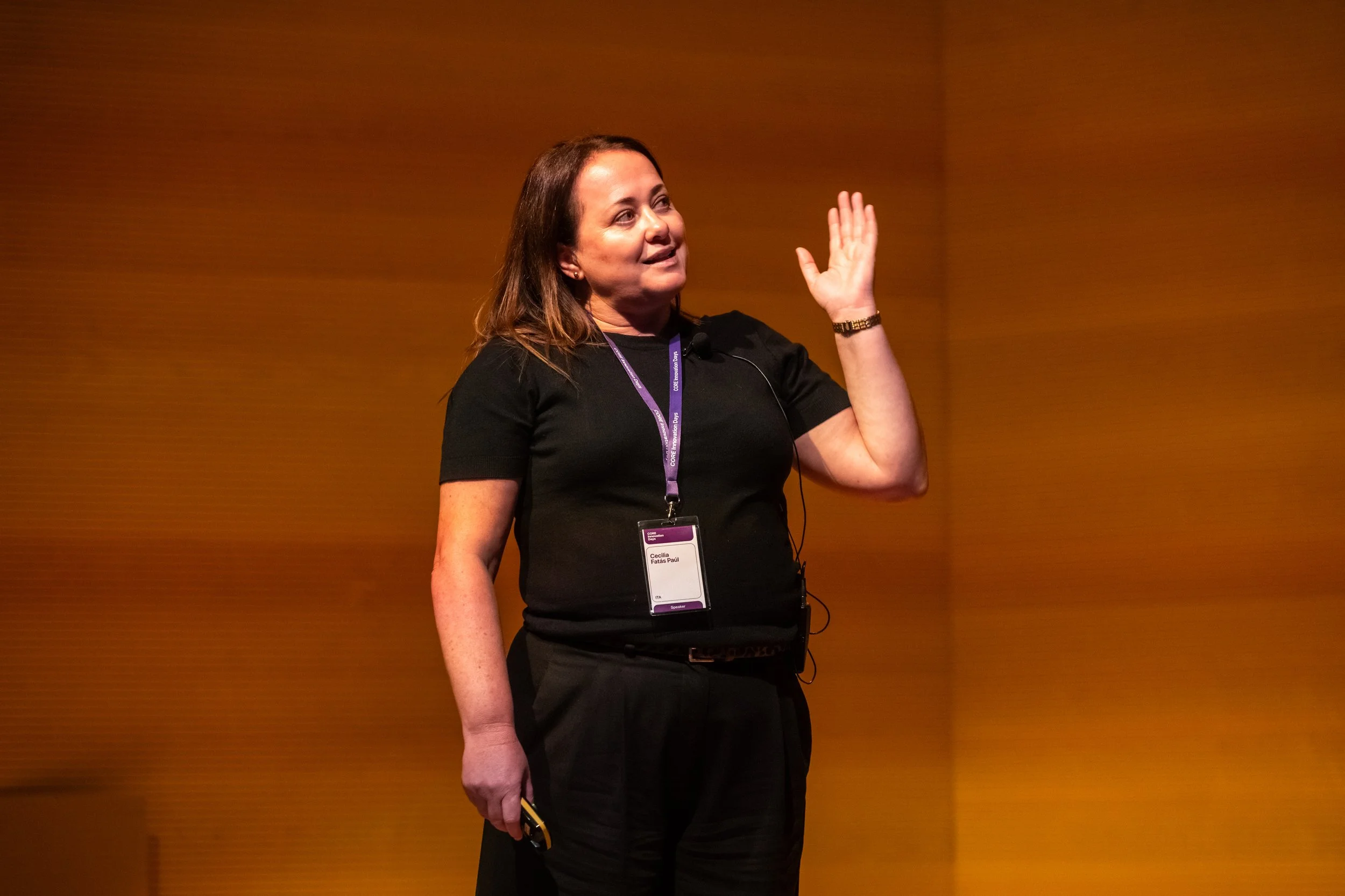
Cecilia Fatás Paúl (ΙΤΑ) exploring the underlying architecture of intelligent industrial systems.
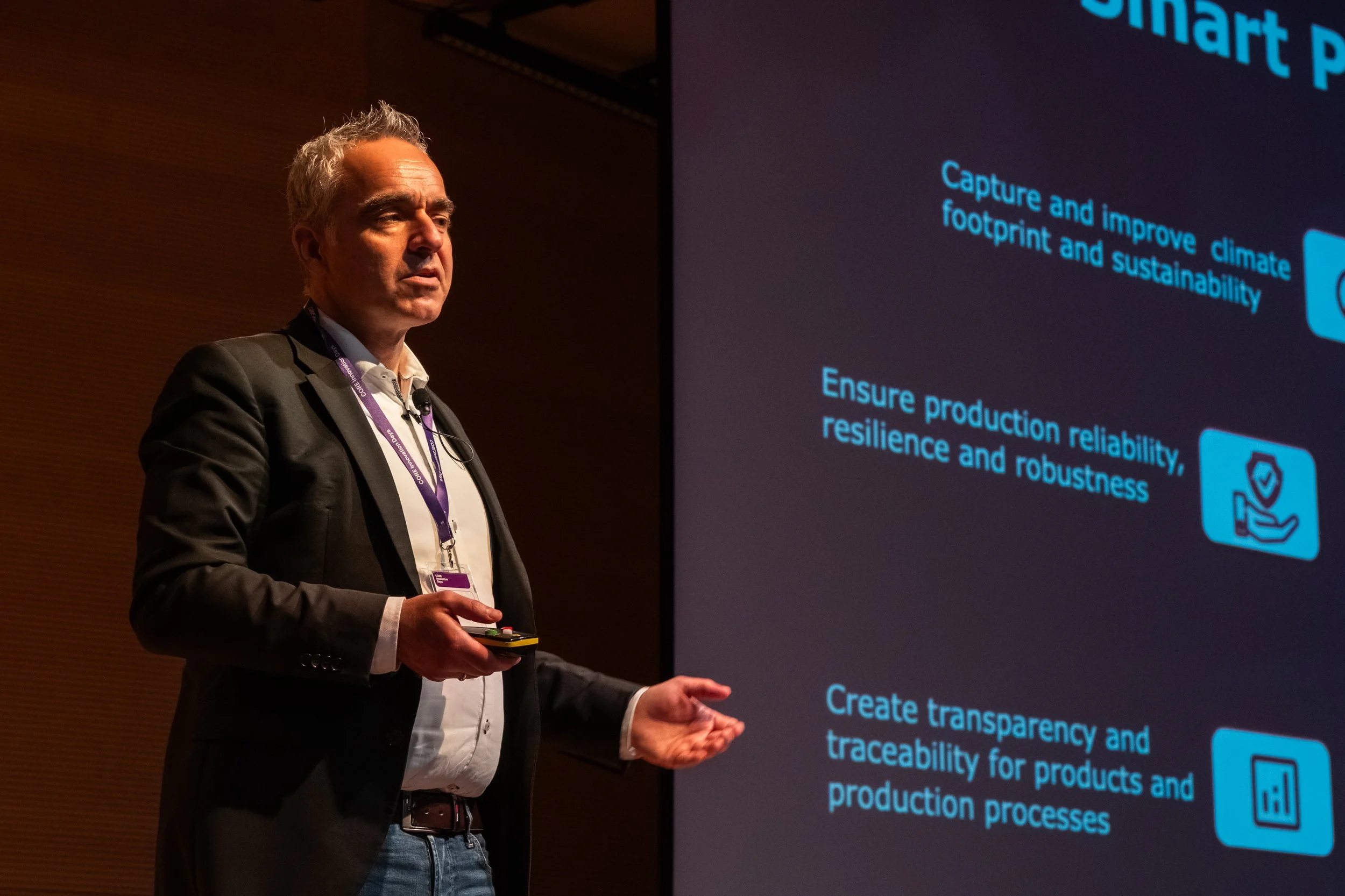
Niki Nicolas Grigoriou (Intelligent Systems A/S) discussing the practical challenges of implementing smart production.
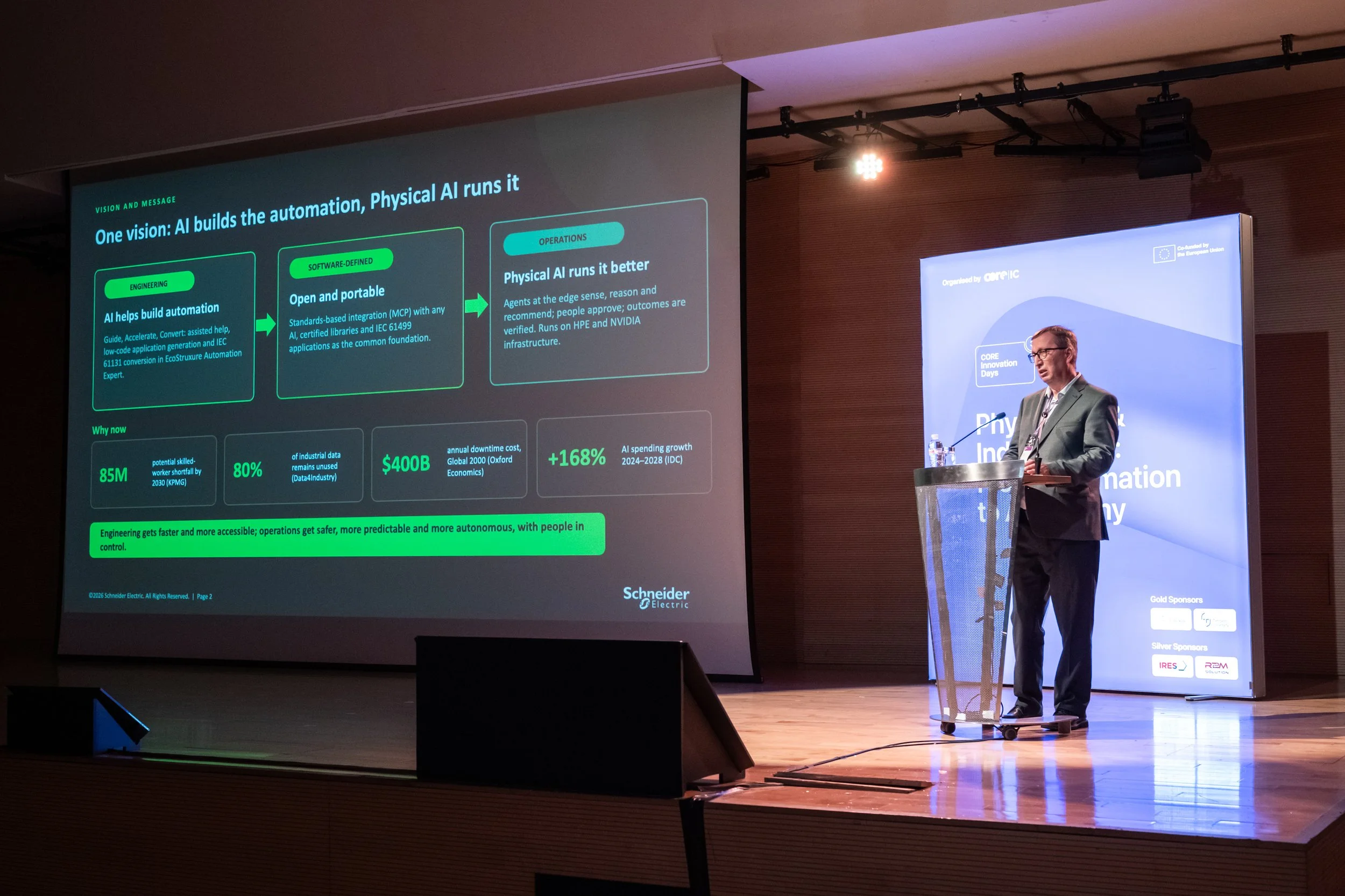
Artur Fritz (nxtControl, Schneider Electric) addressing the connection between engineering and operations.
The session was moderated by Nikos Frangakis (CORE Innovation Group).
The discussions reinforced an important point: in heavy industry, autonomy is not something that can be introduced overnight. It has to be developed, tested, and proven in the environments where it is expected to operate
The Demo Area: Seeing the Technology in Action
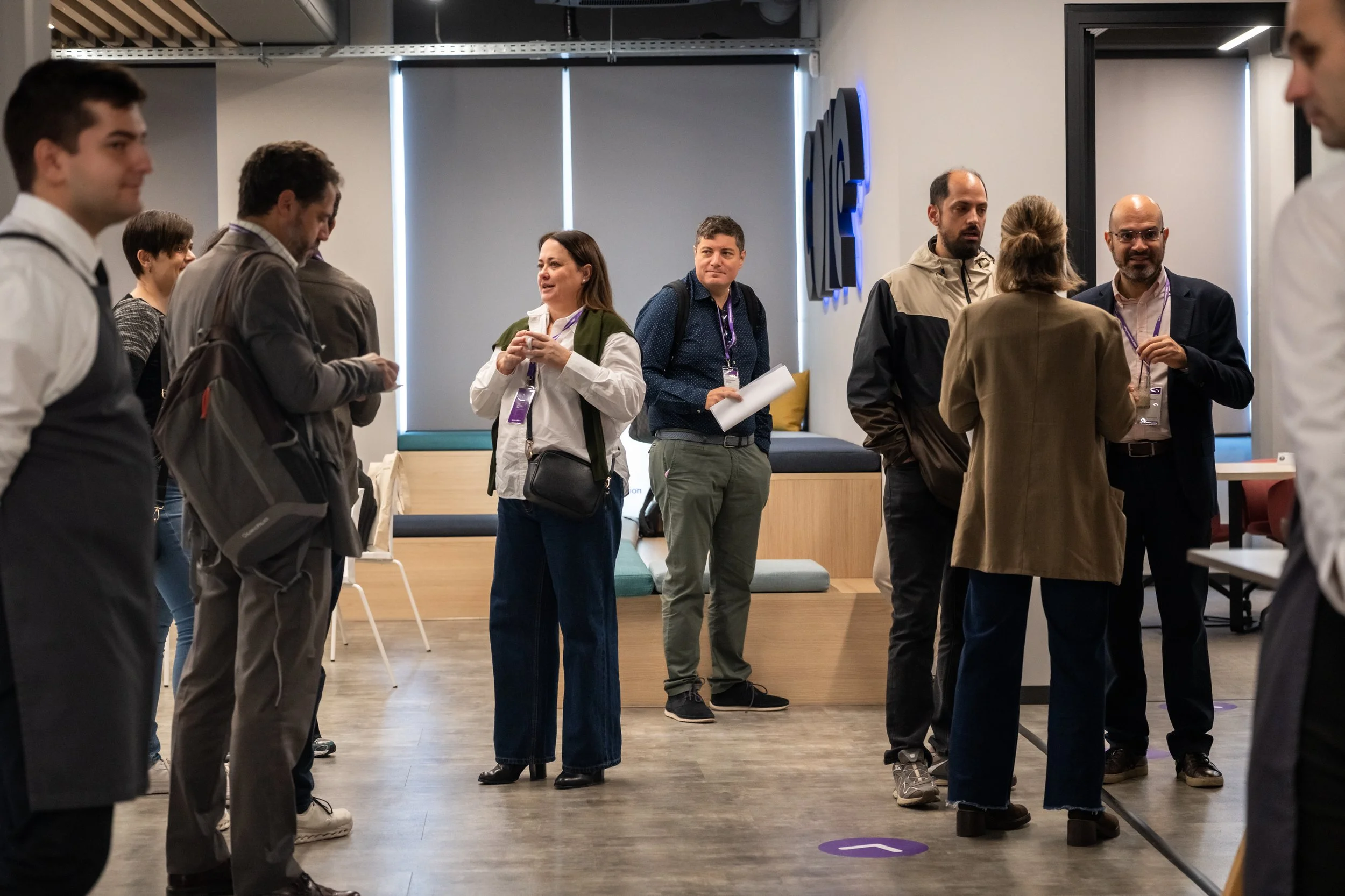
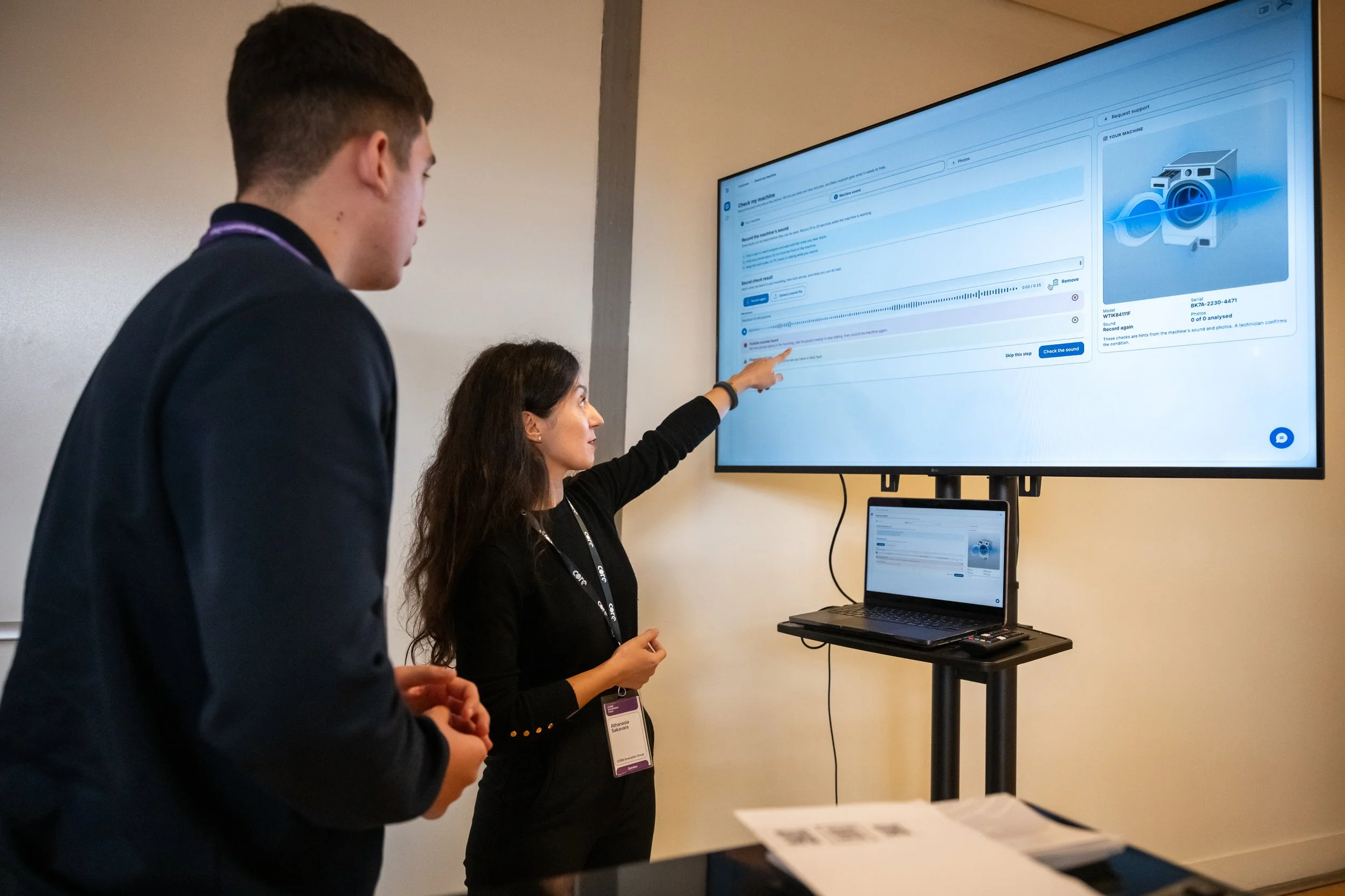
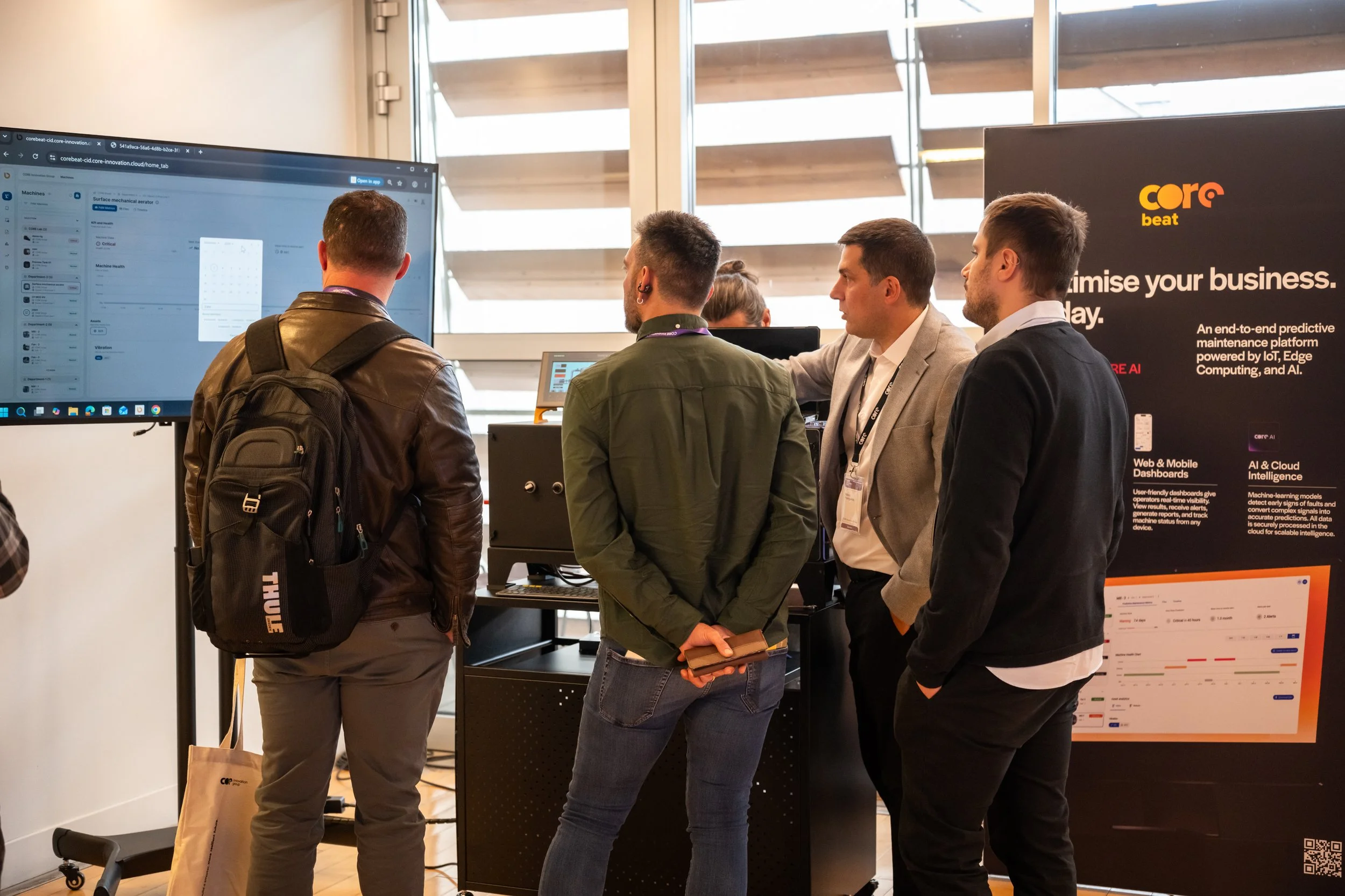
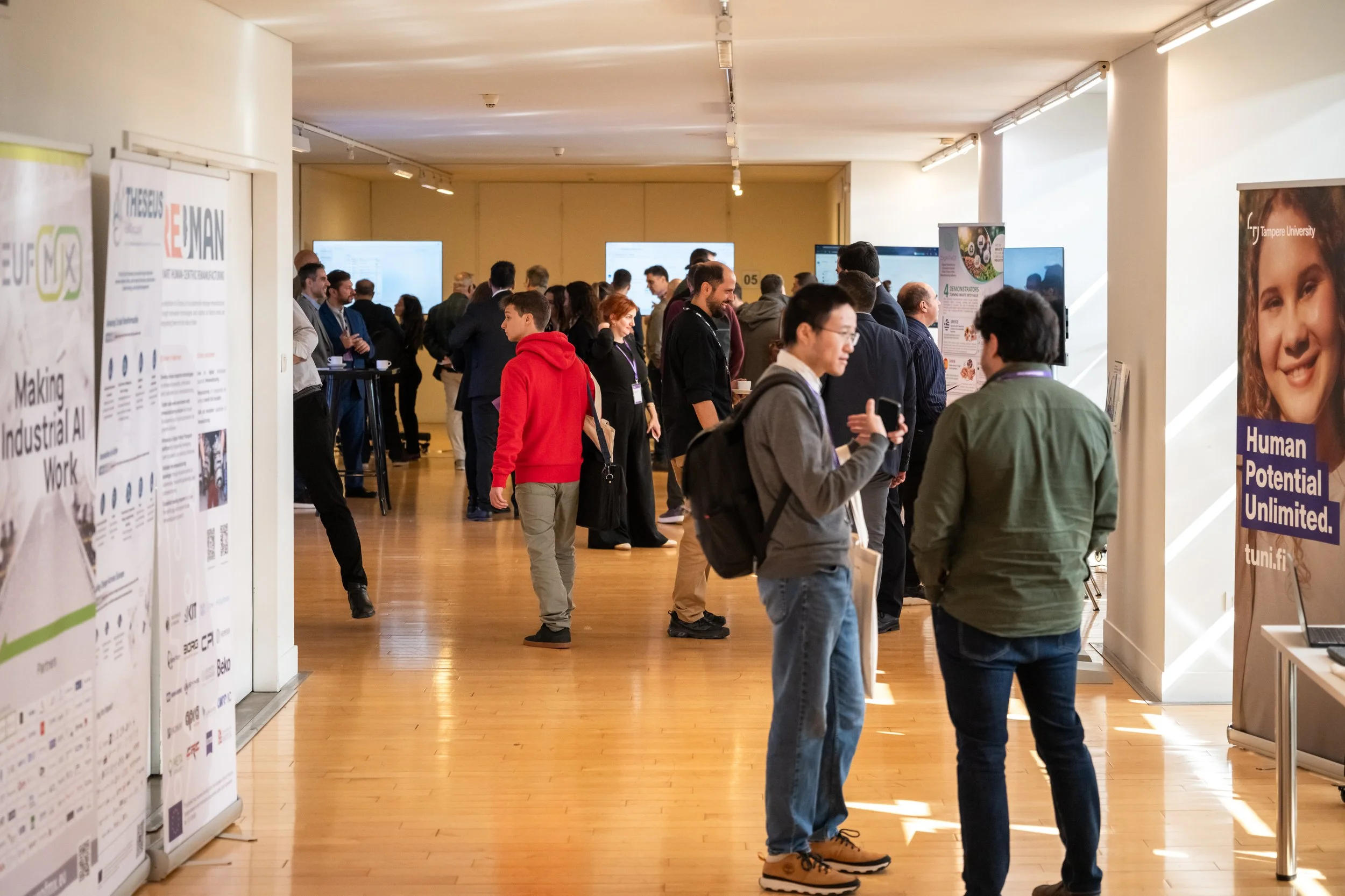
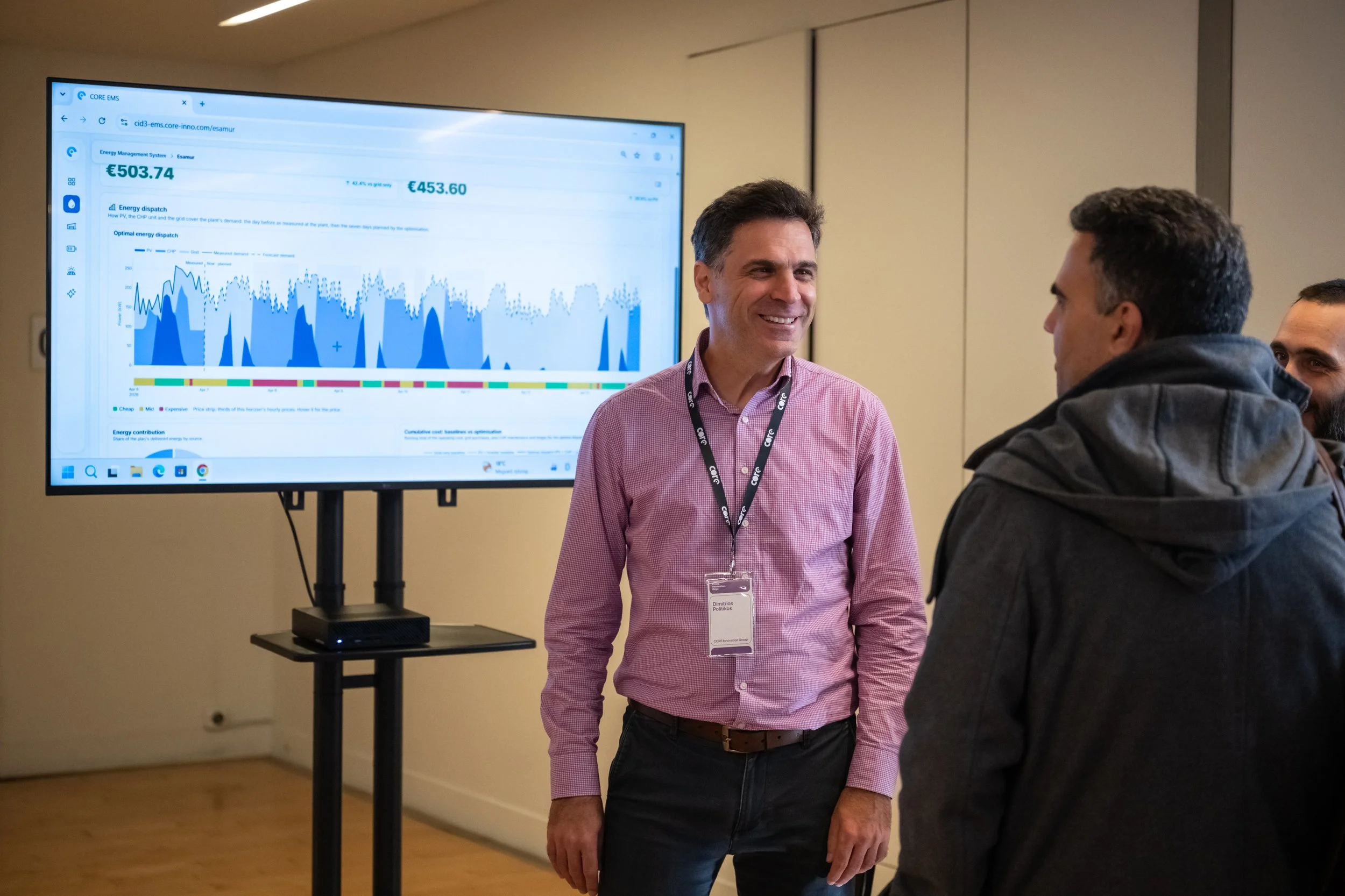
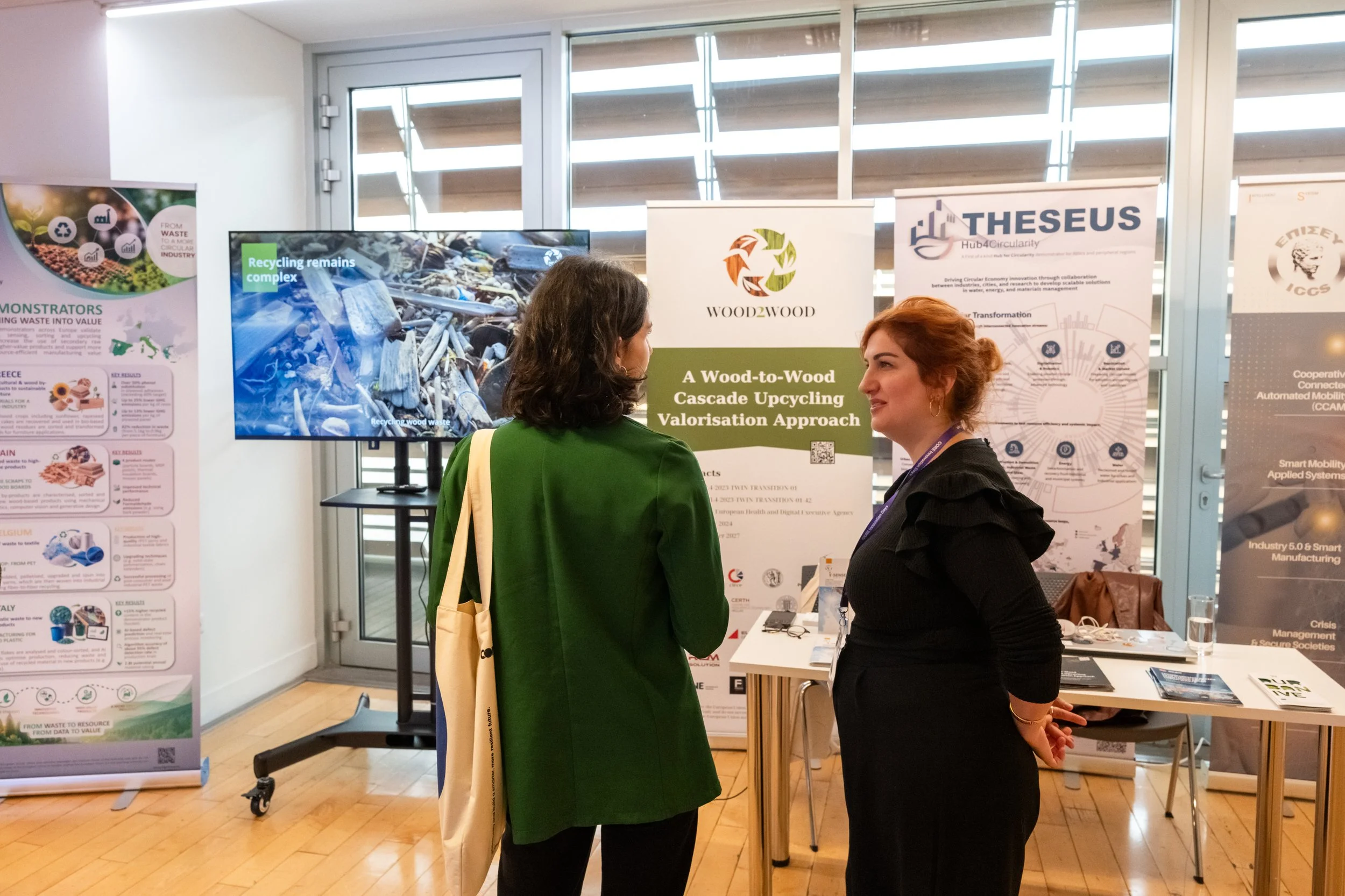
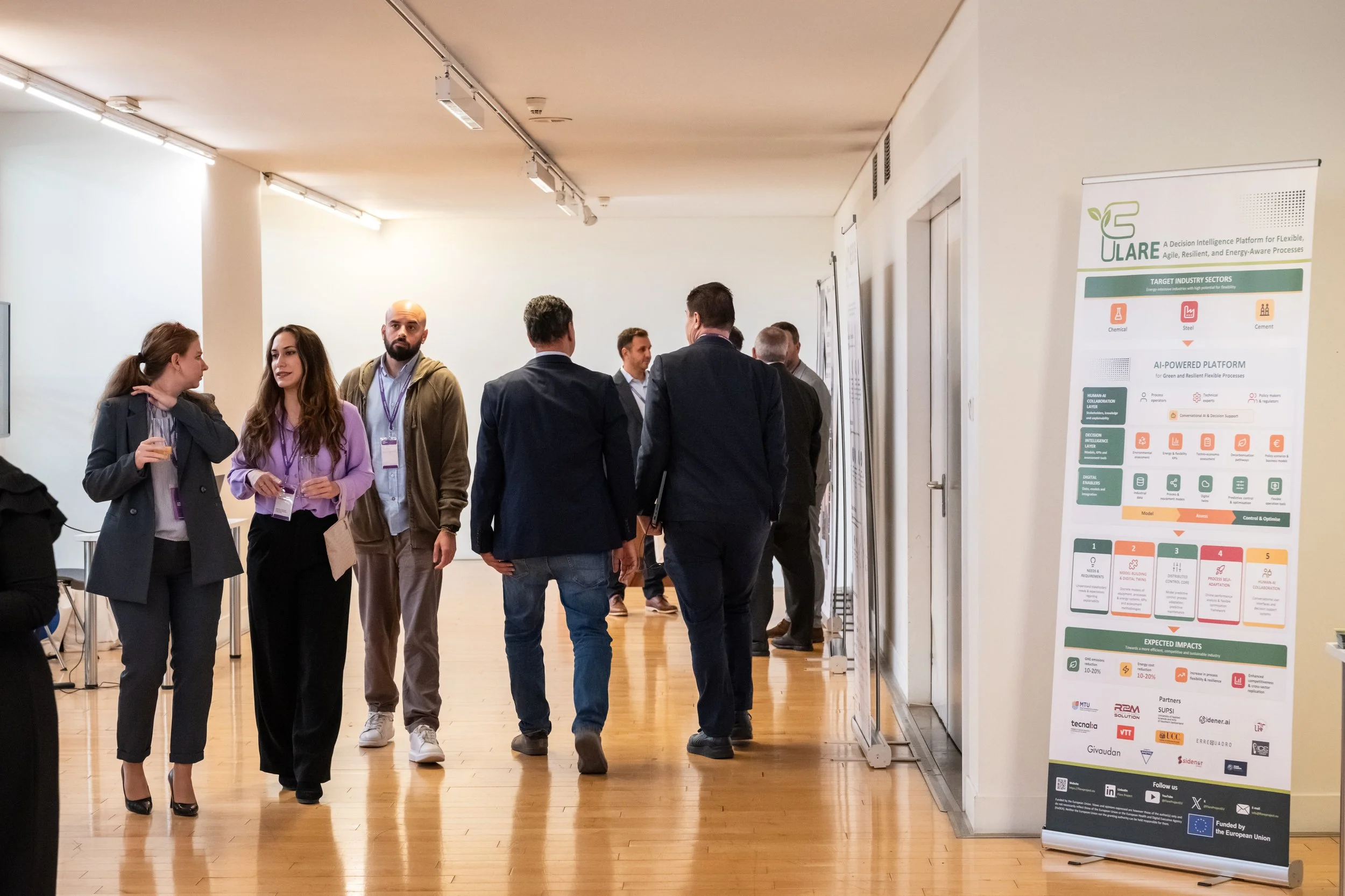
Beyond the presentations and panel discussions, the demo area gave participants the opportunity to engage directly with the technologies and projects behind the event.
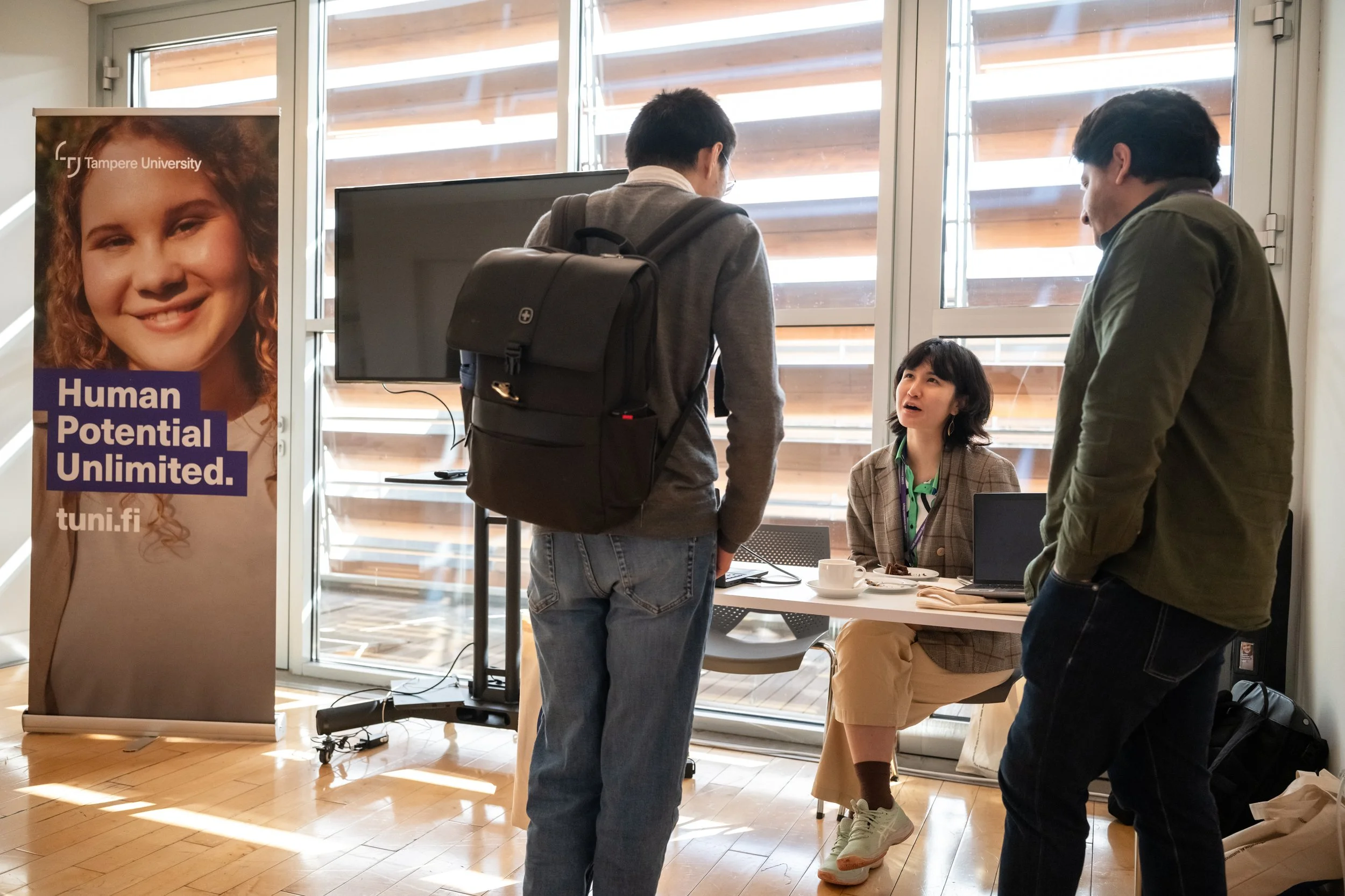
It was a chance to see solutions up close, speak with the teams developing them, and explore how different approaches to Physical AI are being applied to real industrial challenges. Just as importantly, it gave participants the opportunity to ask practical questions and exchange perspectives beyond the conference stage.
A big thank you to our partner projects REUMAN, M4ESTRO, MASTERMINE, M2DESCO, StreamStep, Wood2Wood, OPTIMINER, euroFMX, THESEUS, and FLARE for being part of the event and bringing their work to the demo area.
We would also like to thank our sponsors: I-SENSE Group (ICCS), Tampere University (Gold Sponsor), and IRES and R2M Solution (Silver Sponsors), whose support helped make the event possible.
Day 2: From Conversations to Collaboration
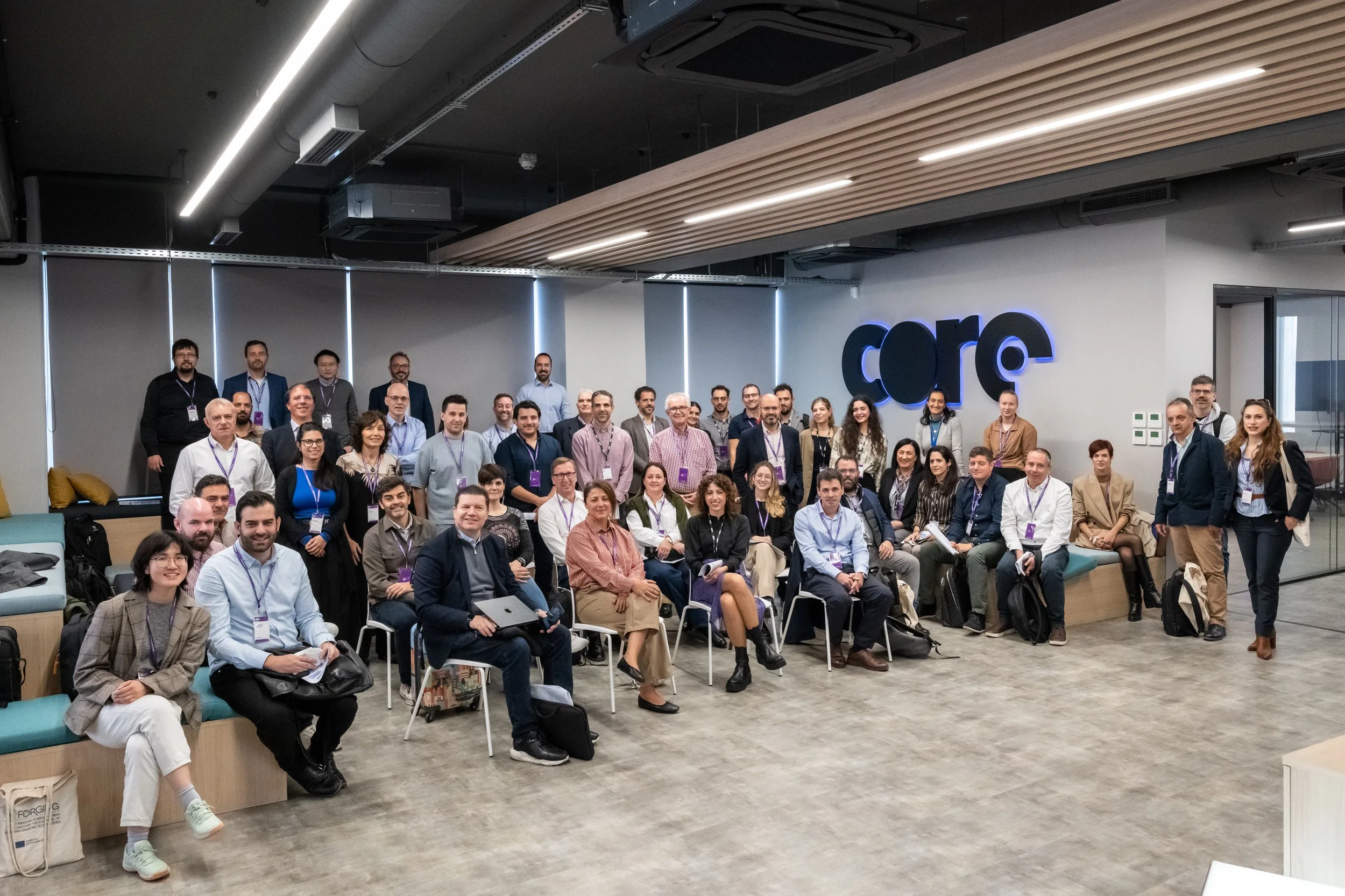
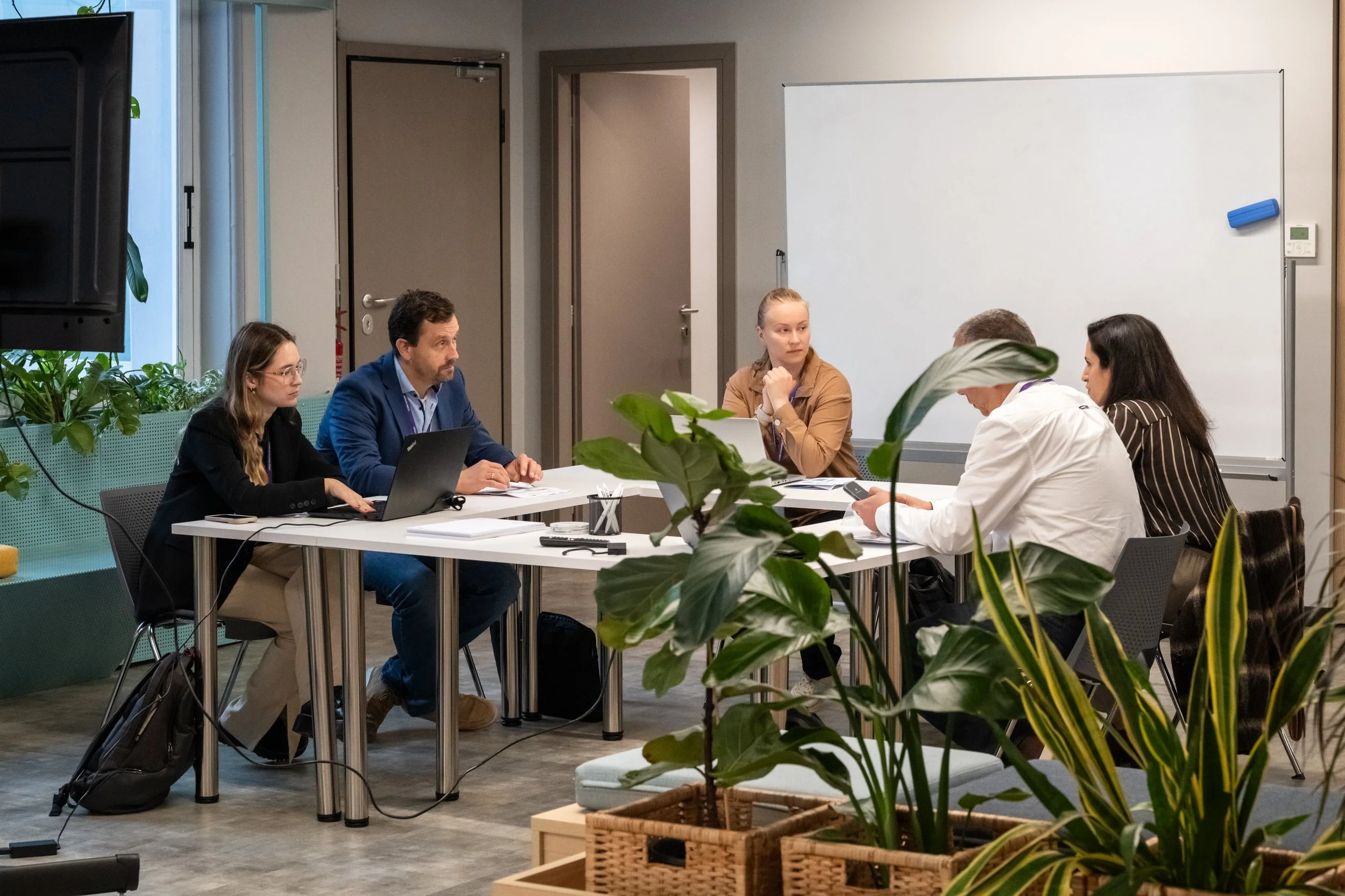
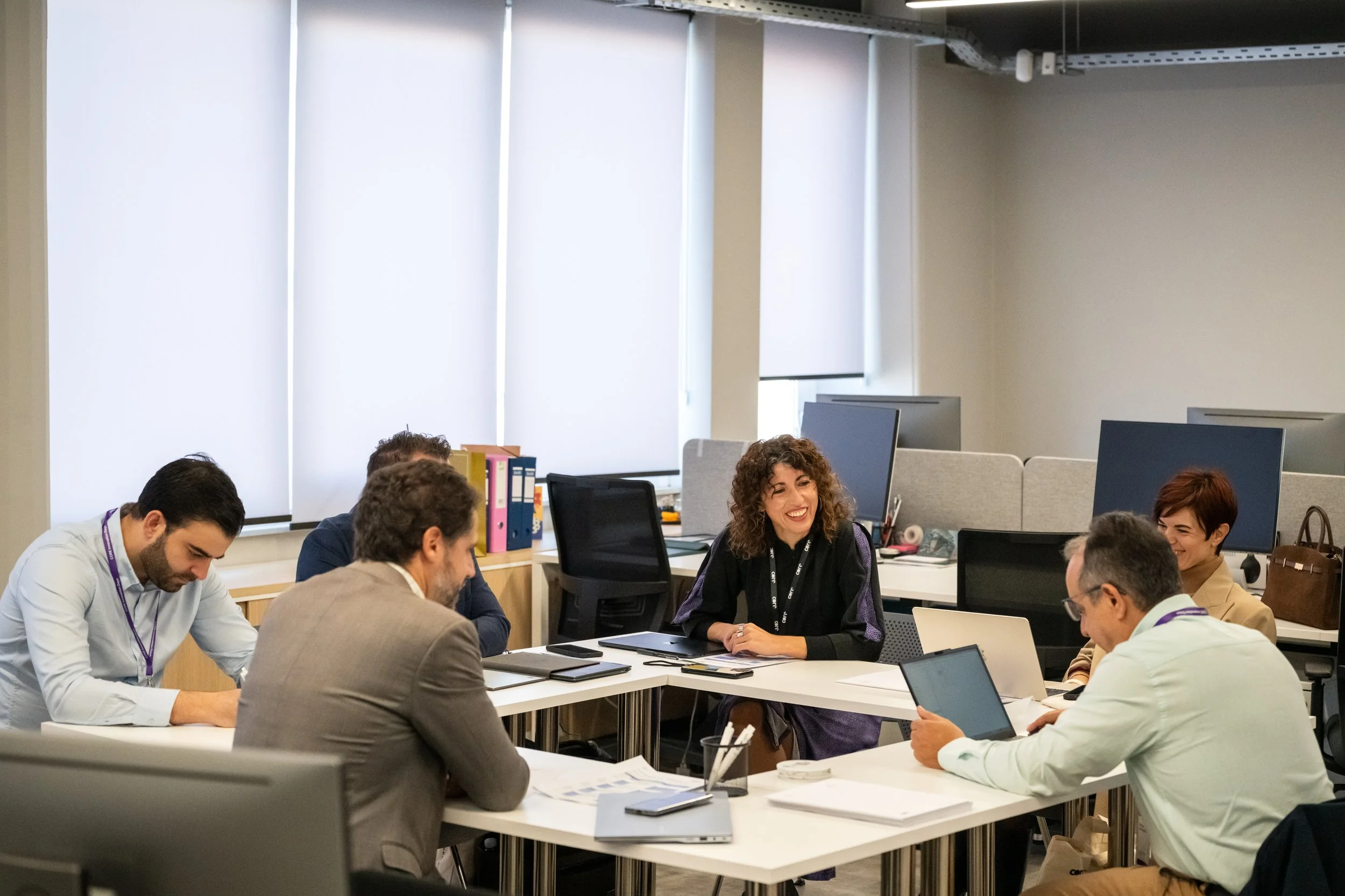
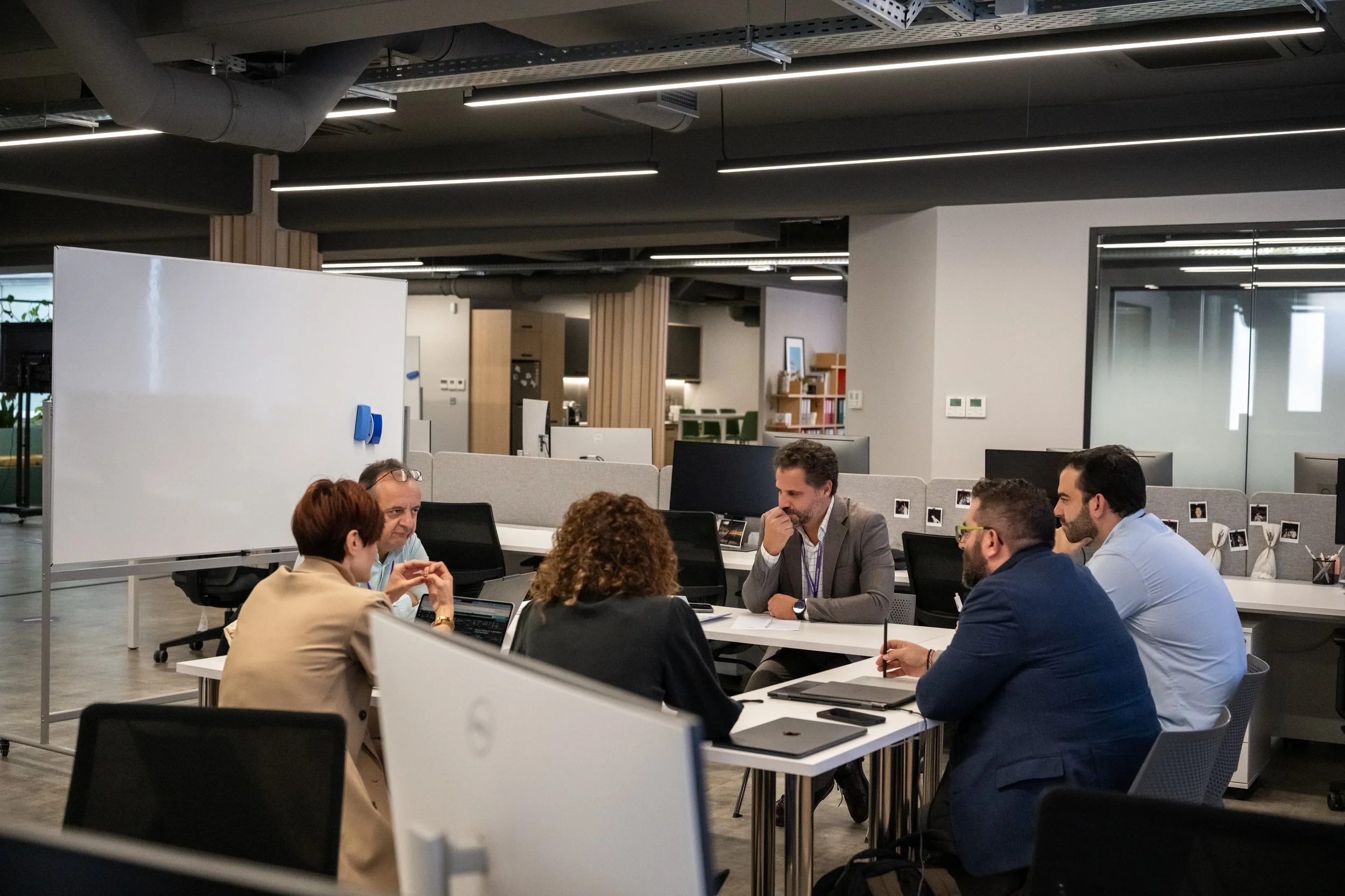
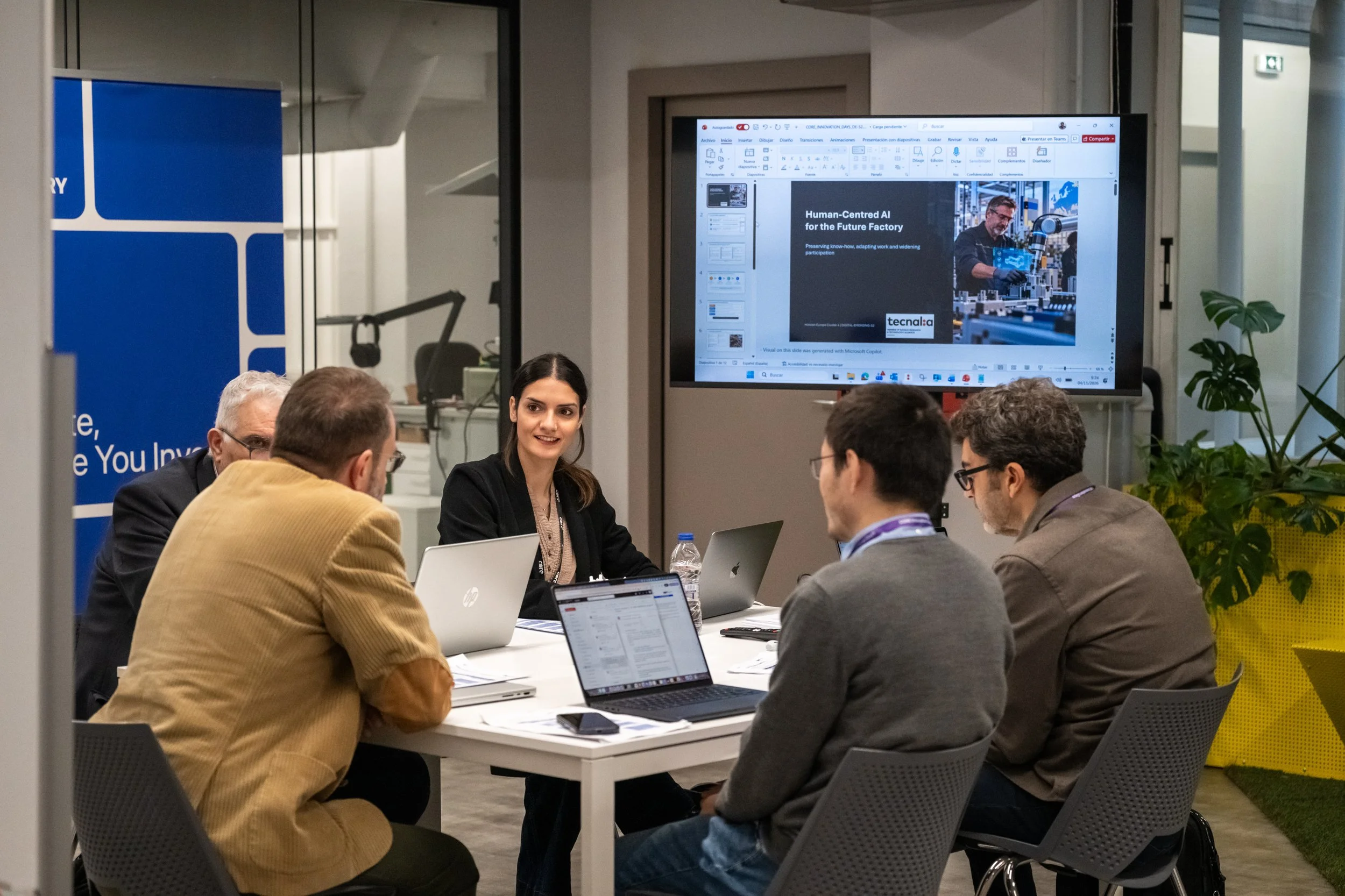
The conversations didn't stop when the event came to a close. The second day of CORE Innovation Days 3 moved from the conference setting to the CORE Innovation Group offices, where an invitation-only group of participants from industry, research, and academia came together for a more hands-on experience.
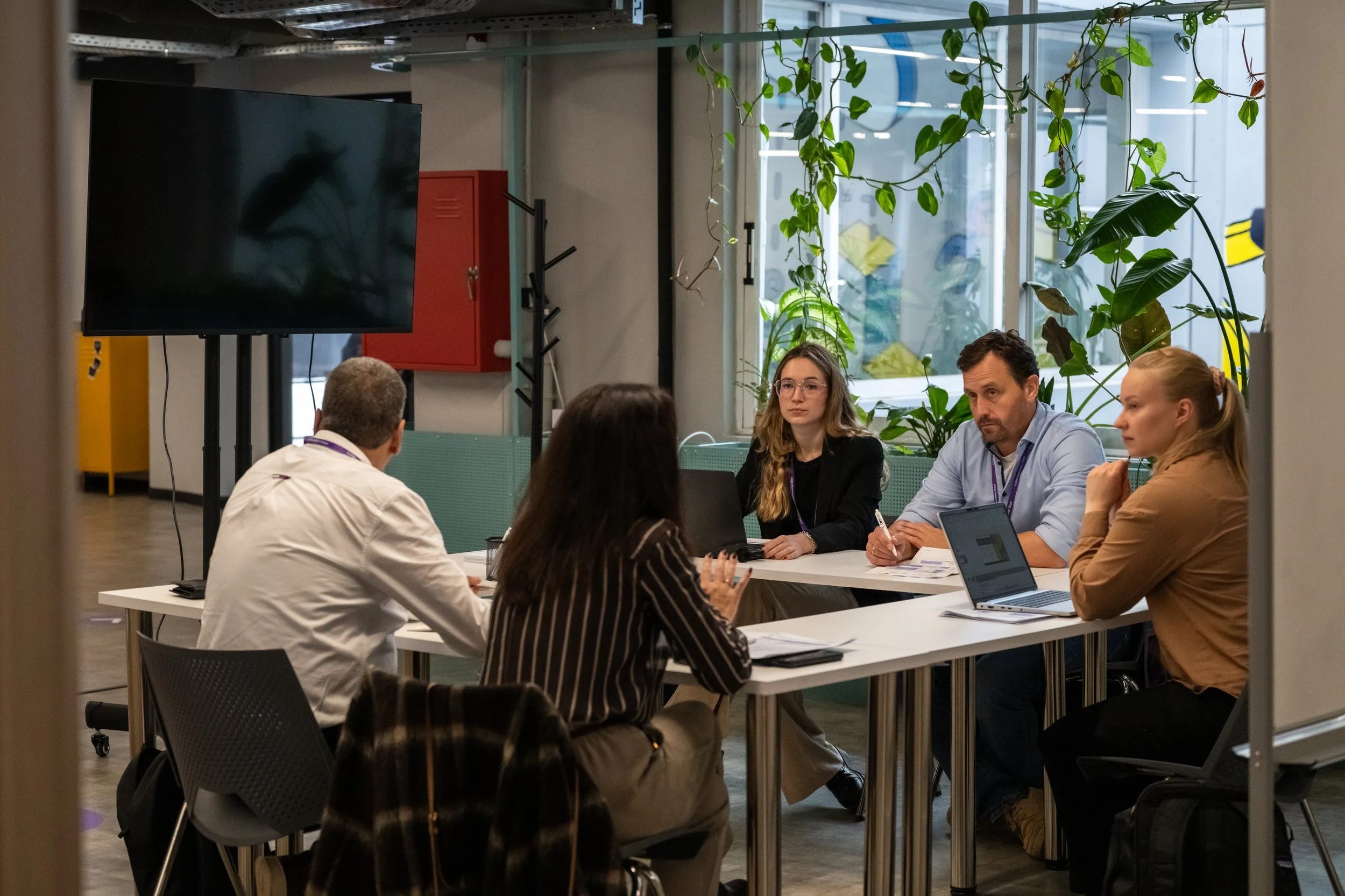
Organised into smaller working groups, participants took part in collaborative proposal-writing workshops, with a shared focus on developing the next generation of European Research and Innovation projects.
The workshops provided an opportunity to identify industry challenges, bring together complementary expertise across sectors, explore upcoming European funding calls, and work towards building strong, balanced project consortia. The goal was to turn initial ideas and discussions into concrete project concepts and first-draft proposals.
This collaborative approach is not new to us. Over the past two years, several project concepts developed through similar working sessions have gone on to secure funding and evolve into impactful European projects.
Day 2 was therefore an important part of the overall experience: an opportunity to take the discussions initiated during the conference one step further and start building the collaborations and ideas that could shape future European R&I initiatives.