
Smart, Secure, and Scalable: AI-Driven Industrial Efficiency with FEDMA
Smart, Secure, and Scalable: AI-Driven Industrial Efficiency with FEDMA
Christina Nektaria Vlasi, Data Scientist & Lida Theodorou, R&I Unit Leader
Every time a milling tool is removed from a CNC machine for manual inspection, production stops. It's a small disruption- but multiply it across hundreds of operations, and the cost in downtime, resource waste, and unpredictability becomes significant. RE4DY set out to change that, and CORE Innovation Centre acted as a key catalyst, working alongside project partners to bring the vision to life.
The Challenge
Modern industrial environments face a critical combination of challenges that limit efficiency, innovation, and scalability.
First, data infrastructure and orchestration remain complex: industrial data is often fragmented, underutilised, or difficult to access in real time. Second, data privacy and security concerns prevent companies from sharing valuable operational data, limiting the potential of advanced AI solutions. Finally, there is a growing need for intelligent, adaptive models capable of improving decision-making, predicting failures, and reducing downtime.
These challenges are particularly evident in machining environments. Companies like FRAISA and GF Machining Solutions face a highly practical issue: milling tools must often be removed after operations to manually assess wear, interrupting workflows, increasing downtime, and raising the risk of malfunctions.
This creates inefficiencies that affect industrial productivity, equipment reliability, operational costs, and sustainability. The need for a smarter, data-driven, and privacy-preserving solution has never been more urgent.
The Project at a Glance
RE4DY is an innovation-driven project focused on enabling secure, intelligent, and collaborative industrial AI solutions. It explores how advanced technologies, such as federated learning and edge computing, that can transform industrial processes without compromising data privacy.
At its core, the project validates a new paradigm: AI models that learn collaboratively across machines and factories without sharing sensitive data.
CORE IC’s Contribution - Going Beyond the Scope
At CORE Innovation Centre, we played a leading role in designing and developing a federated learning-based AI solution for predictive maintenance, known as FEDMA. Our contribution focused on:
Developing the AI models for tool wear prediction and Remaining Useful Life (RUL) estimation
Designing a federated learning architecture that enables collaborative intelligence without data exchange
Implementing edge computing solutions to enable on-device data processing and inference.
Deploying and validating the solution in real industrial environments
A major milestone was the successful deployment of our solution on GF’s CNC machines at FRAISA’s premises, where it operated in real production conditions, delivering AI insights.
Our contribution extended beyond initial expectations: we ensured seamless integration across industrial systems, addressed real-world operational challenges during deployment, enhanced the solution with continuous learning capabilities, and actively supported partners to maximise the project’s impact.
This reflects our commitment to impact-driven innovation and applied research excellence.
Key Results and Outcomes
FEDMA delivered a real-world validated solution that not only advances predictive maintenance, but redefines how machining operations are monitored, optimised, and improved through AI, while ensuring full data privacy and security.
What we developed and demonstrated:
A federated AI system that predicts tool wear, directly on CNC machines
Remaining Useful Life (RUL) estimation, empowering operators with actionable insights
Live deployment and validation at FRAISA, in collaboration with GF Machining Solutions
A compelling FAIRE demonstration at CORE Innovation Days and Beyond Expo 2025, showcasing AI in action.
FEDMA fuses operational and historical machining data, tool strategies, and material information to deliver predictive intelligence. Each machine learns locally, sharing only model parameters, creating a continuously improving global model, ensuring data privacy, scalability, and ever-growing accuracy.
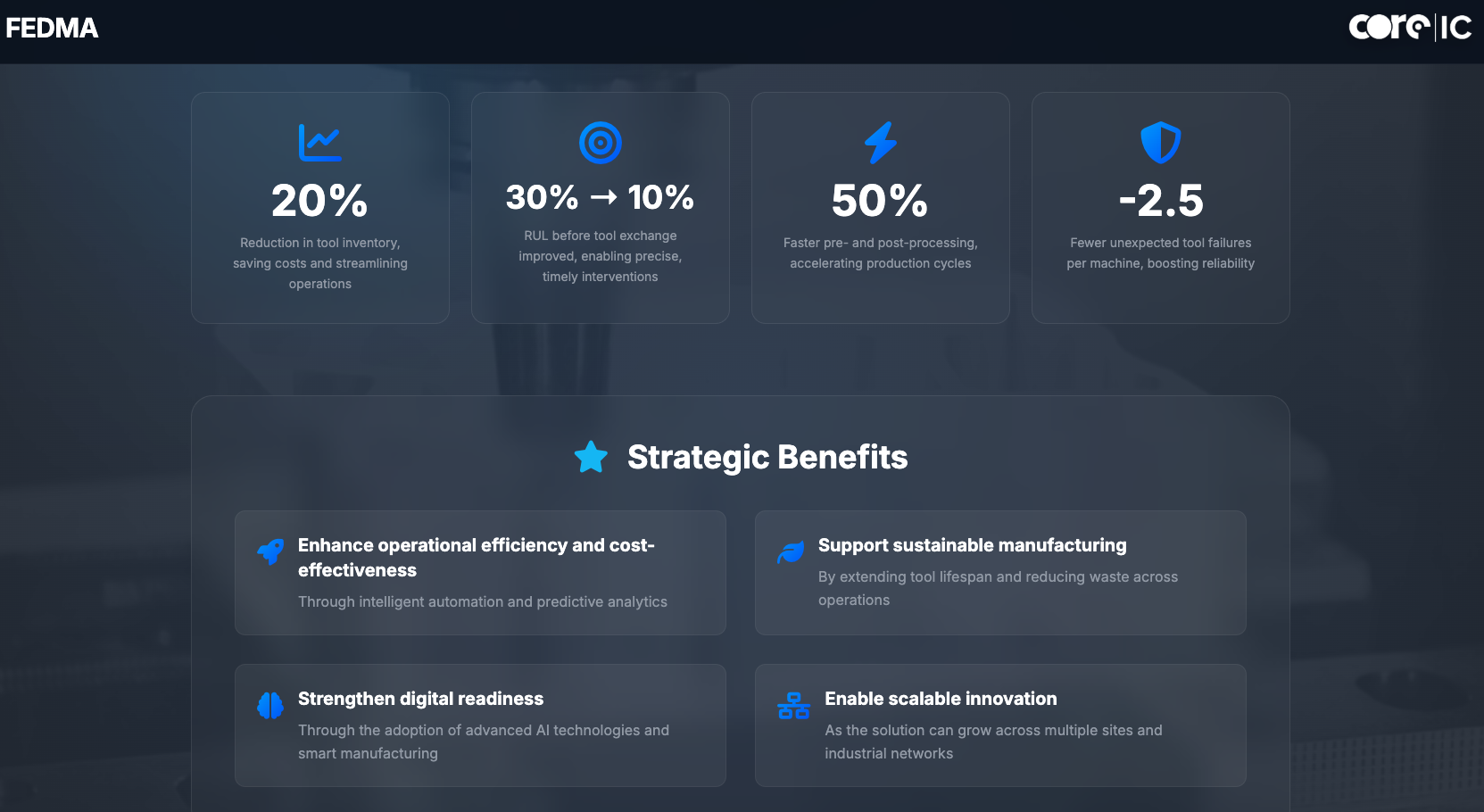
Quantitatively, tests and pilot deployments show that FEDMA contributes to improvements such as:
20% reduction in tool inventory, saving costs and streamlining operations
RUL before tool exchange improved from 30% to 10%, enabling precise, timely interventions
50% faster pre- and post-processing, accelerating production cycles
2.5 fewer unexpected tool failures per machine, boosting reliability and continuity
By accurately estimating the Remaining Useful Life (RUL) of each milling tool, operators can:
Optimise machining schedules based on actual tool condition
Avoid premature tool replacement while preventing critical failures
Dynamically adjust production planning to minimise interruptions
Reduce unnecessary machine stoppages caused by manual inspections
This shifts maintenance strategies from reactive and time-based approaches to fully predictive and optimised operations, unlocking a new level of efficiency on the shop floor.
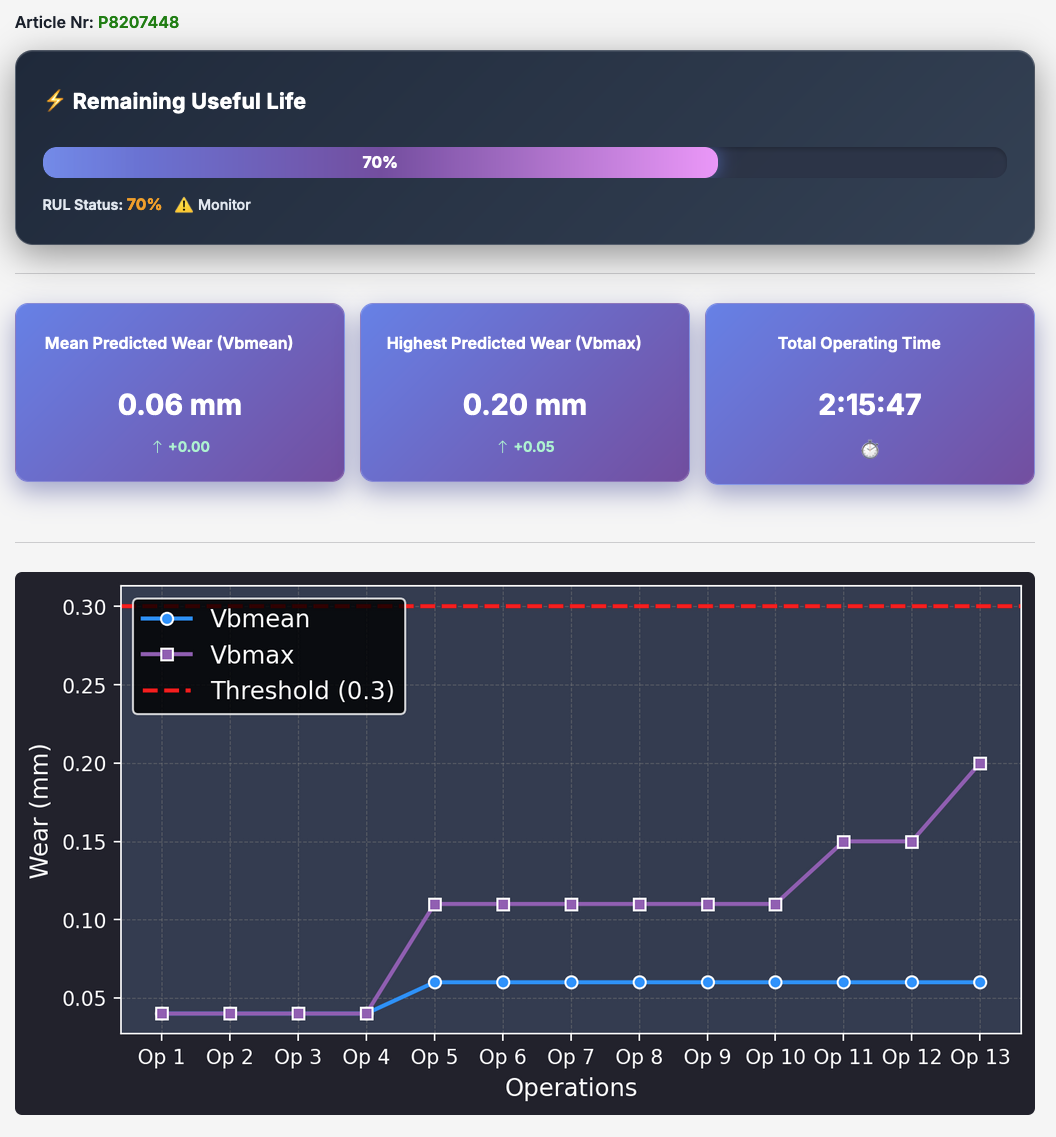
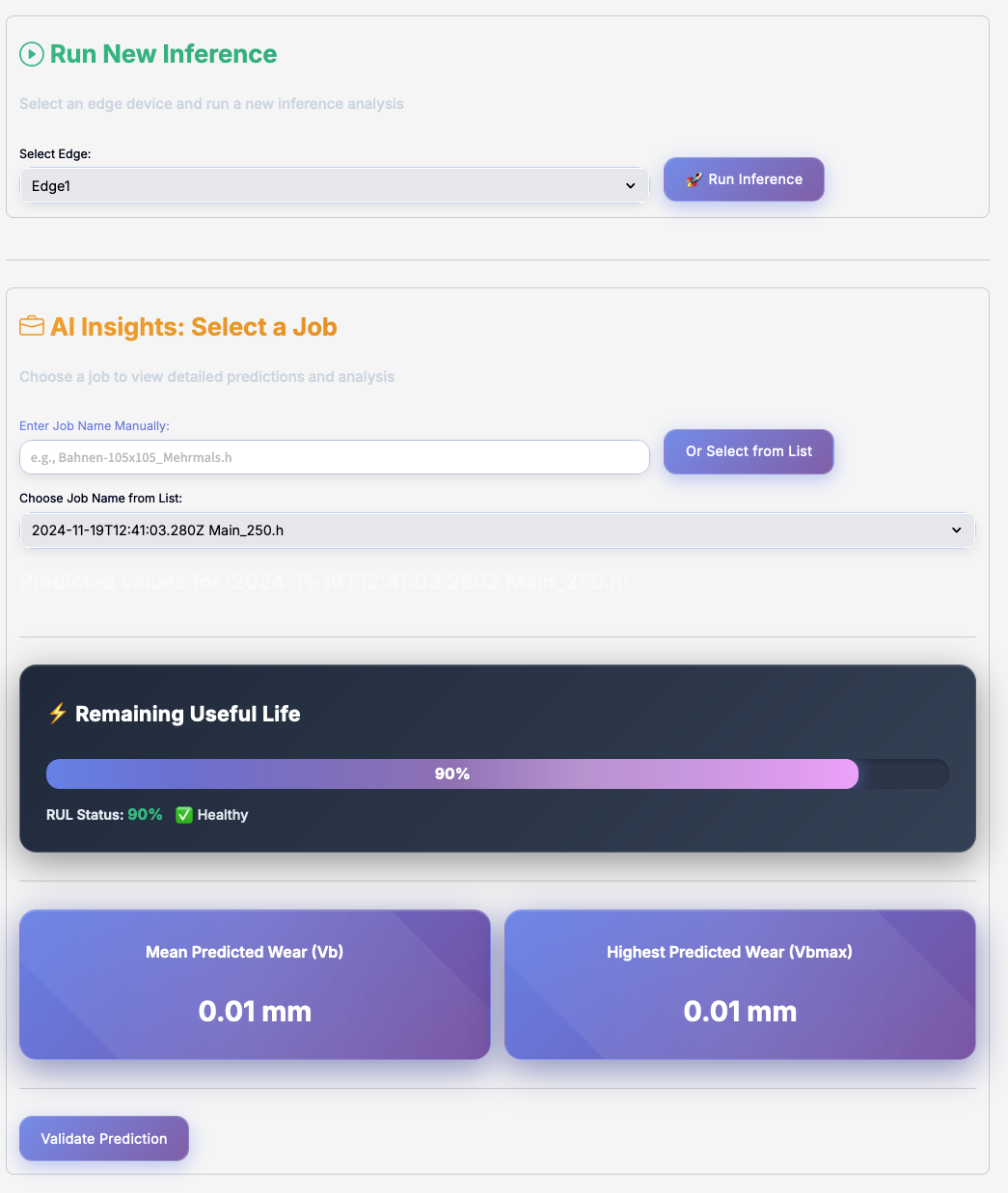
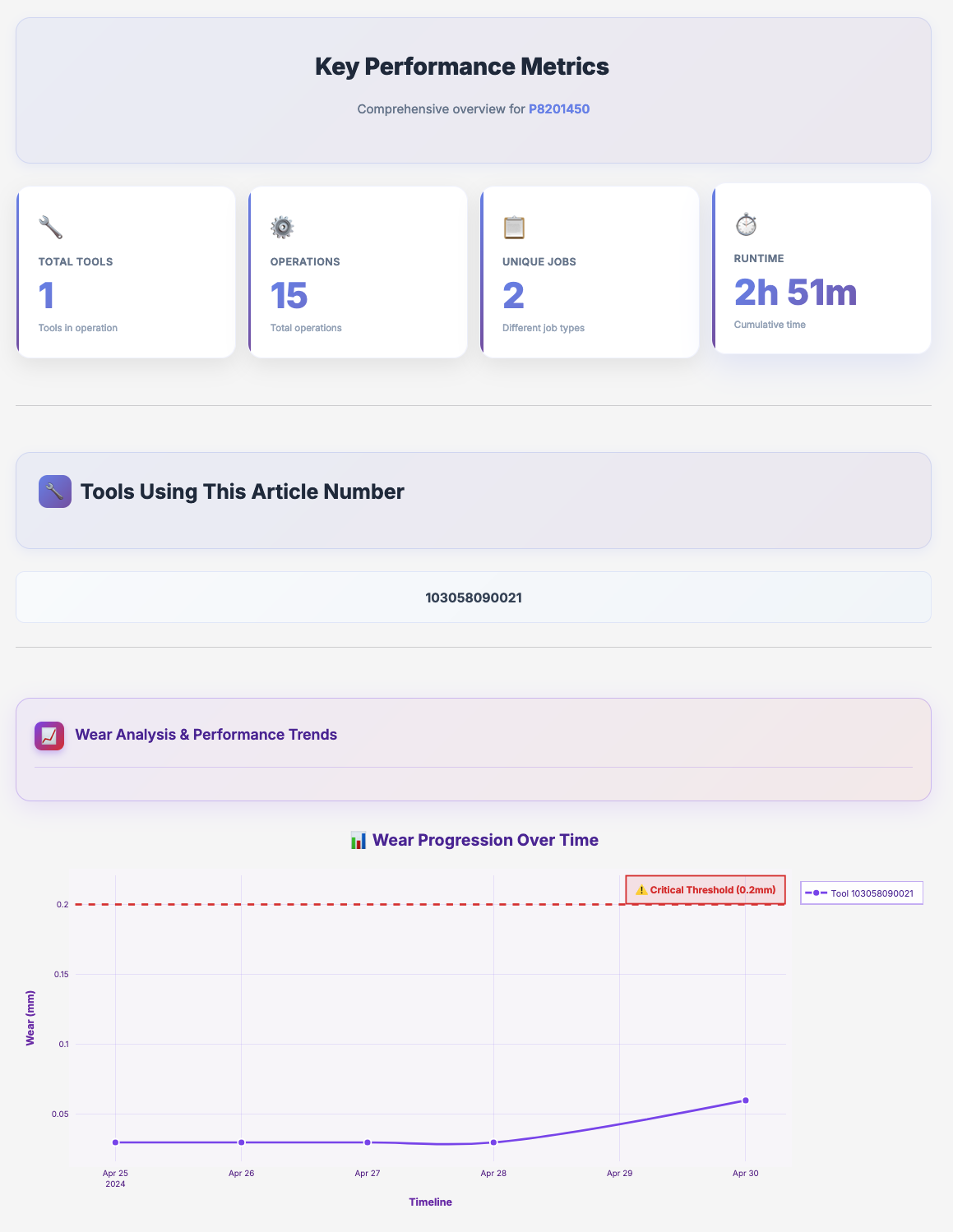
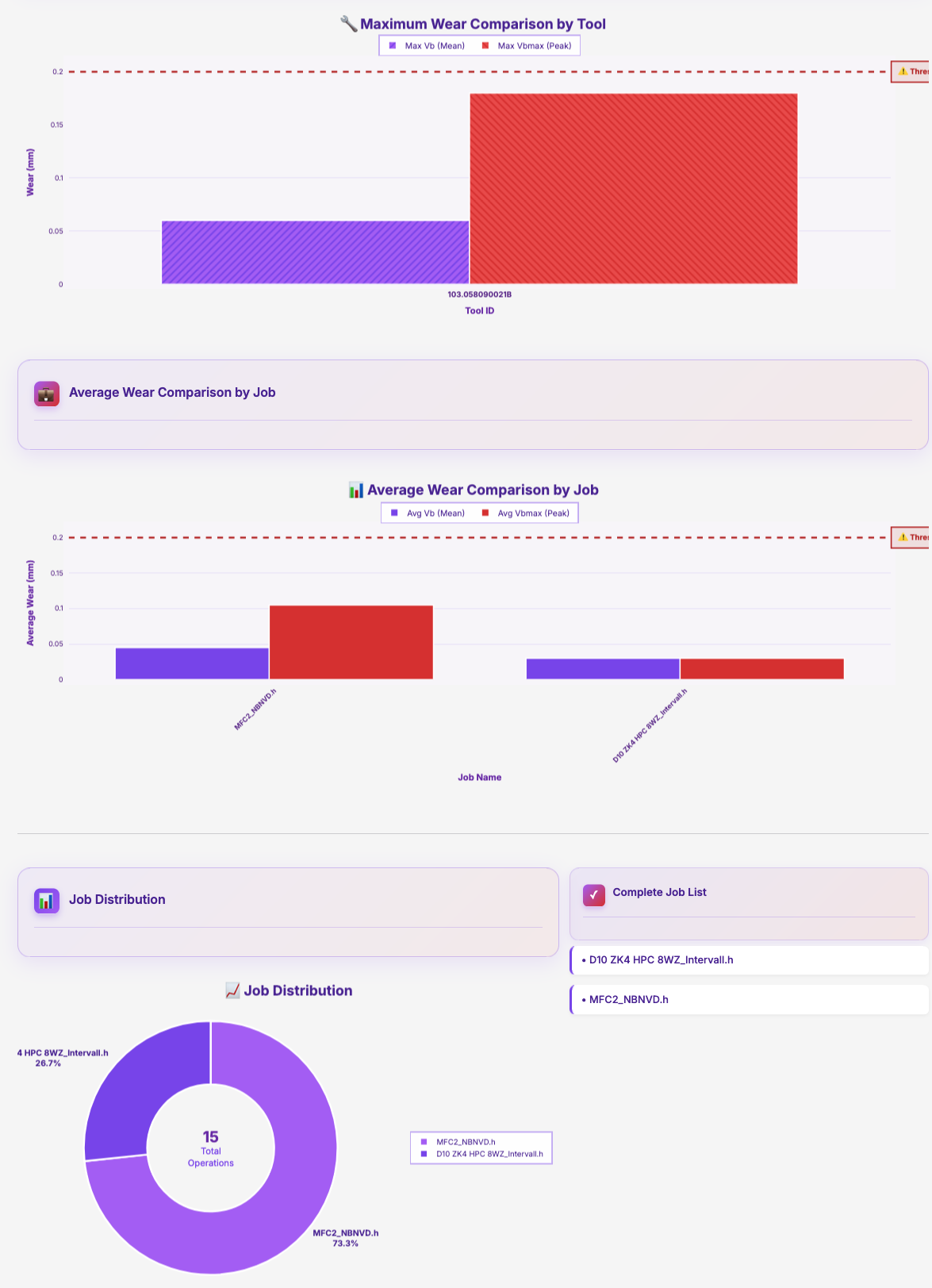
Actionable AI Insights: Wear Analysis and RUL Estimation to optimise operations and CNC tool lifecycle.
Why These Results Matter
With FEDMA, manufacturers can finally move from reactive maintenance to fully predictive, intelligent operations. Schedules are optimised based on real tool condition, downtime is minimised, and workflows are smoother than ever. Machines stop only when needed- never prematurely, and operators can plan with confidence.
By leveraging accurate Remaining Useful Life (RUL) estimations, manufacturers can move away from rigid, time-based maintenance strategies and adopt a fully predictive and optimised approach. This enables:
Smarter scheduling of maintenance activities based on actual tool condition
Reduced downtime through better planning and fewer unexpected failures
Increased machine availability and smoother production flow
More efficient allocation of resources across operations
This means that decisions are no longer based on assumptions, but on AI-driven intelligence.
At the same time, the solution ensures that this intelligence is delivered in a secure and privacy-preserving way. By keeping sensitive data on-premises and enabling collaborative learning across machines and factories, companies can benefit from shared knowledge without compromising confidentiality.
From a broader perspective, these results:
Enhance operational efficiency and cost-effectiveness
Support sustainable manufacturing by extending tool lifespan and reducing waste
Strengthen digital readiness through the adoption of advanced AI technologies
Enable scalable innovation, as the solution can grow across multiple sites and industrial networks
Through RE4DY, FEDMA transforms data into action, driving smarter decisions and more efficient operations every day.
What we achieved
From Project Results to CORE IC’s Future
The results of RE4DY strongly reinforce CORE IC’s strategic direction in Industry 4.0 and intelligent systems.
In particular, they strengthen CORE IC’s capabilities in federated AI and edge computing, enhance existing solutions in predictive maintenance and smart manufacturing, and open new opportunities for scalable industrial AI services.
The technologies developed, especially FEDMA and the FAIRE demonstration, form a solid foundation for future products and services, cross-industry applications, and advanced industrial pilots.

Previous
Previous
Vitex Goes Predictive: COREbeat at the Heart of a New Production Era
Next
Next