A Hybrid Digital Twin for Intelligent Industrial Water Management 

Maria Tassi, Ioannis Meintanis and Pantelis Papachristou | February 16th 2025

A Hybrid Digital Twin for Intelligent Industrial Water Management

Enabling predictive, data-driven decision-making for resilient and sustainable industrial water systems


Industrial water systems are facing increasing pressure due to regulatory constraints, climate variability, sustainability targets, and rising operational costs. Industrial facilities must ensure reliable water supply, maintain water quality, and manage complex networks of assets while minimizing environmental impact. These challenges are often addressed through fragmented monitoring tools and static modelling approaches, which offer limited support for predictive analysis or proactive decision-making. Furthermore, existing water management solutions focus on isolated functions, such as monitoring or reporting, without capturing the dynamic interactions between network components, assets, and operational strategies. This limits the ability of operators to anticipate failures, evaluate alternative operational scenarios, or optimize water reuse across industrial processes. 


The Demand-Driven Industrial Water Symbiosis System (DDIWSS) addresses these challenges by introducing a Hybrid Digital Twin that integrates real-time data, advanced physics-based and data-driven models, and a simulation engine within a unified digital environment. Developed under the CARDIMED project, DDIWSS supports a holistic, demand-driven physics-informed decision support to industrial water management operators. 

The Technology at a Glance 

The DDIWSS is a Hybrid Digital Twin designed to digitally represent and manage industrial water network infrastructure, with an initial application to HALCOR’s water network. The system provides a comprehensive digital view of the physical water network, enabling continuous monitoring, performance analysis, quality control, and operational optimization. The technology integrates sensor data acquisition, physical and data-driven predictive models, data analytics, and simulation tools within a modular, microservices-based architecture. A secure web-based user interface allows authorized users to access system information through intuitive dashboards and multiple views, supporting both operational monitoring and strategic decision-making. 
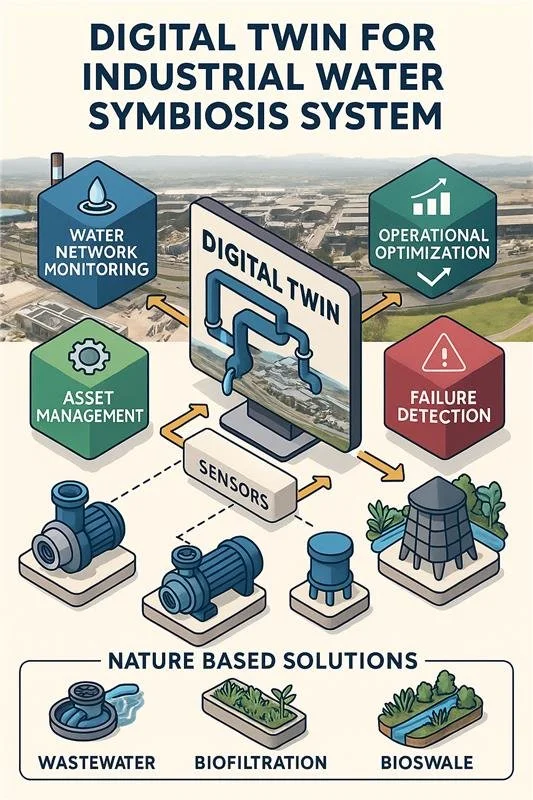
Figure 1: Schematic representation of DDIWSS 

DDIWSS targets industrial operators, engineers, and decision-makers responsible for water infrastructure management, sustainability, and operational efficiency. Its scalable design allows the solution to be adapted to other industrial contexts and extended with new modules as new requirements emerge. 

CORE’s Technological Contribution 

Within the CARDIMED project, CORE IC has been responsible for the design and development of the DDIWSS Hybrid Digital Twin, leveraging its expertise in digital twins, industrial analytics, and cyber-physical systems. CORE defined the overall system architecture to ensure interoperability between heterogeneous components, scalability for future expansion, and robustness for industrial use. 

A key contribution was the integration and harmonization of diverse modelling approaches. Hydraulic network models were transformed into Python-based implementations compatible with the Digital Twin’s cp-simulation engine, while asset models were standardized and integrated using a standardized unified modelling framework such as Functional Mock-up Interface (FMI). This enables co-simulation and information exchange between the hydraulic network dynamic models and the asset models within a single digital platform. CORE IC also developed data analytics and predictive modelling capabilities to convert raw monitoring data into actionable insights. These capabilities support performance assessment, forecasting, and evaluation of alternative operational strategies.  

Functional Capabilities and Demonstrated Value 

TThe DDIWSS supports continuous monitoring of key water network parameters, including pressure, flow, temperature, and water quality at critical nodes. Where available, data from existing SCADA systems are integrated to reflect actual operating conditions. The system also monitors the operational states of major assets such as pumps, heat exchangers, chillers, and water storage tanks. 

Beyond monitoring, it enables simulation and analysis of different operational strategies. Users can assess how changes in production demand, asset operation, or external conditions influence network performance, supporting more efficient and resilient decision-making. The system further facilitates water reuse across industrial processes, contributing to improved sustainability and resource efficiency


Alignment with CORE’s Mission and Values  

The DDIWSS is closely aligned with CORE’s mission to deliver applied research and digital innovation that addresses real industrial challenges. Developed within the CARDIMED project, the technology builds on CORE’s established expertise in Digital Twins while contributing to sustainability and circular economy objectives. 

By enabling data-driven water management and supporting efficient resource use, DDIWSS reinforces our role as a trusted innovation and technology partner for industry. The solution is designed as a scalable and transferable digital platform, ensuring long-term impact beyond the CARDIMED project and supporting CORE’s broader strategic direction in advanced digital systems


Next
Next

Work that Fits Life: Why we’re Fully Hybrid