Repair, Refurbish, Repeat: Agentic AI for a Second Life of Home Appliances
Athanasia Sakavara, RnD Manager, Giorgis Tsoukaris, AI Engineer
Calculating...
A customer says “there is a loud noise in my washing machine”. Today, that sentence is most of what reaches the technician. With a CORE AI application, the phone listens to the noise, looks at the machine and turns it into a complete service job, so the technician arrives once, with the right parts.
Built for Beko within the rEUman project, the application shows 3 AI assistants, 2 ways to recognise damage (AI Noise and AI Vision) and 1 AI stack behind them, taking a washing machine from the customer’s home to repair, and on to refurbishment.
Beko: more than appliances
Our partner for the demo is Beko, Europe’s number one large home appliances company and the fastest-growing brand in European white goods: 130+ countries served, 400M+ customers and a turnover of €10.7bn in 2025.
Beko doesn’t stop at selling the product. Two services keep it connected to the customer after the sale: repair, at the heart of its customer experience and long-term loyalty, and refurbishment, which gives returned appliances a second life, reducing waste and offering quality products at a more accessible price.
The process with a CORE AI application
We built one AI system that supports the whole journey, with an assistant for each person in it:
• Customer support assistant, for the customer at home
• Repair assistant, for the technician before and during the visit
• Refurbishment assistant, for the technician in the factory floor
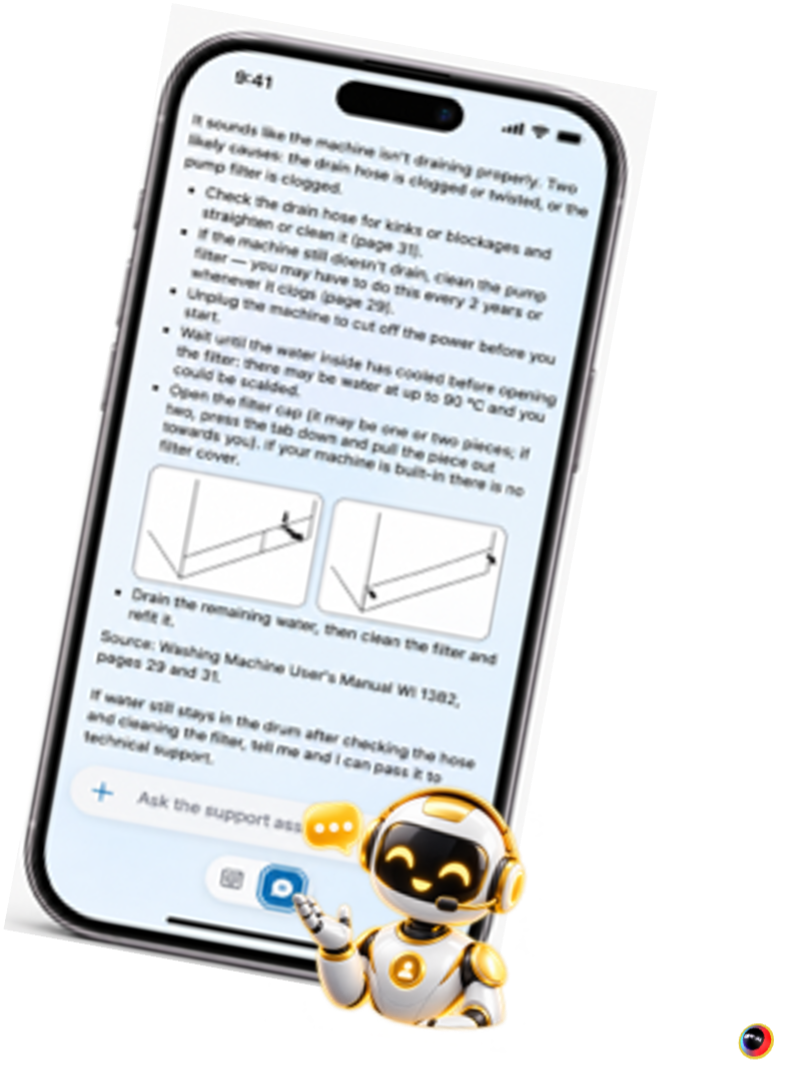
Customer support assistant
The customer writes the problem the way anyone would: “Water stays in the drum after the program.” The assistant answers step by step, with the manual’s own pictures and safety warnings.
Many problems end here: no technician, no visit.
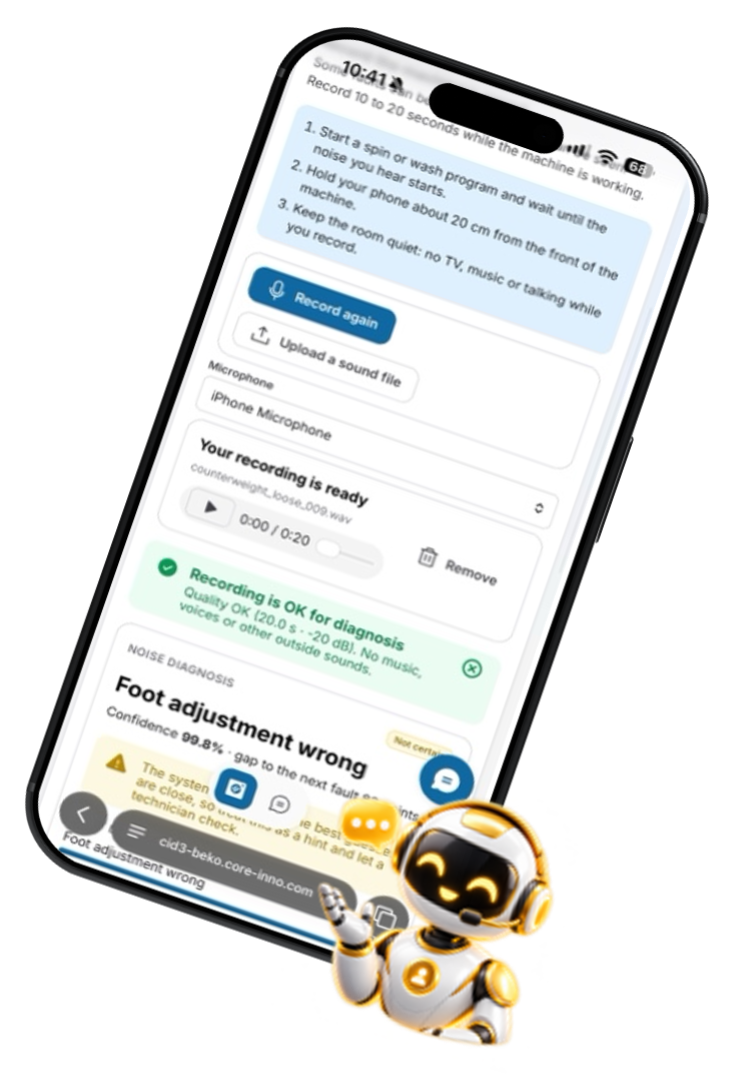
But how do you describe a noise?
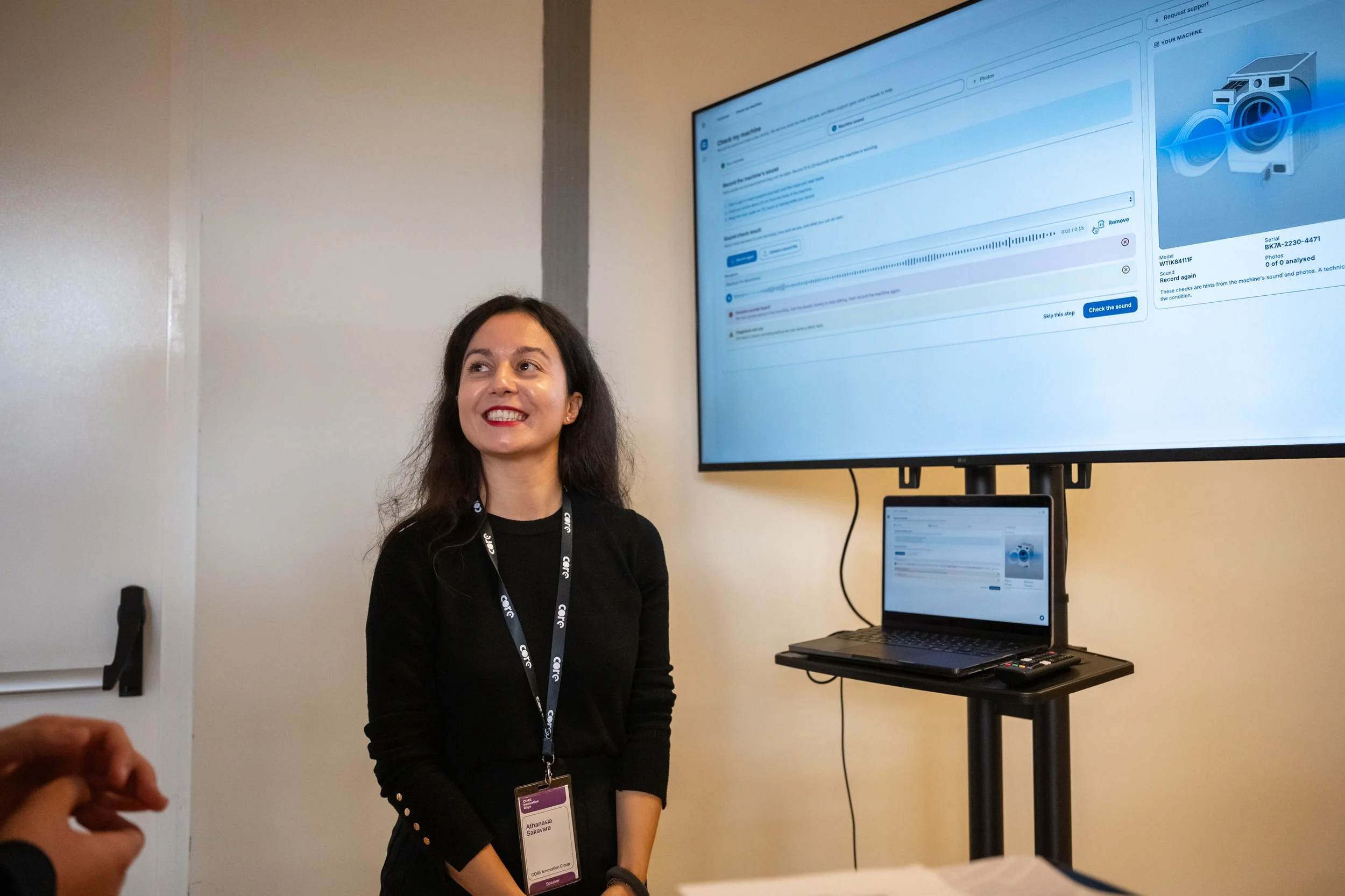
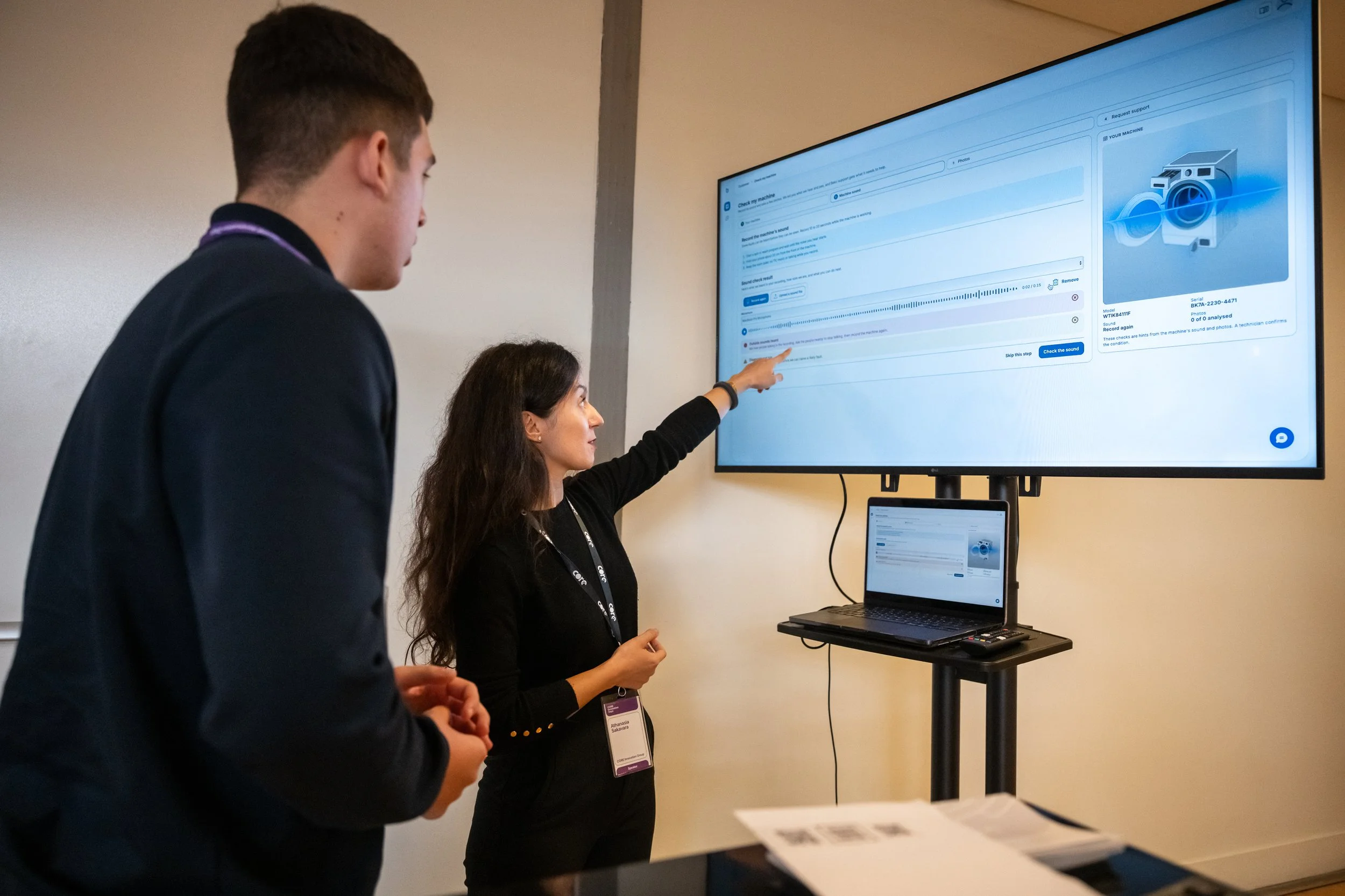
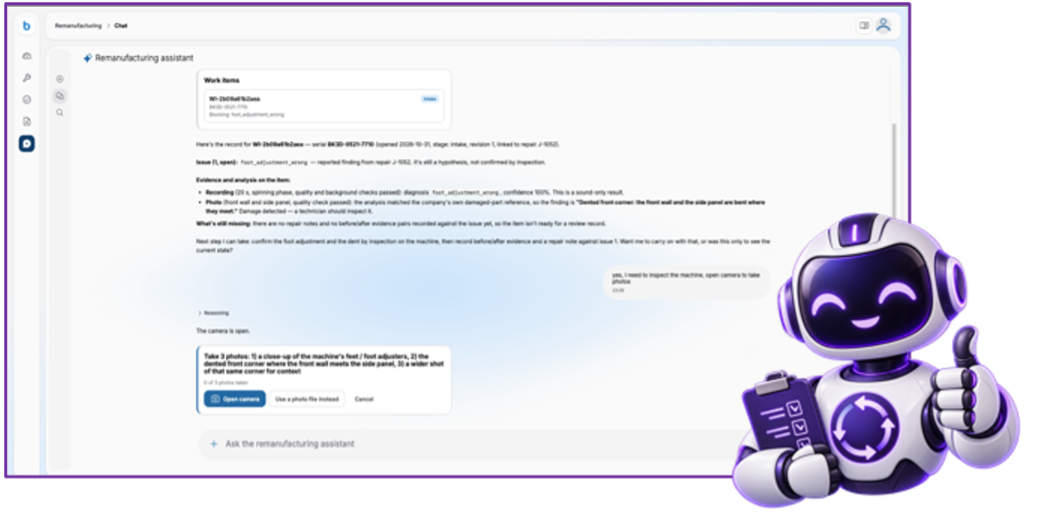
“There is a loud noise in my machine.” What kind of noise? When? Describing a noise in words is almost impossible, so the assistant doesn’t ask the customer to. It opens the recorder on the phone: 10 to 60 seconds of the machine running and AI Noise recognises the fault from the sound e.g. “foot adjustment wrong”.
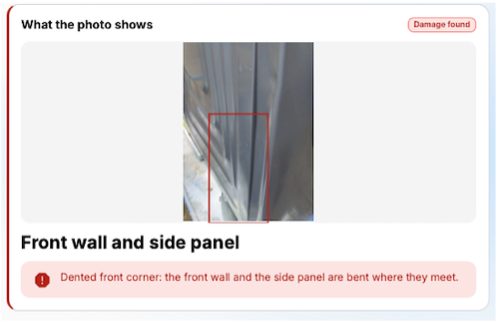
It can also see…
The assistant asks for photos: the whole machine and close-ups of the damaged areas. Each photo is checked first (sharp, bright and clear enough), then AI Vision finds what it shows and the damage.
The Repair assistant
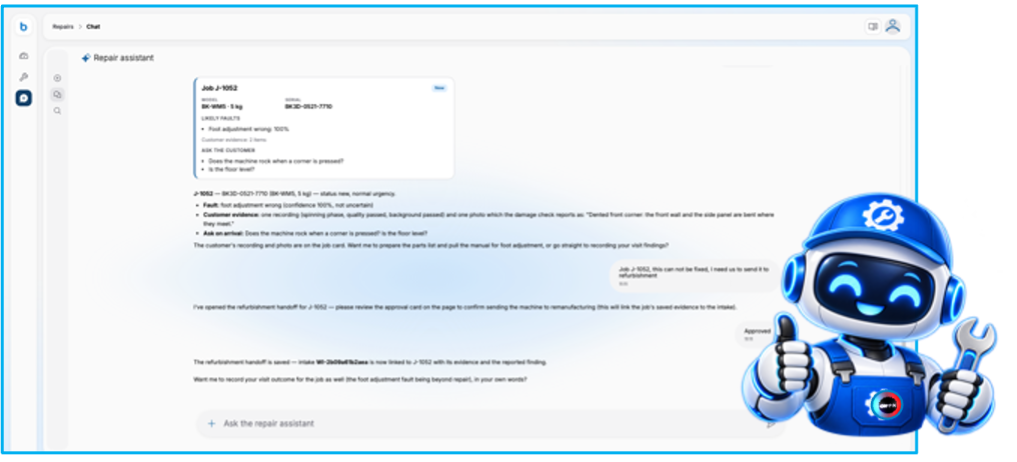
The system gathers all information and evidence and creates a job for the repair technician.
The technician doesn’t start from zero. Before the home visit, they get a clear service job with the customer’s photos, the sound analysis, the error codes and the likely fault. If they need more, they just ask: which parts to bring, or what the manual says for this model.
They arrive prepared and they have access to the same damage recognition tools: AI noise and AI vision.
The Refurbishment assistant
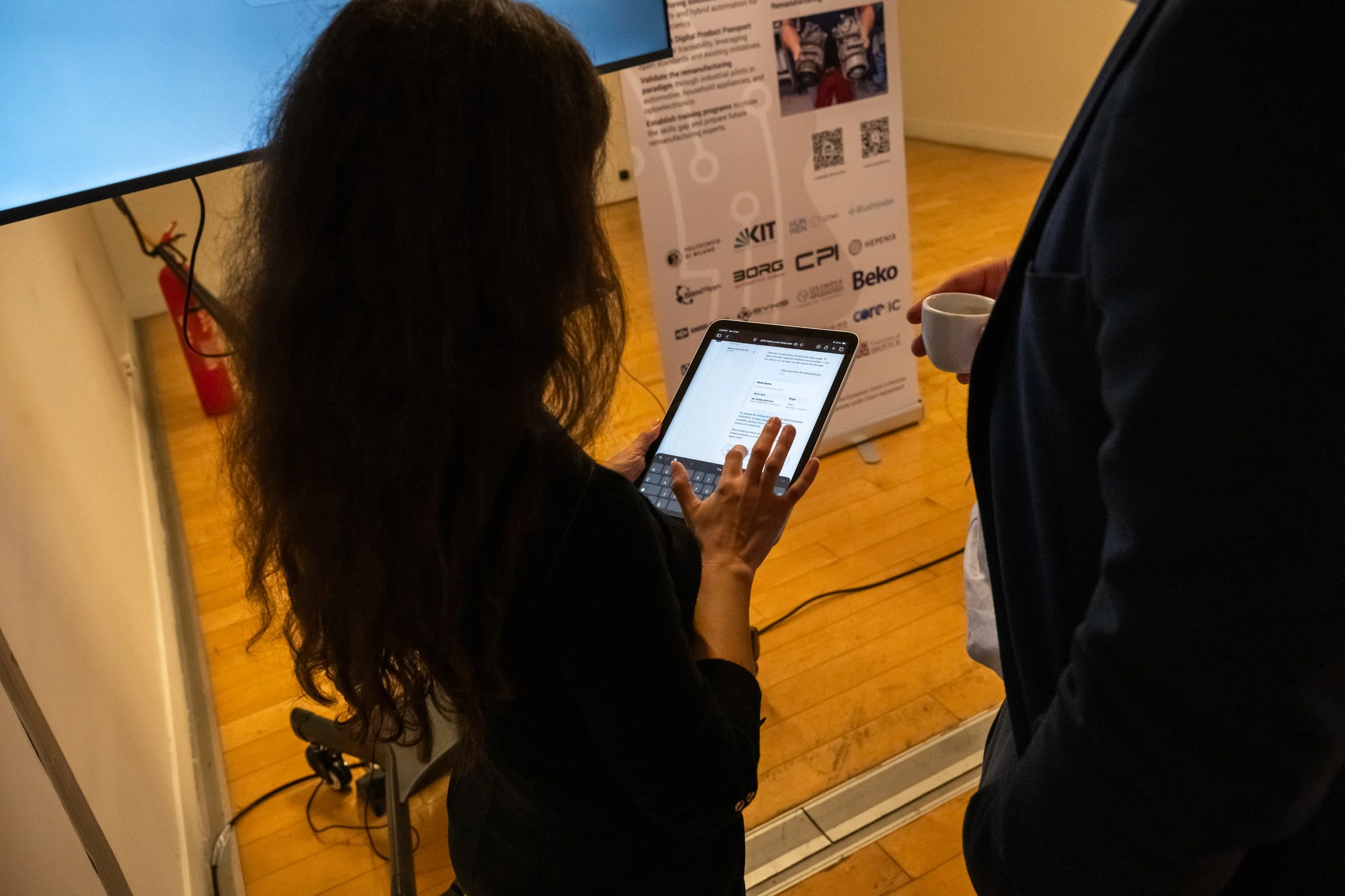
When a returned machine comes in, the technician shows it to the assistant, just like the customer did. They scan the QR code, and the assistant sees the damage, hears the fault and finds the right information. It also organises the work: it records what was repaired, with evidence before and after, and the technician only needs to ask “What jobs do I have today?” to get started.
A single AI stack for an agentic experience
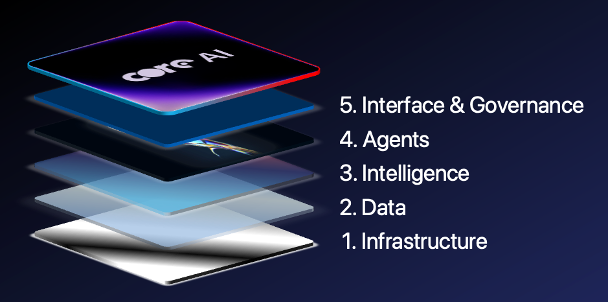
The 3 assistants and the 2 recognition tools are not separate products. They run 1 AI stack, Core AI, built in five layers.
Why it matters
A washing machine is simple to describe when it works, and almost impossible when it doesn't. That gap between what a customer notices and what a technician needs to know has always cost time, visits and parts. CORE AI closes it by giving the AI the senses a technician would use: it listens to the machine, looks at it, reads the manual for the customer, and turns all of it into a job a technician can act on. And when a machine is returned, the same senses help refurbishment technicians find what it needs for a second life.
This is what an agentic experience means to us: AI that doesn't just answer questions, but does the legwork across the whole journey, so customers wait less, technicians arrive prepared, refurbishment teams have their work organised for them, from today's jobs to each repair's documented evidence, and more appliances stay in use for longer.